
Safety Data Sheets / Uranyl Acetate Replacement Stain (Ted Pella)
Safety Data Sheet
Uranyl Acetate Replacement Stain (Ted Pella)
1. Identification
Product Identifiers
- Product Name
- Uranyl Acetate Replacement Stain
- Other Names
- N/A
- Product Number(s)
- 19485, CTP19485
- CAS Number
- 15280-53-2
Recommended use of the chemical and restriction on use
Laboratory use
Company Details
ProSciTech Pty Ltd
11 Carlton Street
KIRWAN QLD 4817
Australia
(07) 4773 9444
pst@proscitech.com
proscitech.com.au
11 Carlton Street
KIRWAN QLD 4817
Australia
(07) 4773 9444
pst@proscitech.com
proscitech.com.au
Emergency Contact Details
ProSciTech Pty Ltd
11 Carlton Street
KIRWAN QLD 4817
Australia
(07) 4773 9444
pst@proscitech.com
proscitech.com.au
11 Carlton Street
KIRWAN QLD 4817
Australia
(07) 4773 9444
pst@proscitech.com
proscitech.com.au
2. Hazards Identification
Classification of the substance or mixture
GHS Pictograms: GHS07 GHS Categories:
Label Elements
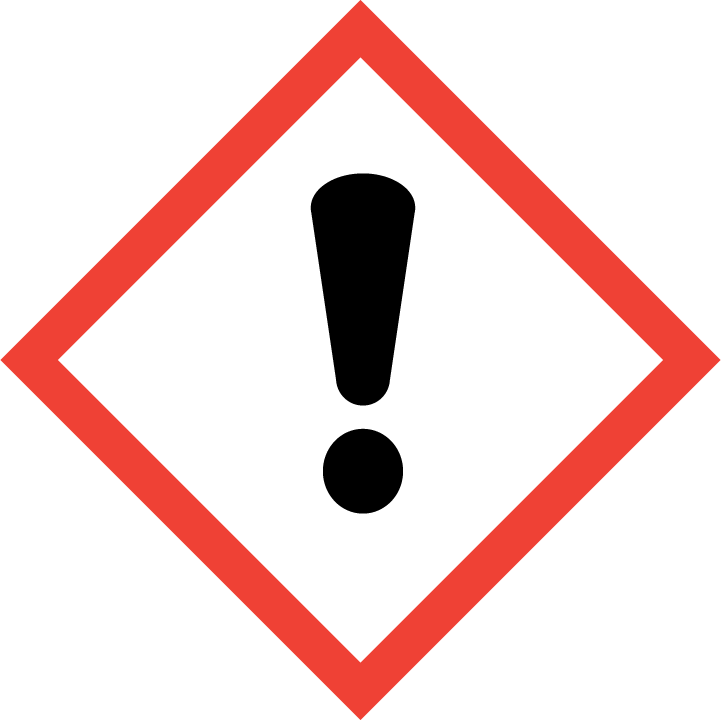
- Signal Words
- None
- Hazard Statement(s)
- H315±H320: Causes skin and eye irritation
- Precautionary Statement(s)
- P280: Wear prorective gloves
- H302: Harmful if swallowed H315: Causes skin irritation.
- H319: Causes serious eye irritation.
- H320: Causes eye irritation
Primary route(s) of entry
- Health Effects:
- Skin and eye contact, ingestion and inhalation
- Hazard Rating: Health: 2; Fire: 0; Reactivity: 0
- (0=least, 1=Slight, 2=Moderate, 3=High, 4=Extreme)
- Potential health effects
- Primary Routes of entry: Skin and eye contact, ingestion and inhalation.
- Signs and Symptoms of Overexposure: ND
Human Health
- Inhalation
- Harmful if inhaled
- Ingestion
- Harmful if swallowed
- Eyes
- May cause irritation
- Skin
- May cause irritation
Environment
- Potential environmental effects
- See Ecological Information (Section 12)
- Dispose of contents/container in accordance with local regional/national/international regulations.
3. Composition / Information on Ingredients
| Name | CAS No. | Content (w/w) | Classification |
|---|---|---|---|
| Gadolinium Acetate Tetrahydrate | 15280-53-2 | >10 | Not Available |
4. First Aid Measures
- Ingestion
- Immediately call a doctor. No information on the physiological effects of ingestion. Harmful if swallowed
- Inhalation
- Supply fresh air. If required, provide artificial respiration. Keep patient warm. Consult doctor if symptoms persist. In case of unconsciousness place patient stably in side position for transportation.
- Skin Contact
- Immediately wash with water and soap and rinse thoroughly. Generally the product does not irritate the skin.
- Eye Contact
- Rinse opened eye for several minutes under running water. If symptoms persist, consult a doctor.
- Other Information
- Note to physician
- Treatment: ND
- Medical Conditions generally aggravated by Exposure: ND
5. Firefighting Measures
Suitable extinguishing equipment
- Fire
- Carbon dioxide, dry powder or foam
- HAZCHEM
- No further relevant information available
Special protective equipment and precautions for fire fighters
If involved in a fire, fire fighters should be equipped with a NIOSH approved positive pressure self-contained breathing apparatus and full protective clothing.
6. Accidental Release Measures
- Personal precautions, protective equipment and emergency procedures
- If possible, handle the material in an efficient fume hood.
- Environmental precautions
- Dilute with plenty of water. Avoid discharge of spilled substance into river
- Methods and materials for containment and clean up
- Small spills can be mixed with vermiculite or sodium carbonate and swept up, the safety recommended container is glass. Avoid discharge of spilled substance into river.
- Waste Disposal Methods: Dispose of waste according to Federal, State and Local Regulations.
7. Handling and Storage
- Precautions for safe handling
- Avoid direct sunlight and heat. Store in sealed glass container.
- Conditions for safe storage
- Room Temperature
- Storage Pressure: NA
8. Exposure Controls / Personal Protection
Exposure Standards
- Engineering controls
- Ventilation required: If in form of fine mist and ventilation is not available a respirator should be worn.
Personal protective equipment
- Eye and face protection
- Always wear approved safety glasses when handling a chemical substance in the laboratory
- Skin protection
- Wear appropriate chemical resistant protective clothing. Generally the product does not irritate the skin.
- Body protection
- Wear appropriate chemical resistant gloves
- Respiratory protection
- If possible, handle the material in an efficient fume hood. If in form of fine mist and ventilation is not available a respirator should be worn.
9. Physical and Chemical Properties
General information
- Appearance
- Liquid, colourless or slightly yellow
- Odour
- Characteristic
- pH
- No information available
- Vapour Pressure
- No information available
- Density
- No information available
- Boiling Point
- No information available
- Melting Point
- No information available
- Solubility
- Soluable in water
- Specific Gravity of Density
- No information available
- Flash Point
- No information available
- Flammable (Explosive) Limits
- No information available
- Ignition Temperature
- No information available
- Formula
- No information available
10. Stability and Reactivity
- Reactivity
- No information available
- Chemical stability
- Stable under normal conditions
- Possibility of hazardous reactions
- Carbon dioxide, carbon monoxide, organic vapours, and metal oxides and
- carbonates
- Conditions to avoid
- Sunlight and heat
- Incompatible materials
- Oxidizing agents and active metals.
11. Toxicological Information
- Acute effects
- No information available
- Eye contact
- No information available
- Skin contact
- No information available
- Ingestion
- No information available
- Inhalation
- No information available
- Toxicity and irritation
- The product is not subject to classification according to internally approved calculation methods for preparations:
- When used and handled according to specifications, the product does not have any harmful effects according to our experience and the information provided to us.
12. Ecological Information
- Ecotoxicity
- No further relevant information available.
- Persistence and degradability
- No further relevant information available.
- Bioaccumulative potential
- No further relevant information available.
- Other adverse effects
- No further relevant information available.
13. Disposal Considerations
General information
Federal, State and local laws governing disposal of materials can differ. Ensure proper disposal compliance with proper authorities before disposal.
14. Transport Information
ADG label required
- HAZCHEM
- No further relevant information available
- UN Number
- Not regulated
- Proper shipping name
- No further relevant information available.
- Transport hazard class
- No further relevant information available.
- Packing group
- No further relevant information available.
- Environmental hazard
- No further relevant information available.
- Special precautions for users
- No further relevant information available.
- Additional information
- No further relevant information available.
15. Regulatory Information
- Poisons Schedule Number
- No further relevant information available.
- Other Information
- No further relevant information available.
16. Other Information
- SDS preparation date
- 2 March 2026
- Comments
- This information is based on our present knowledge. However, this shall not constitute a guarantee for any specific product features and shall not establish a legally valid contractual relationship.This Safety Data Sheet (SDS) has been prepared in compliance with the Preparation of Safety Data Sheets for Hazardous Chemicals Code of Practice February 2016. It is the user's responsibility to determine the suitability of this information for adoption of necessary safety precautions. The information published in this SDS has been compiled from the publications listed in Section 16: to the best of our ability and knowledge these publications are considered accurate. We reserve the right to revise Safety Data Sheets as new information becomes available. Copies may be made for non-profit use.