
Safety Data Sheets / Sodium Hydroxide 2N Solution
Safety Data Sheet
Sodium Hydroxide 2N Solution
1. Identification
Product Identifiers
- Product Name
- Sodium Hydroxide 2N Solution
- Other Names
- N/A
- Product Number(s)
- C201
- CAS Number
- 1310-73-2
Recommended use of the chemical and restriction on use
Laboratory chemicals. Common caustic solution
Company Details
ProSciTech Pty Ltd
11 Carlton Street
KIRWAN QLD 4817
Australia
(07) 4773 9444
pst@proscitech.com
proscitech.com.au
11 Carlton Street
KIRWAN QLD 4817
Australia
(07) 4773 9444
pst@proscitech.com
proscitech.com.au
Emergency Contact Details
ProSciTech Pty Ltd
11 Carlton Street
KIRWAN QLD 4817
Australia
(07) 4773 9444
pst@proscitech.com
proscitech.com.au
11 Carlton Street
KIRWAN QLD 4817
Australia
(07) 4773 9444
pst@proscitech.com
proscitech.com.au
2. Hazards Identification
Classification of the substance or mixture
Skin corrosion category 1A
Label Elements
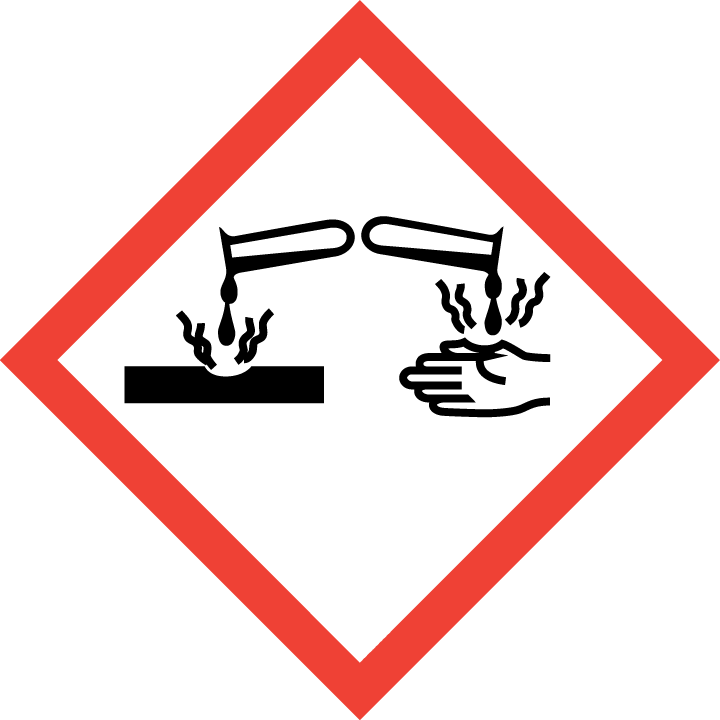
- Signal Words
- None
- Hazard Statement(s)
- H314: Causes severe skin burns and eye damage
- Precautionary Statement(s)
- P260: Do not breather dust/fume/gas/mist/vapours/spray.
- P264: Wash with soap and water thoroughly after handling.
- P280: Wear face protection. Specify type of equipment.
- P301±P330±P331: IF SWALLOWED: Rinse mouth. Do NOT induce vomiting.
- P303±P361±P353 IF ON SKIN (OR HAIR): Remove/Take off immediately all contaminated clothing. Rinse skin with water/shower.
- P363: Wash contaminated clothing before reuse.
- P304±P340: IF INHALED: Remove victim to fresh air and keep at rest in a position comfortable for breathing.
- P310: Immediately call a POISON CENTRE or doctor/physician.
- P305±P351±P338: IF IN EYES: Rinse cautiously with water for several minutes. Remove contact lenses, if present and easy to do so. Continue rinsing.
- P405: Store locked up. P501: Dispose of contents/container in accordance with local, state and federal regulations
- S45 In case of accident or if you feel unwell, seek medical advice immediately (show the label where possible).
Primary route(s) of entry
Inhalation, ingestion, skin and/or eye contact.
Human Health
- Inhalation
- Irritation.
- Ingestion
- Irritation/corrosive; causes a burning sensation
- Eyes
- Irritation/corrosive; causes a burning sensation
- Skin
- Irritation/corrosive; causes a burning sensation
Environment
No.
3. Composition / Information on Ingredients
| Name | CAS No. | Content (w/w) | Classification |
|---|---|---|---|
| Sodium Hydroxide | 1310-73-2 | 2.5-10% | Skin corrosion category 1A |
| Non-hazardous materials | - | 2.5-100% | - |
4. First Aid Measures
- Ingestion
- DO NOT induce vomiting. Have conscious person drink several glasses of water or milk. Seek immediate medical attention.SERIOUS INGESTION: DO NOT induce vomiting. Examine the lips and mouth to ascertain whether the tissues are damaged, a possible indication that the toxic material was ingested; the absence of such signs, however, is not conclusive. Loosen tight clothing such as a collar, tie, belt or waistband. If the victim is not breathing, perform mouth-to-mouth resuscitation. Seek medical attention.
- Inhalation
- Allow the victim to rest in a well ventilated area. Seek immediate medical attention.
- SERIOUS INHALATION: Evacuate the victim to a safe area as soon as possible. Loosen tight clothing such as a collar, tie, belt or waistband. if breathing is difficult, administer oxygen. If the victim is not breathing, perform mouth-to-mouth resuscitation. WARNING: It may be dangerous to the person providing aid to give mouth-to-mouth resuscitation when the inhaled material is toxic, infectious or corrosive. Seek immediate medical attention.
- Skin Contact
- If the chemical got onto the clothed portion of the body, remove the contaminated clothes as quickly as possible, protecting your own hands and body. Place the victim under a deluge shower. If the chemical touches the victim's exposed skin such as the hands. Neutralize exposed skin with a dilute solution of boric acid or acetic acid. Gently and thoroughly wash the contaminated skin with running water and non-abrasive soap. Be particularly careful to clean folds, crevices, creases and groin. COLD water may be used. If irritation persists, seek medical attention. Wash contaminated clothing before reusing.
- SERIOUS SKIN CONTACT: Wash with a disinfectant soap and cover the contaminated skin with an anti-bacterial cream. Seek medical attention.
- Eye Contact
- Check for and remove any contact lenses. IMMEDIATELY flush eyes with running water for at least 15 minutes, keeping eyelids open. Rinse with a dilute solution of boric acid. Finish by rinsing thoroughly with running water to avoid a possible infection. COLD water may be used.
- Other Information
- Liquid or spray mist may produce tissue damage particularly on mucous membranes of eyes, mouth and respiratory tract. Skin contact may produce burns. Inhalation of the spray mist may produce severe irritation of respiratory tract, characterised by coughing, choking, or shortness of breath. This product may irritate eyes and skin upon contact. Inflammation of the eye is characterised by redness, watering, and itching. Skin inflammation is characterised by itching, scaling, reddening, or, occasionally, blistering.
5. Firefighting Measures
Suitable extinguishing equipment
- Fire
- CO₂, powder or water spray
- Large Fire
- Fight larger fires with water spray or alcohol resistant foam.
- HAZCHEM
- 2R
Special protective equipment and precautions for fire fighters
No special measures required.
6. Accidental Release Measures
- Personal precautions, protective equipment and emergency procedures
- Ensure adequate ventilation, remove unnecessary personnel from area. Wear appropriate protective clothing
- Environmental precautions
- Do not let enter drains unless heavily diluted.
- Methods and materials for containment and clean up
- SMALL SPILL:
- Dilute with water and mop up, or absorb with an inert DRY liquid-binding material (sand, diatomite, acid binders, universal binders, sawdust). Use neutralizing agent. Reduce the risk of producing vapours/mist and place in an appropriate waste disposal container. If necessary: Neutralize the residue with a dilute solution of acetic acid.
- LARGE SPILL:
- Corrosive liquid. Stop leak if without risk. Absorb with DRY earth, sand or other non-combustible material. DO NOT get water inside container. DO NOT touch spilled material. Use water spray curtain to divert vapour drift. Prevent entry into sewers, basements or confined areas; dike if needed. Call for assistance on disposal. Neutralize the residue with a dilute solution of acetic acid.
7. Handling and Storage
- Precautions for safe handling
- Keep container dry. DO NOT ingest. Do not breathe gas, fumes, vapour or spray. Never add water to this product. In case of insufficient ventilation wear suitable respiratory equipment. If ingested, seek medical advice immediately and show the container or the label. Avoid contact with skin and eyes. Keep away from incompatibles as moisture.
- Conditions for safe storage
- Alkalis may be stored in heavy duty gauge steel containers. Corrosive materials should be stored in a separate safety storage cabinet or room. Keep container tightly sealed. Store in a cool, dry location. Keep away from foodstuffs, beverages and feed.
8. Exposure Controls / Personal Protection
Exposure Standards
| Material | TWA ppm | TWA mg/m³ | STEL ppm | STEL mg/m³ |
|---|---|---|---|---|
| Sodium hydroxide | - | 2 (PEAK Limitation) | - | - |
- Engineering controls
- Provide exhaust ventilation or other engineering controls to keep the airborne concentrations of vapours below their respective threshold limit value. Ensure that eyewash station and safety shower is proximal to the work-station location.
Personal protective equipment
- Eye and face protection
- Tightly sealed goggles
- Skin protection
- Protective gloves. The glove material has to be impermeable and resistant to the product/ the substance/ the preparation. Due to missing tests no recommendation to the glove material can be given for the product/ the preparation/ the chemical mixture. Selection of the glove material on consideration of the penetration times, rates of diffusion and the degradation.Material of gloves:The selection of the suitable gloves does not only depend on the material, but also on further marks of quality and varies from manufacturer to manufacturer. As the product is a preparation of several substances, the resistance of the glove material cannot be calculated in advance and has therefore to be checked prior to the application.Penetration time of glove material:The exact break through time has to be found out by the manufacturer of the protective gloves and has to be observed.
- Body protection
- Wear suitable clothing to prevent contact with skin. Full suit and boots.
- Respiratory protection
- In case of brief exposure or low pollution use respiratory filter device. In case of intensive or longer exposure use self-contained respiratory protective device.Wear appropriate respirator when ventilation is inadequate. Be sure to use a MSHA/NIOSH approved respirator or equivalent.
9. Physical and Chemical Properties
General information
- Appearance
- Clear Colourless Liquid.
- Odour
- Odourless.
- pH
- (1% SOLN/WATER): Basic
- Vapour Pressure
- 23 hPa at 20°C
- Density
- 0.62 (Air = 1) based on data for: Water
- Boiling Point
- 100°C
- Melting Point
- Not available.
- Solubility
- Fully miscible
- Specific Gravity of Density
- 1.0904g/cm³ at 20°C.
- Flash Point
- Not available.
- Flammable (Explosive) Limits
- Product does not present an explosion hazard.
- Ignition Temperature
- Product is not self igniting.
- Formula
- Not available.
10. Stability and Reactivity
- Reactivity
- No further relevant information available.
- Chemical stability
- Stable under normal conditions of use.
- Possibility of hazardous reactions
- Will not occur. . No dangerous decomposition products known.
- Conditions to avoid
- No further relevant information available.
- Incompatible materials
- Very slightly too slightly corrosive in presence of glass.
11. Toxicological Information
- Acute effects
- No further relevant information available.
- Eye contact
- This product may irritate eyes and skin upon contact. Inflammation of the eye is characterised by redness, watering, and itching. Repeated or prolonged contact with spray mist may produce chronic eye irritation.
- Skin contact
- Skin contact may produce burns. Skin inflammation is characterised by itching, scaling, reddening, or, occasionally, blistering. Repeated or prolonged contact with spray mist may produce severe skin irritation.
- Ingestion
- The substance is toxic to lungs, mucous membranes. Repeated or prolonged exposure to the substance can produce target organs damage.
- Inhalation
- Inhalation of the spray mist may produce severe irritation of respiratory tract, characterised by coughing, choking, or shortness of breath. Repeated or prolonged exposure to spray mist may produce respiratory tract irritation leading to frequent attacks of bronchial infection.
- Toxicity and irritation
- Oral LD50 2000 mg/kg (rat)
12. Ecological Information
- Ecotoxicity
- No further relevant information available
- Persistence and degradability
- May produce some metallic oxides during biodegradation. The products of degradation are less toxic than the product itself.
- Bioaccumulative potential
- No further relevant information available
- Other adverse effects
- Water hazard class 1 (German Regulation) (Self-assessment): slightly hazardous for water. Do not allow undiluted product or large quantities of it to reach ground water, water course or sewage system. Must not reach sewage water or drainage ditch undiluted or un-neutralised.
13. Disposal Considerations
General information
Must not be disposed together with household garbage. Do not allow product to reach sewage system. Dispose of the material and container in accordance with local, state and federal regulations. If necessary to clean the container - do so with water and cleansing agents. Recycle to process, if possible. Consult your local or regional authorities.
14. Transport Information
ADG label required
- HAZCHEM
- 2R
- UN Number
- UN1824
- Proper shipping name
- Sodium Hydroxide solution
- Transport hazard class
- 8
- Packing group
- PG II
- Environmental hazard
- No.
- Special precautions for users
- Warning: Corrosive substances.
- Additional information
- No further relevant information available.
15. Regulatory Information
- Poisons Schedule Number
- S6
- Other Information
- No further information available.
16. Other Information
- SDS preparation date
- 27 February 2026
- Comments
- This information is based on our present knowledge. However, this shall not constitute a guarantee for any specific product features and shall not establish a legally valid contractual relationship.
- References
- List of Publications referenced when creating this SDS;
- Dangerous Goods - Initial Emergency Response Guide (SAA/SNZ HB76:1997).
- IATA Dangerous Goods Regulations.
- Adopted National Exposure Standards for Atmospheric Contaminants in the Occupational Environment [NOHSC:1003(1995)].
- Australia Standard for the Uniform Scheduling of Drugs and Poisons [SUSPD] (Australian Government Department of Health and Ageing).