
Safety Data Sheets / Ruthenium Red
Safety Data Sheet
Ruthenium Red
1. Identification
Product Identifiers
- Product Name
- Ruthenium Red
- Other Names
- Ruthenium (111) Chloride Oxide Ammoniated Hydrate
- Product Number(s)
- C075
- CAS Number
- 12790-48-6
Recommended use of the chemical and restriction on use
Laboratory use - biological stain
Company Details
ProSciTech Pty Ltd
11 Carlton Street
KIRWAN QLD 4817
Australia
(07) 4773 9444
pst@proscitech.com
proscitech.com.au
11 Carlton Street
KIRWAN QLD 4817
Australia
(07) 4773 9444
pst@proscitech.com
proscitech.com.au
Emergency Contact Details
ProSciTech Pty Ltd
11 Carlton Street
KIRWAN QLD 4817
Australia
(07) 4773 9444
pst@proscitech.com
proscitech.com.au
11 Carlton Street
KIRWAN QLD 4817
Australia
(07) 4773 9444
pst@proscitech.com
proscitech.com.au
2. Hazards Identification
Classification of the substance or mixture
- GHS09 - Irritant Serious eye irritation 2B
- H320: Causes eye irritation. Skin corrosion/irritation 3
- H316: Causes mild skin irritation. Acute tox., inh. 5
- H333: May be harmful if inhaled. Acute tox., dermal 5
- H313: May be harmful in contact with skin. Acute tox., oral 4
- H302: Harmful if swallowed.
Label Elements
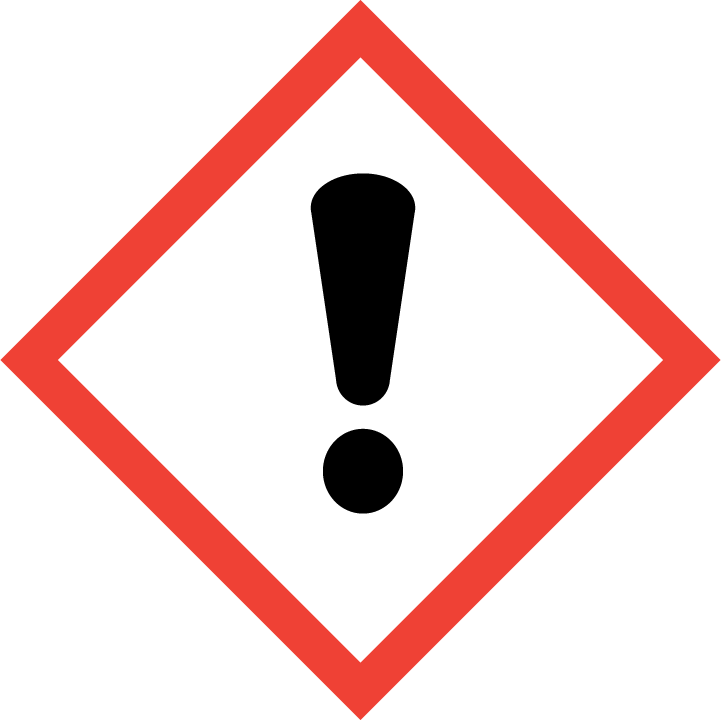
- Signal Words
- Warning
- Hazard Statement(s)
- H302 Harmful if swallowed.
- H313 May be harmful in contact with skin.
- H316 Causes mild skin irritation.
- H320 Causes eye irritation.
- H333 May be harmful if inhaled.
- Precautionary Statement(s)
- P201 Obtain special instructions before use.
- P280 Wear protective gloves/protective clothing/eye protection/face protection.
- P308±313 IF exposed or concerned: Get medical advice/attention.
Primary route(s) of entry
- Inhalation, skin, and ingestion.
- Immediate effects: May cause irritation of the respiratory system. Maintain housekeeping and personal hygiene to minimise exposure and prevent sensitisation.Signs and Symptoms of Overexposure: To the best of our knowledge, the chemical, physical and toxicological properties have not been thoroughly investigated.Chronic Exposure: May cause irritation of the respiratory system.
Human Health
- Inhalation
- Irritation
- Ingestion
- May cause irritation, nausea, and diarrhea. Poison is unlikely on single exposure.
- Eyes
- Irritation.
- Skin
- Irritation and difficulty breathing.
Environment
No further relevant information available.
3. Composition / Information on Ingredients
| Name | CAS No. | Content (w/w) | Classification |
|---|---|---|---|
| Ruthenium (111) Chloride Oxide Ammoniated Hydrat | 12790-48-6 | Not established | - |
4. First Aid Measures
- Ingestion
- Rinse mouth. Seek immediate medical attention. Do not induce vomiting unless directed to do so by medical personnel.
- Inhalation
- Remove to fresh air. If discomfort occurs or persists, contact physician. Remove contaminated clothing and shoes and wash before reuse.
- Skin Contact
- Flush for 15 minutes with soap and plenty of water. If discomfort occurs or persists, contact a physician.
- Eye Contact
- Flush area for 15 minutes with plenty of water and wash with soap and water. Remove contact lenses if present and easy to do. If discomfort occurs or persists, contact a physician.
- Other Information
- Consult a physician. Show this safety data sheet to the doctor in attendance.Medical Conditions Generally Aggravated by Exposure: May cause irritation of the respiratory system. Maintain housekeeping and personal hygiene to minimise exposure and prevent sensitisation.
5. Firefighting Measures
Suitable extinguishing equipment
- Fire
- Water fog, dry chemical, CO₂, or "alcohol resistant" foam.
- HAZCHEM
- Not available.
Special protective equipment and precautions for fire fighters
- Fire fighters should wear self-contained breathing apparatus and full protective gear.
- Unusual Fire and Explosion Hazards: Can decompose to emit toxic ammonia and chlorine vapours. Hazardous combustion products: Carbon monoxide, carbon dioxide, nitrogen dioxide, ammonia, hydrogen chloride gas, ruthenium oxide.
6. Accidental Release Measures
- Personal precautions, protective equipment and emergency procedures
- Keep unnecessary personnel away. Keep people away from and upwind of spill/leak. Eliminate all ignition sources (no smoking, flares, sparks, or flames in immediate area). Wear appropriate respiratory protective equipment and clothing during clean-up. Avoid breathing dust. Ventilate area if easy to do so, Contact local authorities if significant spillages cannot be contained.
- Environmental precautions
- No special measures required.
- Methods and materials for containment and clean up
- Large spills: Contain actively spilling material if safe and easy to do so. Do not let product enter drains.Small spills: Wet brush and collect to waste receptacles.Contain spillage and then collect with an electrically-protected vacuum cleaner or by wet brushing and place in container for disposal according to local regulations
7. Handling and Storage
- Precautions for safe handling
- Do not handle until all safety precautions have been read and understood. Keep containers closed. Ensure adequate ventilation. Avoid breathing dust. Avoid contact with eyes, skin and clothing. Avoid prolonged exposure. Wear appropriate personal protective equipment and wash thoroughly after handling. Keep away from ignition sources.
- Conditions for safe storage
- Store in cool, dry area in a tightly-closed product container away from sources of ignition or flame. Containers which are opened must be carefully resealed and kept upright to prevent leakage. Incompatibilities: Store away from strong acids or oxidising agents.
8. Exposure Controls / Personal Protection
Exposure Standards
- Engineering controls
- Ventilation required: Local exhaust required in handling area. Mechanical: desirable to ensure concentration of material below TLV/TWA levels. Closed ventilation system - dust (laboratory fume hood).
Personal protective equipment
- Eye and face protection
- Wear safety glasses with side shields or goggles or face shield.
- Skin protection
- Wear chemical-resistant gloves. Observe good chemical hygiene practices. Do not smoke or eat while using product. Wash hands or exposed skin after using the product.
- Body protection
- Protective work clothing that covers skin and prevents exposures.
- Respiratory protection
- Utilise organic vapour respirator if airborne levels are not maintained or if ventilation is inadequate. Where risk assessment shows air-purifying respirators are appropriate use a full-face respirator with multi-purpose combination (US) or type ABEK (EN 14387) respirator cartridges as a backup to engineering controls. If the respirator is the sole means of protection, use a full-face supplied air respirator. Use respirators and components tested and approved under appropriate government standards such as NIOSH (US) or CEN(EU).
9. Physical and Chemical Properties
General information
- Appearance
- Dark brown powder
- Odour
- Ammonia-like (No Data)
- pH
- Not applicable.
- Vapour Pressure
- Not available.
- Density
- Not available.
- Boiling Point
- Not available.
- Melting Point
- Not available.
- Solubility
- Soluble in water.
- Specific Gravity of Density
- Not available.
- Flash Point
- Not available.
- Flammable (Explosive) Limits
- Not available.
- Ignition Temperature
- Not available.
- Formula
- Not available.
10. Stability and Reactivity
- Reactivity
- No further relevant information available.
- Chemical stability
- Stable under normal conditions of use.
- Possibility of hazardous reactions
- Hazardous Decomposition Products: Ammonia and chlorine vapour.
- Hazardous Polymerization: Does not occur.
- Conditions to avoid
- Open flame, high temperatures, and ignition sources.
- Incompatible materials
- No further relevant information available.
11. Toxicological Information
- Acute effects
- No further relevant information available.
- Eye contact
- No further relevant information available.
- Skin contact
- No further relevant information available.
- Ingestion
- No further relevant information available.
- Inhalation
- No further relevant information available.
- Toxicity and irritation
- No further relevant information available.
12. Ecological Information
- Ecotoxicity
- No further relevant information available.
- Persistence and degradability
- No further relevant information available.
- Bioaccumulative potential
- No further relevant information available.
- Other adverse effects
- No further relevant information available.
13. Disposal Considerations
General information
Dispose of waste according to Federal, State and Local Regulations. Federal, State and local laws governing disposal of materials can differ. Ensure proper disposal compliance with proper authorities before disposal.
14. Transport Information
ADG label required
- HAZCHEM
- Not available.
- UN Number
- None.
- Proper shipping name
- Not regulated.
- Transport hazard class
- 0
- Packing group
- None.
- Environmental hazard
- No information available.
- Special precautions for users
- No information available.
- Additional information
- No information available.
15. Regulatory Information
- Poisons Schedule Number
- No information available.
- Other Information
- No further relevant information available.
16. Other Information
- SDS preparation date
- 6 October 2021
- Comments
- This information is based on our present knowledge. However, this shall not constitute a guarantee for any specific product features and shall not establish a legally valid contractual relationship.