
Safety Data Sheets / Latex Flow Cytometry Microparticles 0.1% - 0.1µm
Safety Data Sheet
Latex Flow Cytometry Microparticles 0.1% - 0.1µm
1. Identification
Product Identifiers
- Product Name
- Latex Flow Cytometry Microparticles 0.1% - 0.1µm
- Other Names
- Polystyrene Particles, 0.1% w/v, 0.05-0.1um, 250mL
- Product Number(s)
- SL-001S
- CAS Number
- -
Recommended use of the chemical and restriction on use
- Laboratory use.
- This material is only for purpose of technical analysis and/or scientific research.
Company Details
ProSciTech Pty Ltd
11 Carlton Street
KIRWAN QLD 4817
Australia
(07) 4773 9444
pst@proscitech.com
proscitech.com.au
11 Carlton Street
KIRWAN QLD 4817
Australia
(07) 4773 9444
pst@proscitech.com
proscitech.com.au
Emergency Contact Details
ProSciTech Pty Ltd
11 Carlton Street
KIRWAN QLD 4817
Australia
(07) 4773 9444
pst@proscitech.com
proscitech.com.au
11 Carlton Street
KIRWAN QLD 4817
Australia
(07) 4773 9444
pst@proscitech.com
proscitech.com.au
2. Hazards Identification
Classification of the substance or mixture
Not classified as hazardous according to Regulation (EC) 1272/2008 (CLP/GHS) or Directive 67/548/EEC as amended. Caution: This substance has not been fully tested (EC).
Label Elements
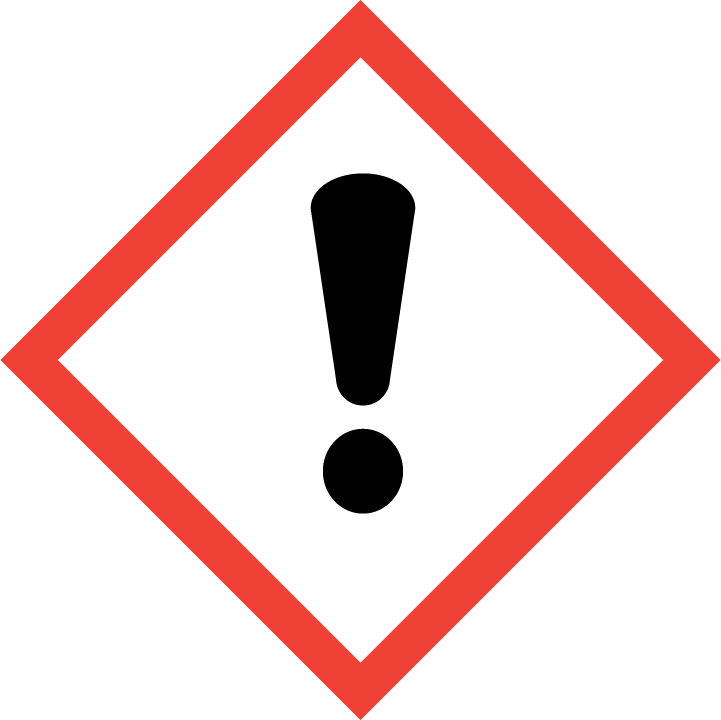
- Signal Words
- Warning
- Hazard Statement(s)
- Not available.
- Precautionary Statement(s)
- Not available.
Primary route(s) of entry
Not available.
Human Health
- Inhalation
- May be harmful if inhaled. May cause upper respiratory tract & mucous membrane irritation.
- Ingestion
- May be harmful if swallowed.
- Eyes
- May cause skin and eye irritation.
- Skin
- May cause skin and eye irritation.
Environment
May be harmful to the environment.
3. Composition / Information on Ingredients
| Name | CAS No. | Content (w/w) | Classification |
|---|---|---|---|
| Water | 7732-18-5 | 99.88% | Not hazardous |
| Polystyrene Beads | 9003-53-6 | 0.1% | Not hazardous |
| Sodium Azide | 26628-22-8 | 0.02% | Acute Tox. 2 H300 H310 H330; Aquatic Acute 1 H400; Aquatic Chronic 1 H410 |
4. First Aid Measures
- Ingestion
- Rinse mouth with water, but do not swallow mouthwash. Do not induce vomiting. Give plenty of water to drink (ONLY IN CONSCIOUS PERSONS). Refer for medical attention.
- Inhalation
- Immediate fresh air & rest. Keep under observation and if breathing becomes difficult seek immediate medical attention. Resuscitate if breathing stops.
- Skin Contact
- Remove contaminated clothes. Rinse skin with plenty of water or shower. Refer for medical attention.
- Eye Contact
- First rinse with plenty of water for at least 10 minutes (remove contact lenses if easily possible), ensure lids remain open during flushing, and then seek immediate medical attention.
- Other Information
- No further relevant information available.
5. Firefighting Measures
Suitable extinguishing equipment
- Fire
- Use foam extinguishers or water spray.
- HAZCHEM
- Not available.
Special protective equipment and precautions for fire fighters
Wear self contained breathing apparatus with full face shield operated in positive pressure mode, MSHA/NIOSH (approved or equivalent), and full protective gear.
6. Accidental Release Measures
- Personal precautions, protective equipment and emergency procedures
- Use protective equipment as detailed in section 8.
- Environmental precautions
- Not available.
- Methods and materials for containment and clean up
- Clean up spills using an absorbent, non-combustible material and gather up placing in a clean closed container for disposal. Do not wash away into sewers.
7. Handling and Storage
- Precautions for safe handling
- Read the Suppliers' technical data Sheet carefully before commissioning or using the product.
- Conditions for safe storage
- Store unopened package at ambient temperature in a well ventilated place away from heat.
8. Exposure Controls / Personal Protection
Exposure Standards
- Engineering controls
- No components above the 0.1% threshold have specific workplace control parameters assigned to our knowledge.
- Local mechanical ventilation not required as supplied, but this is also dependent on other mobile phases and analytes used. Always use a fume cupboard if handling as the dry power or where the liquid component may become airborne.
Personal protective equipment
- Eye and face protection
- Safety glasses with side-shields conforming to EN 166.
- Skin protection
- Suitable impervious gloves e.g. Nitrile or Neoprene rubber. The selected protective gloves have to conform to EN 374.
- Body protection
- Avoid contact of contents with skin, eyes, and clothing. Wash hand before breaks and immediately after handling the product.
- Respiratory protection
- If required to control exposure, use only suitable respirators and components tested and approved under appropriate government standards such as NIOSH (US) or CEN (EU).
9. Physical and Chemical Properties
General information
- Appearance
- Cloudy,white,dilute Suspension of Polystyrene Particles in water with 0.02% Sodium Azide as preservative.
- Odour
- Not available.
- pH
- Not available.
- Vapour Pressure
- Not available.
- Density
- Not available.
- Boiling Point
- 100°C / 212°F
- Melting Point
- Not available.
- Solubility
- Not available.
- Specific Gravity of Density
- Not available.
- Flash Point
- Not applicable.
- Flammable (Explosive) Limits
- Not available.
- Ignition Temperature
- Not available.
- Formula
- Not available.
10. Stability and Reactivity
- Reactivity
- Hazardous Polymerization: Will not occur.
- Chemical stability
- Stable.
- Possibility of hazardous reactions
- Monomer maybe formed if heated to high temperatures. May release toxic fumes including oxides of carbon and nitrogen.
- Conditions to avoid
- Extreme heat.
- Incompatible materials
- Strong oxidising agents, bases.
11. Toxicological Information
- Acute effects
- Caution: To the best of our knowledge, the toxicological properties of these materials have not been fully investigated.
- Eye contact
- No further relevant information available.
- Skin contact
- May cause skin irritation.
- May be harmful if absorbed through skin.
- Ingestion
- May be harmful if swallowed.
- Inhalation
- May be harmful if inhaled.
- Toxicity and irritation
- No further relevant information available.
12. Ecological Information
- Ecotoxicity
- To the best of our knowledge, the ecotoxicological properties of this mixture have not been fully investigated. However, the liquid may be harmful to the environment depending on the quantity and dilution involved.
- Persistence and degradability
- No further relevant information available.
- Bioaccumulative potential
- No further relevant information available.
- Other adverse effects
- No further relevant information available.
13. Disposal Considerations
General information
Methods of disposal must meet all local, federal and state laws.
14. Transport Information
ADG label required
- HAZCHEM
- Not available.
- UN Number
- None
- Proper shipping name
- Not regulated.
- Transport hazard class
- 0
- Packing group
- None.
- Environmental hazard
- Yes
- Special precautions for users
- Not regulated.
- Additional information
- No information available.
15. Regulatory Information
- Poisons Schedule Number
- Not listed.
- Other Information
- No further relevant information available.
16. Other Information
- SDS preparation date
- 24 February 2026
- Comments
- This information is based on our present knowledge. However, this shall not constitute a guarantee for any specific product features and shall not establish a legally valid contractual relationship.