
Safety Data Sheets / Kovac's Reagent
Safety Data Sheet
Kovac's Reagent
1. Identification
Product Identifiers
- Product Name
- Kovac's Reagent
- Other Names
- Indole reagent
- Product Number(s)
- AKOVC-20
- CAS Number
- -
Recommended use of the chemical and restriction on use
- Laboratory use.
- Used in hospital and pathology laboratories only.
Company Details
ProSciTech Pty Ltd
11 Carlton Street
KIRWAN QLD 4817
Australia
(07) 4773 9444
pst@proscitech.com
proscitech.com.au
11 Carlton Street
KIRWAN QLD 4817
Australia
(07) 4773 9444
pst@proscitech.com
proscitech.com.au
Emergency Contact Details
ProSciTech Pty Ltd
11 Carlton Street
KIRWAN QLD 4817
Australia
(07) 4773 9444
pst@proscitech.com
proscitech.com.au
11 Carlton Street
KIRWAN QLD 4817
Australia
(07) 4773 9444
pst@proscitech.com
proscitech.com.au
2. Hazards Identification
Classification of the substance or mixture
Classified as Hazardous according to the Globally Harmonised System of Classification and Labelling of Chemicals (GHS) and Safe Work Australia criteria.
Label Elements
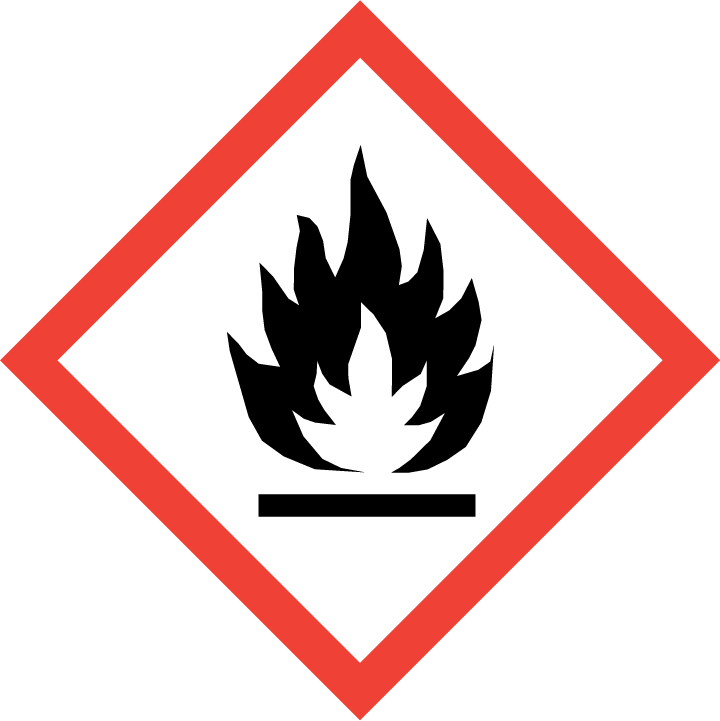
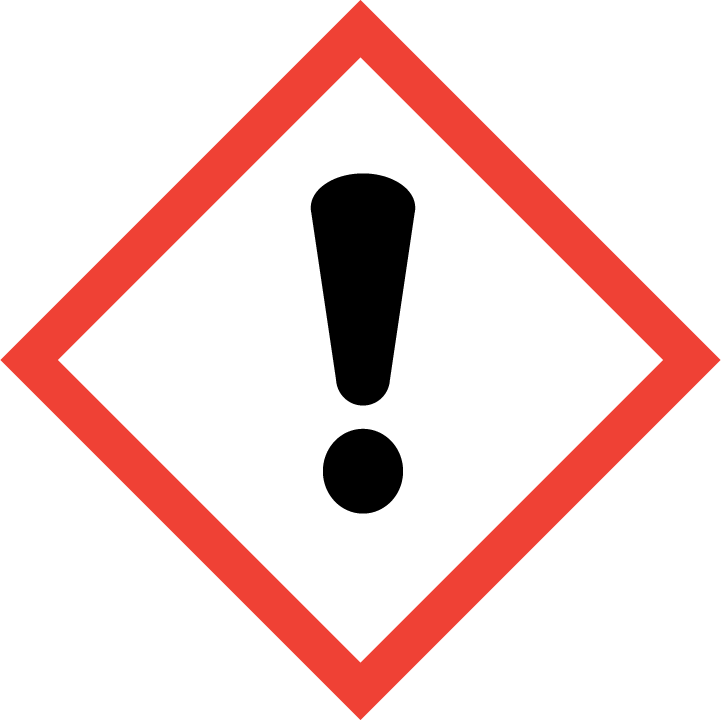
- Signal Words
- Warning
- Hazard Statement(s)
- H226 Flammable liquid and vapour.
- H302 Harmful if swallowed.
- H315 Causes skin irritation.
- H319 Causes serious eye irritation.
- H335 May cause respiratory irritation.
- Precautionary Statement(s)
- P210 Keep away from heat, hot surfaces, sparks, open flames and other ignition sources. No smoking.
- P241 Use explosion-proof electrical/ventilating/lighting/equipment.
- P261 Avoid breathing dust/fume/gas/mist/vapours/spray.
- P280 Wear protective gloves/protective clothing/eye protection/face protection.
- P240 Ground/bond container and receiving equipment.
- P242 Use only non-sparking tools.
- P243 Take precautionary measures against static discharge.
- P264 Wash hands thoroughly after handling.
- P270 Do not eat, drink or smoke when using this product.
- P271 Use only outdoors or in a well-ventilated area.
- P303±P361±P353 IF ON SKIN (or hair): Take off immediately all contaminated clothing. Rinse skin with water/shower.
- P305±P351±P338 IF IN EYES: Rinse cautiously with water for several minutes. Remove contact lenses, if present and easy to do. Continue rinsing.
- P321 Specific treatment (see on this label).
- P301±P312 IF SWALLOWED: Call a POISON CENTER/doctor if you feel unwell.
- P304±P340 IF INHALED: Remove person to fresh air and keep comfortable for breathing.
- P332±P313 If skin irritation occurs: Get medical advice/attention.
- P337±P313 If eye irritation persists: Get medical advice/attention.
- P330 Rinse mouth.
- P370±P378 In case of fire: Use for extinction: CO₂, powder or water spray.
- P362±P364 Take off contaminated clothing and wash it before reuse.
- P405 Store locked up.
- P403±P233 Store in a well-ventilated place. Keep container tightly closed.
- P403±P235 Store in a well-ventilated place. Keep cool.
- P501 Dispose of contents/container in accordance with local/regulations.
Primary route(s) of entry
Not available.
Human Health
- Inhalation
- May be harmful if inhalted. May cause respiratory irritation leading to headache, cough, dizziness incoordination and chest pains.
- Ingestion
- Harmful if swallowed. May cause irritation of mouth, throat and stomach, mucous build up and stomach pain.
- Eyes
- Causes serious eye irritation, stinging, tearing and blurred vision. May cause eye damage.
- Skin
- Causes skin irritation, itchiness and redness.
Environment
Not available.
3. Composition / Information on Ingredients
| Name | CAS No. | Content (w/w) | Classification |
|---|---|---|---|
| 3-methylbutan-1-ol | 123-51-3 | 72.5% | Flam. Liq. 3, H226; Acute Tox. 3, H301 |
| Hydrochloric acid | 7647-01-0 | 22.5% | Skin Corr. 1B, H314;STOT SE 3, H335 |
| 4-dimethylaminobenzaldehyde | 100-10-7 | 5% | Acute Tox. 3, H301 |
4. First Aid Measures
- Ingestion
- If swallowed, do not induce vomiting. Never give anything by mouth to an unconscious person. Seek immediate medical attention.
- Inhalation
- If inhaled, remove to fresh air. If not breathing, give artificial respiration. If breathing is difficult, give oxygen. Seek medical attention if breathing problems develop. Do not use mouth-to-mouth method, use an alternative method or a proper respiratory device.
- Skin Contact
- In case of skin contact, immediately remove contaminated clothing and wash affected areas with water and soap. Seek medical attention if symptoms persist.
- Eye Contact
- In case of eye contact, hold eyelids open and rinse with water for at least 15 minutes. Seek immediate medical attention.
- Other Information
- No further relevant information available.
5. Firefighting Measures
Suitable extinguishing equipment
- Fire
- Foam, dry chemical or carbon dioxide.
- HAZCHEM
- Not available.
Special protective equipment and precautions for fire fighters
Hazardous combustion products include corrosive fumes. Product is flammable. Vapours may travel considerable distances to a source of ignition where they can ignite, flashback, or explode. Closed containers may explode when exposed to extreme heat. Containers close to fire should be removed if safe to do so. Use water spray to cool fire exposed containers. When fighting a major fire wear self-contained breathing apparatus and protective equipment.
6. Accidental Release Measures
- Personal precautions, protective equipment and emergency procedures
- Wear appropriate respiratory protection and protective clothing. Evacuate all non-essential personnel from affected area. Do not breathe vapours. Ensure adequate ventilation. Extinguish all sources of ignition. Avoid sparks and open flames. No smoking.
- Environmental precautions
- In the event of a major spill, prevent spillage from entering drains or water courses.
- Methods and materials for containment and clean up
- Stop leak if safe to do so and absorb spill with sand, earth, vermiculite or some other absorbent material. Do not use sawdust. Collect the spilled material and place into a suitable container for disposal. Blanket the spill with foam or use water spray to disperse vapours. Use only non-sparking tools.
7. Handling and Storage
- Precautions for safe handling
- Use of safe work practices are recommended to avoid eye or skin contact and inhalation of vapours. Use only outdoors or in a well-ventilated area.
- Take precautionary measures against static discharge. Food, beverages and tobacco products should not be stored or consumed where this material is in use. Always wash hands before smoking, eating, drinking or using the toilet. Wash contaminated clothing and other protective equipment before storage or re-use. Provide eyewash fountains and safety showers in close proximity to points of potential exposure.
- Conditions for safe storage
- Store in a cool, dry and well ventilated area out of direct sunlight. Keep in original container tightly closed when not in use. Protect from heat, sparks, open flames and other sources of ignition. Keep away from strong oxidising agents and alkalies.
8. Exposure Controls / Personal Protection
Exposure Standards
| Material | TWA ppm | TWA mg/m³ | STEL ppm | STEL mg/m³ |
|---|---|---|---|---|
| 3-methylbutan-1-ol | 100 ppm | 361 mg/m³ | 125 ppm | 452 mg/m³ |
| Hydrochloric acid | 5 ppm | 7.5 mg/m³ | 5 ppm | 7.5 mg/m³ |
- Engineering controls
- Provide sufficient mechanical (general and/or local exhaust) ventilation to maintain exposure below the limits.
Personal protective equipment
- Eye and face protection
- Eye and face protectors for protection against splashing materials or liquids. See Australian/New Zealand Standard AS/NZS 1337 for more information.
- Skin protection
- PVC, nitrile, neoprene or rubber gloves. See Australian/New Zealand Standard AS/NZS 2161 for more information. When selecting gloves for use against certain chemicals, the degradation resistance, permeation rate and permeation breakthrough time should be considered.
- Occupational protective clothing (depending on conditions in which it has to be used, in particular as regards the period for which it is worn, which shall be determined on the basis of the seriousness of the risk, the frequency of exposure to the risk, the characteristics of the workstation of each worker and the performance of the protective clothing). See Australian/New Zealand Standard AS/NZS 4501 for more information.
- Body protection
- No information available.
- Respiratory protection
- When vapours approach the exposure standards then the use of a half-face organic vapour respirator with dust/mist filter is recommended.
- When vapours exceed the exposure standards, the use of an positive pressure demand self-contained or airline breathing apparatus is recommended. Filter capacity and respirator type depends on exposure levels. If entering spaces where the airborne concentration of a contaminant is unknown then the use of a selfcontained breathing apparatus (SCBA) with positive pressure air supply is recommended. See Australian Standards AS/NZS 1715 and 1716 for more information.
9. Physical and Chemical Properties
General information
- Appearance
- Liquid straw colour
- Odour
- Mild pleasant odour.
- pH
- Not available.
- Vapour Pressure
- at 20 °C: 33 hPa
- Density
- Not available.
- Boiling Point
- 131 °C
- Melting Point
- -117 °C
- Solubility
- Soluble in water 30.6 g/L
- Specific Gravity of Density
- Not available.
- Flash Point
- 42 °C
- Flammable (Explosive) Limits
- No information available.
- Ignition Temperature
- Not applicable.
- Formula
- Not available.
10. Stability and Reactivity
- Reactivity
- No further relevant information available.
- Chemical stability
- Stable at ambient temperature and under normal conditions of use.
- Possibility of hazardous reactions
- Hazardous polymerisation will not occur.
- Conditions to avoid
- Heat, sparks, open flames and other sources of ignition.
- Incompatible materials
- Strong oxidising agents and alkalies.
11. Toxicological Information
- Acute effects
- Repeated or prolonged skin exposure may cause dermatitis. Prolonged or repeated exposure may cause irreversible damage to health, lung damage or death.
- Eye contact
- Causes serious eye irritation, stinging, tearing and blurred vision. May cause eye damage.
- Skin contact
- Causes skin irritation, itchiness and redness.
- Ingestion
- Harmful if swallowed. May cause irritation of mouth, throat and stomach, mucous build up and stomach pain.
- Inhalation
- May be harmful if inhalted. May cause respiratory irritation leading to headache, cough, dizziness incoordination and chest pains.
- Toxicity and irritation
- LD₅₀/LC₅₀ Values Relevant for Classification:
- 123-51-3 3-methylbutan-1-ol
- Oral LD₅₀ 1300 mg/kg (rat)
- Dermal LD₅₀ 3212 mg/kg (rabbit)
- 7647-01-0 Hydrochloric acid
- Oral LD₅₀ 900 mg/kg (rabbit)
12. Ecological Information
- Ecotoxicity
- May cause long term adverse effects in the aquatic environment.
- Persistence and degradability
- No further relevant information available.
- Bioaccumulative potential
- No further relevant information available.
- Other adverse effects
- No further relevant information available.
13. Disposal Considerations
General information
- Dispose according to applicable local and state government regulations.
- Special Precautions for Landfill or Incineration:
- Please consult your state Land Waste Management Authority for more information.
14. Transport Information
ADG label required
- HAZCHEM
- Not available.
- UN Number
- UN2924
- Proper shipping name
- FLAMMABLE LIQUID, CORROSIVE, N.O.S. (PENTANOLS, 4-dimethylaminobenzaldehyde.
- Transport hazard class
- 3 F
- Packing group
- II
- Environmental hazard
- No information available.
- Special precautions for users
- EMS Number: F-E,S-C
- Hazchem Code: .3WE
- Special Provisions: 274
- Additional information
- Packagings & IBCs - Packing Instruction: P001, IBC02 Packagings & IBCs - Special Packing Provisions: No information available
- Portable Tanks & Bulk Containers - Instructions: T11 Portable Tanks & Bulk Containers - Special Provisions: TP2, TP27
15. Regulatory Information
- Poisons Schedule Number
- Poisons Schedule: 6
- Other Information
- No further relevant information available.
16. Other Information
- SDS preparation date
- 27 November 2024
- Comments
- This information is based on our present knowledge. However, this shall not constitute a guarantee for any specific product features and shall not establish a legally valid contractual relationship.