
Safety Data Sheets / Hexamethyldisilazane (HMDS)
Safety Data Sheet
Hexamethyldisilazane (HMDS)
1. Identification
Product Identifiers
- Product Name
- Hexamethyldisilazane (HMDS)
- Other Names
- HMDS
- Product Number(s)
- C108
- CAS Number
- 999-97-3
Recommended use of the chemical and restriction on use
Laboratory use.
Company Details
ProSciTech Pty Ltd
11 Carlton Street
KIRWAN QLD 4817
Australia
(07) 4773 9444
pst@proscitech.com
proscitech.com.au
11 Carlton Street
KIRWAN QLD 4817
Australia
(07) 4773 9444
pst@proscitech.com
proscitech.com.au
Emergency Contact Details
ProSciTech Pty Ltd
11 Carlton Street
KIRWAN QLD 4817
Australia
(07) 4773 9444
pst@proscitech.com
proscitech.com.au
11 Carlton Street
KIRWAN QLD 4817
Australia
(07) 4773 9444
pst@proscitech.com
proscitech.com.au
2. Hazards Identification
Classification of the substance or mixture
- GHS02 flame
- Flam. Liq. 2 H225 Highly flammable liquid and vapour.
- GHS07 Acute Tox. 4 H302 Harmful if swallowed.
- Skin Irrit. 2 H315 Causes skin irritation.
- Eye Irrit. 2 H319 Causes serious eye irritation.
- STOT SE 3 H335 May cause respiratory irritation.
- GHS06 Skull and crossbones
- Acute toxicity - oral 3 H301 Toxic if swallowed.
Label Elements
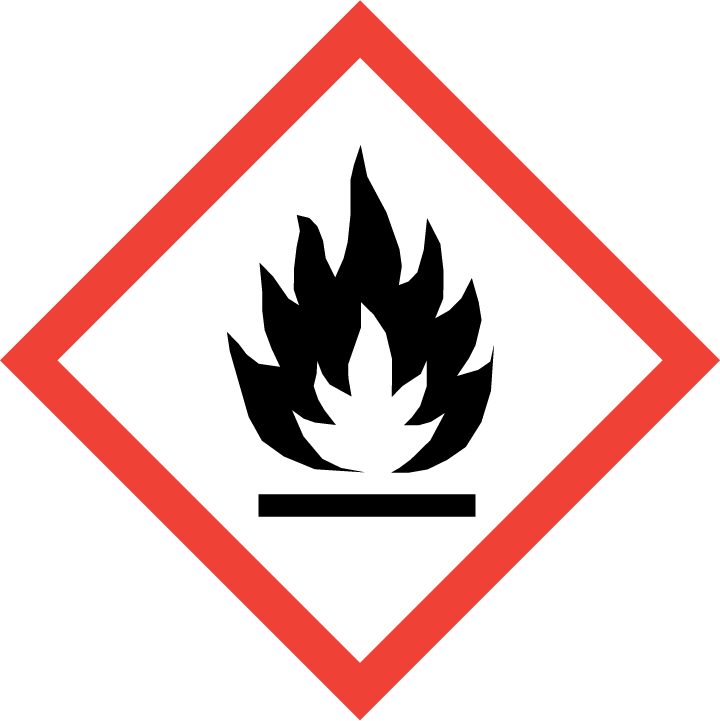
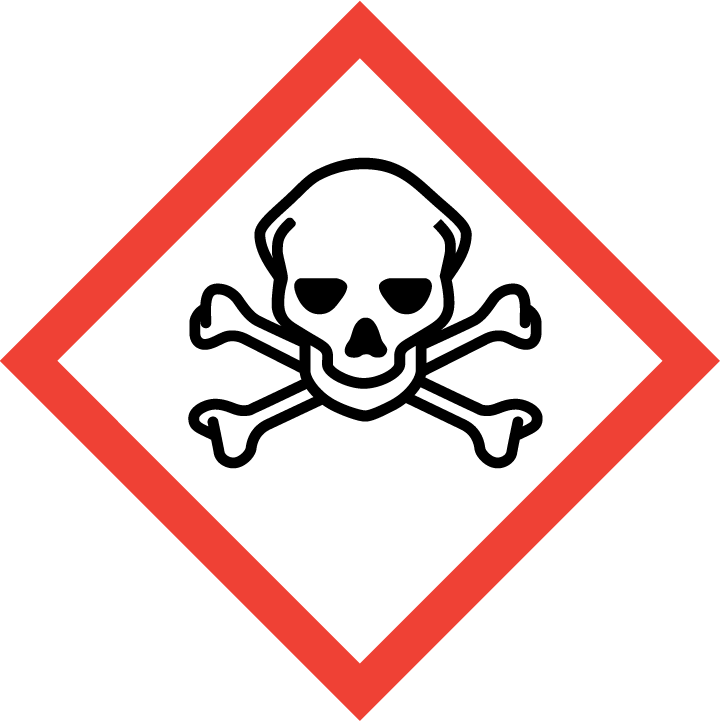
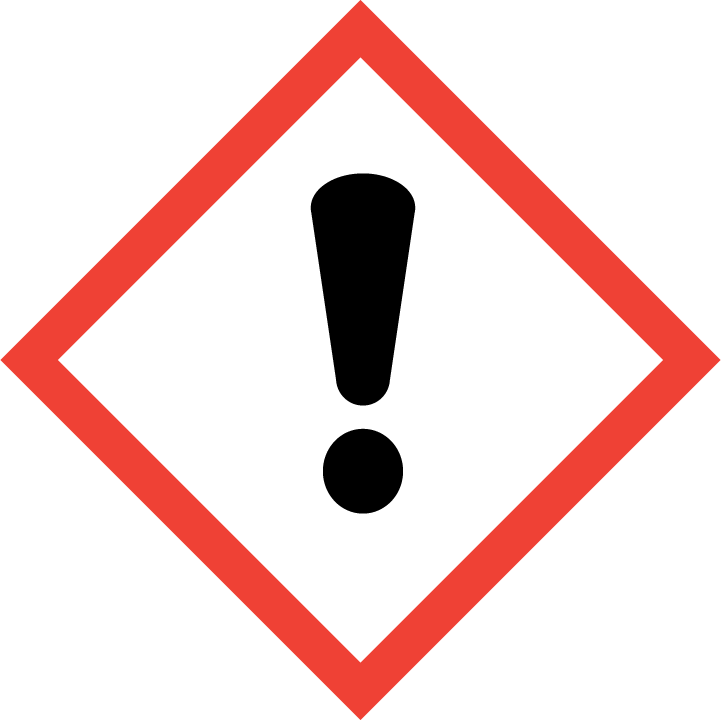
- Signal Words
- None
- Hazard Statement(s)
- Highly flammable liquid and vapour.
- Toxic if swallowed.
- Causes skin irritation.
- Causes serious eye irritation.
- May cause respiratory irritation.
- Precautionary Statement(s)
- Keep away from heat, hot surfaces, sparks, open flames and other ignition sources. No smoking.
- Ground / bond container and receiving equipment.
- Use explosion-proof [electrical/ventilating/lighting] equipment.
- Use non-sparking tools.
- Take action to prevent static discharge.
- Avoid breathing dust/fume/gas/mist/vapours/spray
- Wash thoroughly after handling.
- Do not eat, drink or smoke when using this product.
- Use only outdoors or in a well-ventilated area.
- Wear protective gloves/protective clothing/eye protection/face protection/hearing protection.
Primary route(s) of entry
Not available.
Human Health
- Inhalation
- In case of irregular breathing or respiratory arrest provide artificial respiration.
- In case of unconsciousness place patient stably in side position for transportation.
- Ingestion
- Do not induce vomiting; call for medical help immediately. Rinse mouth.
- Eyes
- Rinse opened eye for several minutes under running water. If symptoms persist, consult a doctor.
- Skin
- Immediately remove any clothing soiled by the product.
- Immediately wash with water and soap and rinse thoroughly.
Environment
- Store in a well-ventilated place. Keep container tightly closed.
- Store in a well-ventilated place. Keep cool.
- Store locked up.
- Dispose of contents/container in accordance with local/regional/national/international regulations.
3. Composition / Information on Ingredients
| Name | CAS No. | Content (w/w) | Classification |
|---|---|---|---|
| 1,1,1,3,3,3-hexamethyldisilazane | 999-97-3 | <= 100 % | Flam. Liq. 2; Acute Tox. 4;Acute Tox. 3; H225, H302, H332, H311 |
4. First Aid Measures
- Ingestion
- Do not induce vomiting; call for medical help immediately.
- Inhalation
- In case of unconsciousness place patient stably in side position for transportation.
- Skin Contact
- Immediately wash with water and soap and rinse thoroughly.
- Eye Contact
- Rinse opened eye for several minutes under running water. If symptoms persist,
- Other Information
- Immediately remove any clothing soiled by the product.
- In case of irregular breathing or respiratory arrest provide artificial respiration.
5. Firefighting Measures
Suitable extinguishing equipment
- Fire
- CO₂, sand, extinguishing powder. Do not use water.For safety reasons unsuitable extinguishing agents: Water with full jet
- HAZCHEM
- Not available.
Special protective equipment and precautions for fire fighters
No special measures required.
6. Accidental Release Measures
- Personal precautions, protective equipment and emergency procedures
- Wear protective equipment. Keep unprotected persons away.
- Environmental precautions
- Do not allow to enter sewers/ surface or ground water. Dilute with plenty of water
- Methods and materials for containment and clean up
- Absorb with liquid-binding material (sand, diatomite, acid binders, universal binders, sawdust).
- Dispose contaminated material as waste according to item 13.
- Ensure adequate ventilation.
- Do not flush with water or aqueous cleansing agents
7. Handling and Storage
- Precautions for safe handling
- Advice on safe handling
- Work under hood. Do not inhale substance/mixture. Avoid generation of vapours/aerosols.
- Advice on protection against fire and explosion
- Flash back possible over considerable distance.Container explosion may occur under fire
- conditions.Keep away from open flames, hot surfaces and sources of ignition.Take
- precautionary measures against static discharge.
- Hygiene measures
- Immediately change contaminated clothing. Apply preventive skin protection. Wash hands
- and face after working with substance.
- Conditions for safe storage
- Handle under nitrogen, protect from moisture. Store under nitrogen.
- Keep container tightly closed in a dry and well-ventilated place. Keep away from heat and
- sources of ignition. Keep locked up or in an area accessible only to qualified or authorised
- persons.
- Hydrolyzes readily.
- Storage class
- Storage class (TRGS 510): 3: Flammable liquids
8. Exposure Controls / Personal Protection
Exposure Standards
- Engineering controls
- Contains no substances with occupational exposure limit values.
Personal protective equipment
- Eye and face protection
- Avoid contact with the eyes.
- Wear tightly sealed goggles.
- Skin protection
- This recommendation applies only to the product stated in the safety data sheet, supplied by us and for the designated use. When dissolving in or mixing with other substances and under conditions deviating from those stated in EN 16523-1 please contact the supplier of CE-approved gloves (e.g. KCL GmbH, D-36124 Eichenzell, Internet: www.kcl.de).
- Full contact
- Material: Nitrile rubber
- Minimum layer thickness: 0.4 mm
- Break through time: 480 min
- Material tested:Camatril® (KCL 730 / Aldrich Z677442, Size M)
- This recommendation applies only to the product stated in the safety data sheet, supplied by us and for the designated use. When dissolving in or mixing with other substances and under conditions deviating from those stated in EN 16523-1 please contact the supplier of CE-approved gloves (e.g. KCL GmbH, D-36124 Eichenzell, Internet: www.kcl.de).
- Splash contact
- Material: Chloroprene
- Minimum layer thickness: 0.65 mm
- Break through time: 240 min
- Material tested:KCL 720 Camapren®
- Body protection
- Keep away from foodstuffs, beverages and feed.
- Immediately remove all soiled and contaminated clothing
- Flame retardant antistatic protective clothing.
- Respiratory protection
- required when vapours/aerosols are generated. Our recommendations on filtering respiratory protection are based on the following standards: DIN EN 143, DIN 14387 and other accompanying standards relating to the used respiratory protection system.
9. Physical and Chemical Properties
General information
- Appearance
- Colourless liquid
- Odour
- Ammonia-like
- pH
- 8.5
- Vapour Pressure
- 0.774 g/cm³
- Density
- 0.774 g/mL at 25 °C
- Boiling Point
- 126 °C
- Melting Point
- -82 °C
- Solubility
- insoluble
- Specific Gravity of Density
- 0.774 g/cm³
- Flash Point
- 11 °C
- Flammable (Explosive) Limits
- Not applicable.
- Product is not explosive. However, formation of explosive air/vapour mixtures are possible.
- Ignition Temperature
- 380.0 °C
- Formula
- Not available.
10. Stability and Reactivity
- Reactivity
- Vapors may form explosive mixture with air.
- Chemical stability
- The product is chemically stable under standard ambient conditions (room temperature). Hydrolyzes readily.
- Possibility of hazardous reactions
- No further relevant information available.
- Conditions to avoid
- Ammonia is formed upon contact with water or humid air. Warming.
- Incompatible materials
- No further relevant information available.
11. Toxicological Information
- Acute effects
- Acute toxicity
- LD50 Oral - Rat - male and female - 851 mg/kg
- (OECD Test Guideline 401)
- LC50 Inhalation - Rat - male and female - 6 h - 10 mg/l
- (OECD Test Guideline 403)
- LD50 Dermal - Rabbit - male and female - 547 - 589 mg/kg
- (OECD Test Guideline 402)
- Eye contact
- Irritating effect.
- Skin contact
- Irritant to skin and mucous membranes.
- Ingestion
- No further relevant information available.
- Inhalation
- No further relevant information available.
- Toxicity and irritation
- Repeated dose toxicity - Rat - male and female - inhalation (vapour)
- RTECS: JM9230000
- Material is extremely destructive to tissue of the mucous membranes and upper respiratorytract, eyes, and skin., spasm, inflammation and edema of the larynx, spasm, inflammation and edema of the bronchi, pneumonitis, pulmonary edema, burning sensation, Cough, wheezing, laryngitis, Shortness of breath, Headache, Nausea, Vomiting, To the best of our knowledge, the chemical, physical, and toxicological properties have not been thoroughly investigated.
12. Ecological Information
- Ecotoxicity
- Toxicity to fish semi-static test LC50 - Danio rerio (zebra fish) - 88 mg/l - 96 h (Directive 67/548/EEC, Annex V, C.1.)
- Toxicity to daphnia and other aquatic invertebrates static test EC50 - Daphnia magna (Water flea) - 80 mg/l - 48 h (Directive 67/548/EEC, Annex V, C.2.)
- Toxicity to algae EC50 - Desmodesmus subspicatus (green algae) - 19.00 mg/l - 72 h
- Persistence and degradability
- Biodegradability aerobic - Exposure time 28 d
- Result: 15.3 % - Not readily biodegradable.
- (Directive 67/548/EEC Annex V, C.4.E.)
- Bioaccumulative potential
- No further relevant information available.
- Other adverse effects
- No further relevant information available.
13. Disposal Considerations
General information
- Must not be disposed together with household garbage. Do not allow product to reach sewage system.
- Disposal must be made according to official regulations.
14. Transport Information
ADG label required
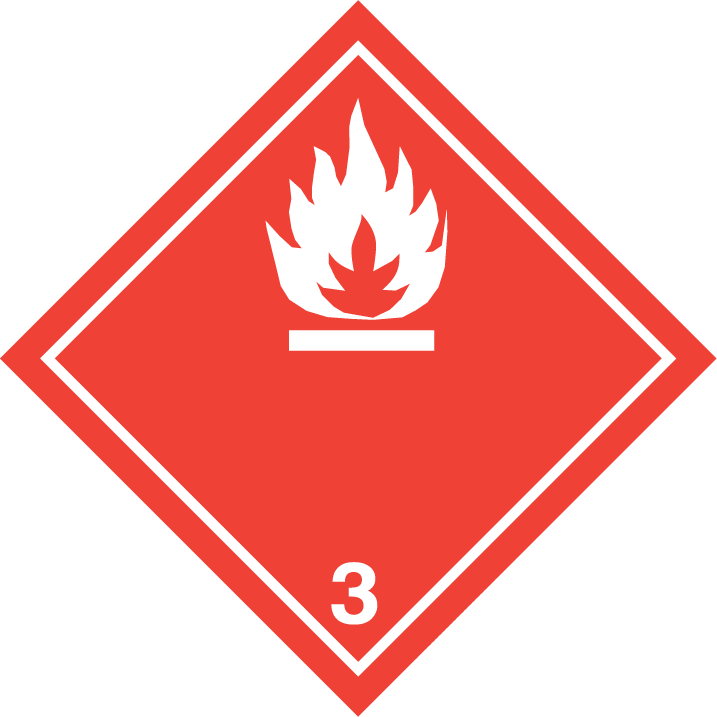
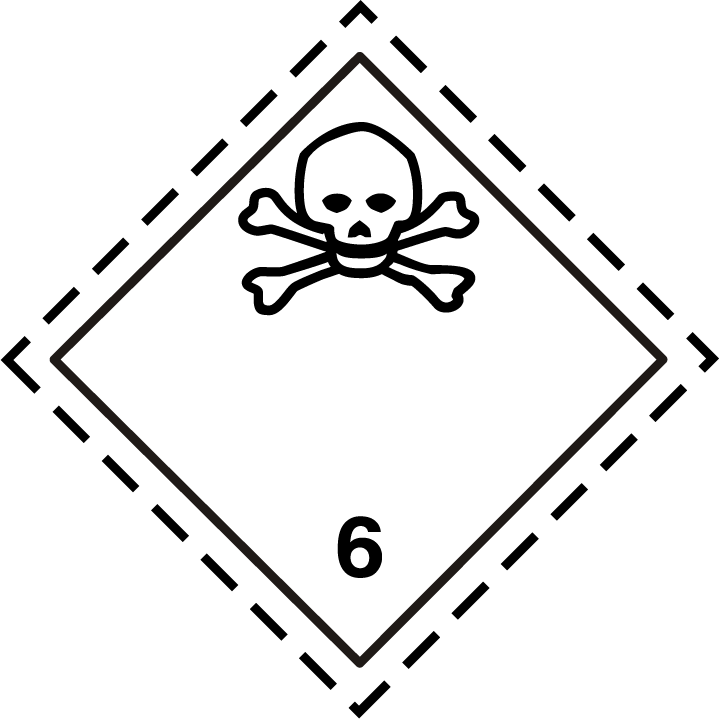
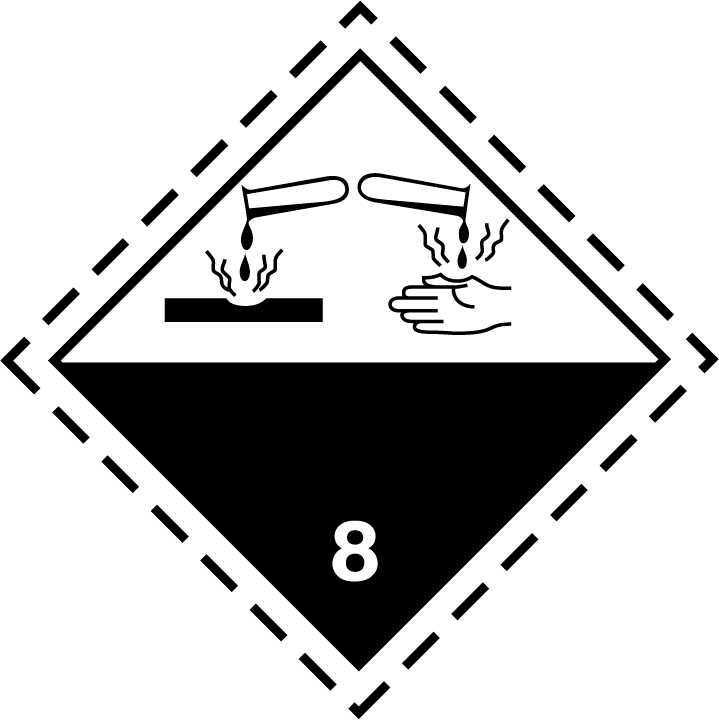
- HAZCHEM
- Not available.
- UN Number
- UN3286
- Proper shipping name
- DOT Flammable liquid, toxic, corrosive, n.o.s.
- ADR 3286 FLAMMABLE LIQUID, TOXIC, CORROSIVE, N.O.S.
- IMDG, IATA FLAMMABLE LIQUID, TOXIC, CORROSIVE, N.O.S.
- Transport hazard class
- 3 Flammable liquids
- Packing group
- PG II
- Environmental hazard
- Marine pollutant
- Special precautions for users
- Special precautions for user Warning: Flammable liquids
- Hazard identification number (Kemler code): 33
- EMS Number: F-E,S-E
- Additional information
- None
15. Regulatory Information
- Poisons Schedule Number
- Therapeutic Goods (Poisons Standard) : No poison schedule number
- Instrument allocated
- Other Information
- Sara
- Section 355 (extremely hazardous substances):
- Substance is not listed.
- Section 313 (Specific toxic chemical listings):
- Substance is not listed.
- TSCA (Toxic Substances Control Act):
- ACTIVE
- Hazardous Air Pollutants
- Substance is not listed.
- Proposition 65
- Chemicals known to cause cancer:
- Substance is not listed.
- Chemicals known to cause reproductive toxicity for females:
- Substance is not listed.
- Chemicals known to cause reproductive toxicity for males:
- Substance is not listed.
- Chemicals known to cause developmental toxicity:
- Substance is not listed.
- Carcinogenic categories
- EPA (Environmental Protection Agency)
- Substance is not listed.
- TLV (Threshold Limit Value)
- Substance is not listed.
- NIOSH-Ca (National Institute for Occupational Safety and Health)
- Substance is not listed.
16. Other Information
- SDS preparation date
- 24 February 2026
- Comments
- Abbreviations and acronyms:
- ADR: Accord relatif au transport international des marchandises dangereuses par route (European Agreement Concerning the International
- Carriage of Dangerous Goods by Road)
- IMDG: International Maritime Code for Dangerous Goods
- DOT: US Department of Transportation
- IATA: International Air Transport Association
- EINECS: European Inventory of Existing Commercial Chemical Substances
- CAS: Chemical Abstracts Service (division of the American Chemical Society)
- NFPA: National Fire Protection Association (USA)
- HMIS: Hazardous Materials Identification System (USA)
- VOC: Volatile Organic Compounds (USA, EU)
- PBT: Persistent, Bioaccumulative and Toxic
- vPvB: very Persistent and very Bioaccumulative
- NIOSH: National Institute for Occupational Safety
- OSHA: Occupational Safety Health
- TLV: Threshold Limit Value
- PEL: Permissible Exposure Limit
- REL: Recommended Exposure Limit
- Flammable liquids 2: Flammable liquids - Category 2
- Acute toxicity - oral 3: Acute toxicity - Category 3
- Skin irritation 2: Skin corrosion/irritation - Category 2
- Eye irritation 2A: Serious eye damage/eye irritation - Category 2A
- Specific target organ toxicity (single exposure) 3: Specific target organ toxicity (single exposure) - Category 3
- References
- SDS EMS (HMDS) HEXAMETHYLDISILAZANE, REAGENT 20/04/2022 https://www.emsdiasum.com/docs/technical/msds/16700.pdf
- Merk SDS Hexamethyldisilazane 18.12.2024 https://www.sigmaaldrich.com/AU/en/sds/sial/52619-userType=anonymous