
Safety Data Sheets / Ethylenediaminetetraacetic Acid (EDTA) 10%
Safety Data Sheet
Ethylenediaminetetraacetic Acid (EDTA) 10%
1. Identification
Product Identifiers
- Product Name
- Ethylenediaminetetraacetic Acid (EDTA) 10%
- Other Names
- N/A
- Product Number(s)
- EDTA-2.5L
- CAS Number
- -
Recommended use of the chemical and restriction on use
Laboratory use.
Company Details
ProSciTech Pty Ltd
11 Carlton Street
KIRWAN QLD 4817
Australia
(07) 4773 9444
pst@proscitech.com
proscitech.com.au
11 Carlton Street
KIRWAN QLD 4817
Australia
(07) 4773 9444
pst@proscitech.com
proscitech.com.au
Emergency Contact Details
ProSciTech Pty Ltd
11 Carlton Street
KIRWAN QLD 4817
Australia
(07) 4773 9444
pst@proscitech.com
proscitech.com.au
11 Carlton Street
KIRWAN QLD 4817
Australia
(07) 4773 9444
pst@proscitech.com
proscitech.com.au
2. Hazards Identification
Classification of the substance or mixture
- Eye Damage/Irritation: Category 2A
- Skin Corrosion/Irritation: Category 2
Label Elements
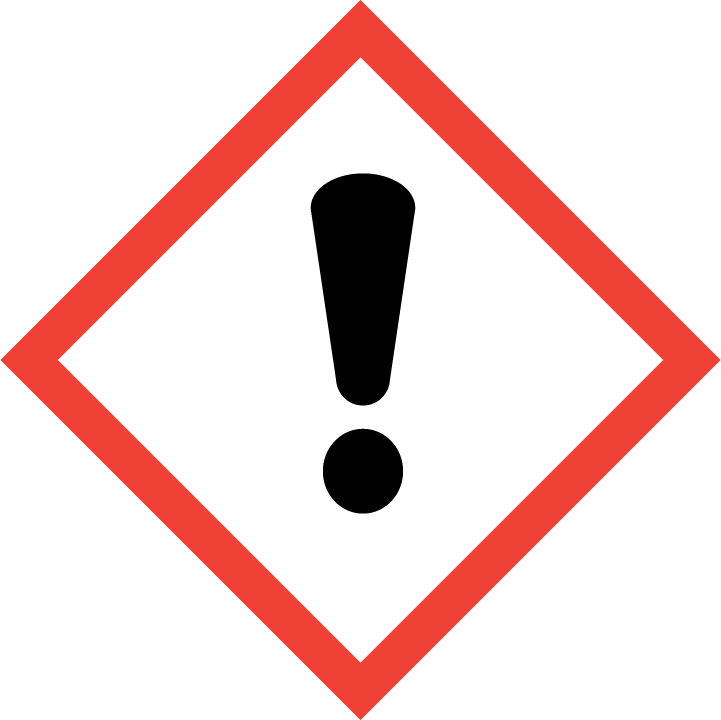
- Signal Words
- Warning
- Hazard Statement(s)
- H315 Causes skin irritation.
- H319 Causes serious eye irritation.
- Precautionary Statement(s)
- P264 Wash ... thoroughly after handling.
- P280 Wear protective gloves/protective clothing/eye protection/face protection.
Primary route(s) of entry
Not available.
Human Health
- Inhalation
- Not available.
- Ingestion
- Not available.
- Eyes
- P305±P351±P338 IF IN EYES: Rinse cautiously with water for several minutes. Remove contact lenses,
- if present and easy to do. Continue rinsing.
- P337±P313 If eye irritation persists: Get medical advice/attention.
- Skin
- P302±P352 IF ON SKIN: Wash with plenty of soap and water.
- P332±P313 If skin irritation occurs: Get medical advice/attention.
- P362 Take off contaminated clothing and wash before reuse.
Environment
P501 Dispose of contents/container to an approved waste disposal plant.
3. Composition / Information on Ingredients
| Name | CAS No. | Content (w/w) | Classification |
|---|---|---|---|
| EDTA disodium salt | 139-33-3 | 11% | - |
| Tris Hydroxymethyl Methylamine | 77-86-1 | 1.12 % | - |
| Sodium Hydroxide | 1310-73-2 | 0.67 % | - |
| Water to make a total of 100% | 7732-18-5 | - | - |
4. First Aid Measures
- Ingestion
- Rinse mouth thoroughly with water immediately, repeat until all traces of product have been removed.
- Give water to drink. DO NOT INDUCE VOMITING. Seek medical advice if symptoms persist.
- Do NOT induce vomiting. Wash out mouth with water and give plenty of water to drink. If symptoms
- develop seek medical attention.
- Inhalation
- If inhaled, remove from contaminated area to fresh air immediately. Apply artificial respiration if not
- breathing. If breathing is difficult, give oxygen. Get medical aid if cough or other symptoms appear.
- Skin Contact
- Remove contaminated clothing and wash affected skin with soap and water. If persistent irritation
- occurs, obtain medical attention.
- Eye Contact
- If contact with the eye(s) occurs, wash with copious amounts of water for approximately 15 minutes
- holding eyelid(s) open. Take care not to rinse contaminated water into the non-affected eye. If persistent
- irritation occurs, obtain medical attention.
- Other Information
- First Aid Facilities: Normal washroom facilities are generally suitable. Ensure an eyewash station and safety shower are
- available and ready for use.
- Advice to Doctor Treat symptomatically based on judgement of doctor and individual reactions of the patient.
5. Firefighting Measures
Suitable extinguishing equipment
- Fire
- This product contains a substantial proportion of water therefore ther are no restrictions on the type of
- extinguishing media which may be used. Use extinguishing media most appropriate for the surrounding
- fire.
- HAZCHEM
- Not available.
Special protective equipment and precautions for fire fighters
Specific hazards Material does not burn. Runoff may pollute waterways.
6. Accidental Release Measures
- Personal precautions, protective equipment and emergency procedures
- Wear protective clothing specified for normal operations (see Section 8)
- Environmental precautions
- Not available.
- Methods and materials for containment and clean up
- Absorb with dry earth, sand or other non-combustible material. Use clean nonsparking tools to collect
- and seal in properly labelled drums for disposal in an area approved by local authority by laws. Wash
- area down with excess water to remove residual material.
7. Handling and Storage
- Precautions for safe handling
- No specific handling conditions specified. Do not eat, drink or smoke when using this product. Eye wash
- facilities and emergency shower must be available when handling this product. Good personal hygiene
- procedures should be implemented. Take off contaminated clothing and wash it before reuse. Wash
- promptly with soap and water if skin becomes contaminated.
- Conditions for safe storage
- Conditions for safe Store in cool place and out of direct sunlight.
8. Exposure Controls / Personal Protection
Exposure Standards
| Material | TWA ppm | TWA mg/m³ | STEL ppm | STEL mg/m³ |
|---|---|---|---|---|
| Sodium Hydroxide 2 | - | 2 | - | - |
- Engineering controls
- Maintain the concentrations values below the TWA. This may be achieved by process modification, use
- of local exhaust ventilation, capturing substances at the source, or other methods.
- No exposure standards have been established for this product by Safe Work Australia, however, the
- TWA exposure standard for dusts/mists not otherwise specified is 10 mg/m3. All atmospheric
- contamination should be kept to as low a level as is workable.
- Always wash hands before smoking, eating or using the toilet. Wash contaminated clothing and other
- protective equipment before storing or re-using.
Personal protective equipment
- Eye and face protection
- The use of a face shield, chemical goggles or safety glasses with side shield protection as appropriate.
- Must comply with Australian Standards AS 1337 and be selected and used in accordance with AS 1336.
- Skin protection
- Wear gloves of impervious material conforming to AS/NZS 2161: Occupational protective gloves - Selection, use and maintenance. Final choice of appropriate glove type will vary according to individual
- circumstances. This can include methods of handling, and engineering controls as determined by
- appropriate risk assessments. Avoid skin contact when removing gloves from hands, do not touch the
- gloves outer surface. Dispose of gloves as hazardous waste.
- Body protection
- Clean clothing or protective clothing should be worn. Clothing for protection against chemicals should
- comply with AS 3765 Clothing for Protection Against Hazardous Chemicals.
- Respiratory protection
- Respirator not normally required.
- Not required.
9. Physical and Chemical Properties
General information
- Appearance
- Clear colourless solution
- Odour
- Not available.
- pH
- Not available.
- Vapour Pressure
- Not available.
- Density
- Not available.
- Boiling Point
- Not available.
- Melting Point
- Not available.
- Solubility
- Completely miscible in water
- Specific Gravity of Density
- Not available.
- Flash Point
- Not available.
- Flammable (Explosive) Limits
- Non flammable.
- Ignition Temperature
- Not available.
- Formula
- Not available.
10. Stability and Reactivity
- Reactivity
- Stable under normal use conditons.
- Chemical stability
- No further relevant information available.
- Possibility of hazardous reactions
- No further relevant information available.
- Conditions to avoid
- Extremes of temperature and direct sunlight.
- Incompatible materials
- Strong oxidising agents.
11. Toxicological Information
- Acute effects
- No further relevant information available.
- Eye contact
- May cause irritation to eyes.
- Skin contact
- May cause irritation to skin on contact.
- Ingestion
- Ingestion of this product may irritate the gastric tract, causing nausea and vomiting.
- Inhalation
- Not normally an inhalation risk due to low vapour pressure at ambient temperatures.
- Toxicity and irritation
- Not classified based on available information.
12. Ecological Information
- Ecotoxicity
- Do not allow product to enter drains, waterways or sewers.
- Persistence and degradability
- No further relevant information available.
- Bioaccumulative potential
- No further relevant information available.
- Other adverse effects
- No further relevant information available.
13. Disposal Considerations
General information
- Whatever cannot be saved for recovery or recycling should be handled as hazardous waste and
- disposed of according to relevant local, state and federal government regulations.
14. Transport Information
ADG label required
- HAZCHEM
- Not available.
- UN Number
- Not regulated
- Proper shipping name
- Not regulated.
- Transport hazard class
- 0
- Packing group
- None.
- Environmental hazard
- No information available.
- Special precautions for users
- No information available.
- Additional information
- Not classified as a Dangerous Good, according to the Australian Code for the Transport of Dangerous Goods by Road and Rail.
15. Regulatory Information
- Poisons Schedule Number
- Not Scheduled
- Other Information
- All of the significant ingredients in this formulation are compliant with NICNAS regulations. Listed in the
- Australian Inventory of Chemical Substances (AICS).
16. Other Information
- SDS preparation date
- 23 February 2026
- Comments
- This information is based on our present knowledge. However, this shall not constitute a guarantee for any specific product features and shall not establish a legally valid contractual relationship.