
Safety Data Sheets / DPX Microscopy Mountant
Safety Data Sheet
DPX Microscopy Mountant
1. Identification
Product Identifiers
- Product Name
- DPX Microscopy Mountant
- Other Names
- N/A
- Product Number(s)
- C06522-100, C06522-500, EMS13510, EMS13512
- CAS Number
- -
Recommended use of the chemical and restriction on use
Laboratory use.
Company Details
ProSciTech Pty Ltd
11 Carlton Street
KIRWAN QLD 4817
Australia
(07) 4773 9444
pst@proscitech.com
proscitech.com.au
11 Carlton Street
KIRWAN QLD 4817
Australia
(07) 4773 9444
pst@proscitech.com
proscitech.com.au
Emergency Contact Details
ProSciTech Pty Ltd
11 Carlton Street
KIRWAN QLD 4817
Australia
(07) 4773 9444
pst@proscitech.com
proscitech.com.au
11 Carlton Street
KIRWAN QLD 4817
Australia
(07) 4773 9444
pst@proscitech.com
proscitech.com.au
2. Hazards Identification
Classification of the substance or mixture
- Flammable liquids (Category 2), H225
- Skin corrosion/irritation (Category 2), H315
- Serious eye damage/eye irritation (Category 2), H319
- Reproductive toxicity (Category 1B), H360
- Specific target organ toxicity - single exposure (Category 3), Respiratory system, Central
- nervous system, H335, H336
- Specific target organ toxicity - repeated exposure, Inhalation (Category 2), Central nervous
- system, Liver, Kidney, H373
- Aspiration hazard (Category 1), H304
Label Elements
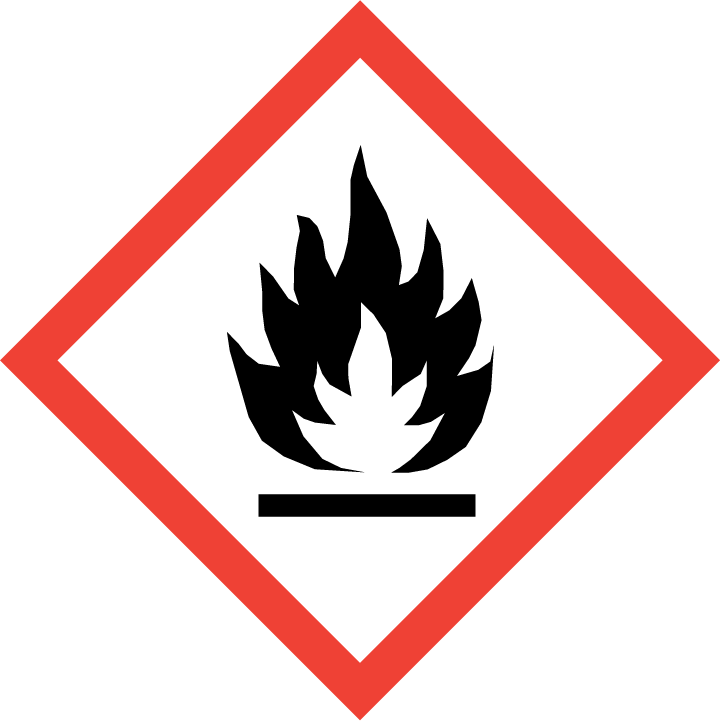
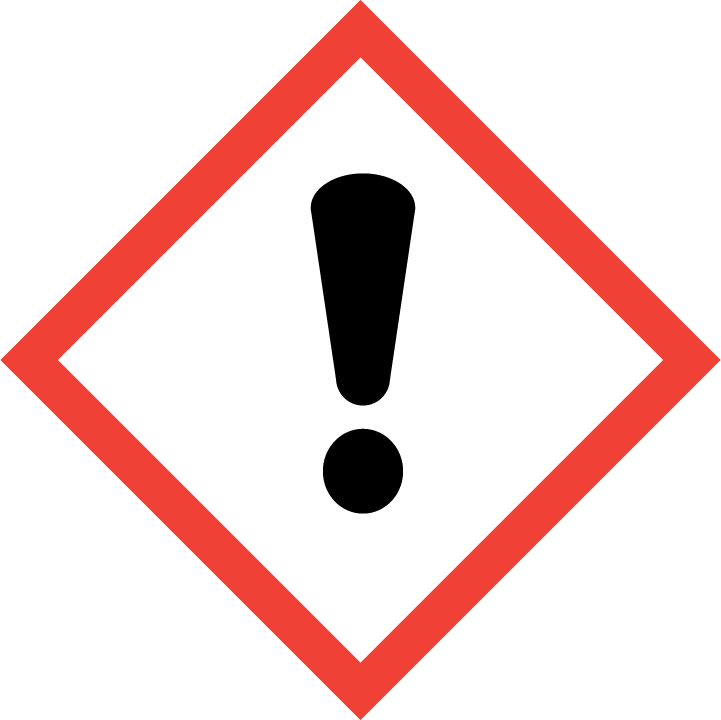
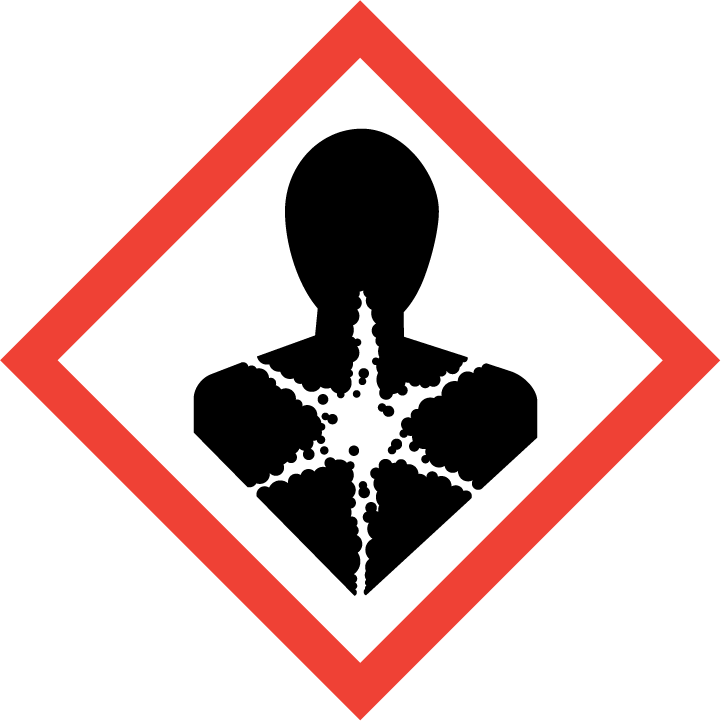
- Signal Words
- None
- Hazard Statement(s)
- H225 Highly flammable liquid and vapour.
- H304 May be fatal if swallowed and enters airways.
- H315 Causes skin irritation.
- H319 Causes serious eye irritation.
- H335 May cause respiratory irritation.
- H336 May cause drowsiness or dizziness.
- H360 May damage fertility or the unborn child.
- H373 May cause damage to organs (Central nervous system, Liver, (Kidney) through prolonged or repeated exposure if inhaled.
- Precautionary Statement(s)
- Prevention
- P201 Obtain special instructions before use.
- P210 Keep away from heat, hot surfaces, sparks, open flames and other ignition sources. No smoking.
- P233 Keep container tightly closed.
- P260 Do not breathe mist or vapours.
- P264 Wash skin thoroughly after handling.
- P280 Wear protective gloves/ protective clothing/ eye protection/ face protection.
- Response
- P301 ± P310 IF SWALLOWED: Immediately call a POISON CENTER/ doctor.
- P308 ± P313 IF exposed or concerned: Get medical advice/ attention.
- P331 Do NOT induce vomiting.
- P370 ± P378 In case of fire: Use dry sand, dry chemical or alcohol-resistant foam to extinguish.
- Restricted to professional users.
Primary route(s) of entry
Not available.
Human Health
- Inhalation
- Do not breathe mist or vapours.
- Ingestion
- Immediately call a POISON CENTER/ doctor. Do NOT induce vomiting.
- Eyes
- Not available.
- Skin
- Wash skin thoroughly after handling. Wear protective gloves/ protective clothing/ eye protection/ face protection.
Environment
Not available.
3. Composition / Information on Ingredients
| Name | CAS No. | Content (w/w) | Classification |
|---|---|---|---|
| Xylene | 1330-20-7 | >= 30 - < 50 % | Flam. Liq. 3, H226; Acute Tox. 4, H312; Acute Tox. 4, H332; Skin Irrit.2, H315 |
| Toluene | 108-88-3 | >= 70 - < 90 % | Not Available |
| dibutyl phthalate | 84-74-2 | >= 10 - < 20 % | Not Available |
4. First Aid Measures
- Ingestion
- If symptoms persist consult doctor.
- Inhalation
- Supply fresh air. If required, provide artificial respiration. Keep patient warm. Consult doctor if symptoms persist. In case of unconsciousness place patient stably in side position for transportation.
- Skin Contact
- In case of skin contact: Take off immediately all contaminated clothing. Rinse skin with water/ shower. Consult a physician.
- Eye Contact
- After eye contact: rinse out with plenty of water. Call in ophthalmologist. Remove contact lenses.
- Other Information
- Symptoms of poisoning may even occur after several hours; therefore medical observation for at least 48 hours after the accident.
- Show this material safety data sheet to the doctor in attendance.
5. Firefighting Measures
Suitable extinguishing equipment
- Fire
- CO₂, sand, extinguishing powder. Do not use water / Water with full jet.
- Unsuitable extinguishing media
- For this substance/mixture no limitations of extinguishing agents are given.
- HAZCHEM
- Not available.
Special protective equipment and precautions for fire fighters
Stay in danger area only with self-contained breathing apparatus. Prevent skin contact by keeping a safe distance or by wearing suitable protective clothing.
6. Accidental Release Measures
- Personal precautions, protective equipment and emergency procedures
- Advice for non-emergency personnel: Do not breathe vapours, aerosols. Avoid substance contact. Ensure adequate ventilation. Keep away from heat and sources of ignition.
- Evacuate the danger area, observe emergency procedures, consult an expert.
- For personal protection see section 8.
- Environmental precautions
- Do not allow to enter sewers/ surface or ground water. Risk of explosion.
- Methods and materials for containment and clean up
- Cover drains. Collect, bind, and pump off spills. Observe possible material restrictions (see sections 7 and 10). Take up carefully with liquid-absorbent material (e.g. Chemizorb®). Dispose of properly. Clean up affected area.
7. Handling and Storage
- Precautions for safe handling
- Advice on safe handling
- Ensure good ventilation/exhaustion at the workplace.
- Prevent formation of aerosols. Do not inhale substance/mixture.
- Advice on protection against fire and explosion.
- Keep away from open flames, hot surfaces and sources of ignition.Take precautionary measures against static discharge.
- Hygiene measures
- Immediately change contaminated clothing. Apply preventive skin protection. Wash hands and face after working with substance.
- For precautions see section 2.2.
- Conditions for safe storage
- Keep container tightly closed in a dry and well-ventilated place. Keep away from heat and sources of ignition. Keep locked up or in an area accessible only to qualified or authorised persons.
- Storage class
- Storage class (TRGS 510): 3: Flammable liquids
8. Exposure Controls / Personal Protection
Exposure Standards
| Material | TWA ppm | TWA mg/m³ | STEL ppm | STEL mg/m³ |
|---|---|---|---|---|
| 1330-20-7 xylene | 50 ppm | 220 mg/m³ | 100 ppm | 441 mg/m³ |
| 108-88-3 Toluene | 50 ppm | 191 mg/m³ | 150 ppm | 574 mg/m³ |
| 84-74-2 dibutyl phthalate | 5 mg/m³ |
- Engineering controls
- Immediately change contaminated clothing. Apply preventive skin protection. Wash hands and face after working with substance.
Personal protective equipment
- Eye and face protection
- Use equipment for eye protection tested and approved under appropriate
- government standards such as NIOSH (US) or EN 166(EU). Safety glasses
- Avoid contact with the skin.
- Wear tightly sealed goggles.
- Skin protection
- Avoid contact with the eyes and skin. Wear protective gloves. Required.
- Body protection
- Flame retardant antistatic protective clothing.
- Immediately remove all soiled and contaminated clothing.
- Respiratory protection
- required when vapours/aerosols are generated.
- Our recommendations on filtering respiratory protection are based on the following standards: DIN EN 143, DIN 14387 and other accompanying standards relating to the used respiratory protection system.
9. Physical and Chemical Properties
General information
- Appearance
- Clear colourless liquid
- Odour
- Characteristic
- pH
- Not available.
- Vapour Pressure
- 6.7 hPa at 20°C
- Density
- Not available.
- Boiling Point
- 144 °C
- Melting Point
- Undetermined.
- Solubility
- Not miscible or difficult to mix with water.
- Specific Gravity of Density
- Not available.
- Flash Point
- 27 °C
- Flammable (Explosive) Limits
- Product is not self igniting. Product is not explosive. However, formation of explosive air/vapour mixtures are possible. Explosion limits: Lower: 1.1 Vol % Upper: 7 Vol %
- Ignition Temperature
- 390 °C (734 °F)
- Formula
- Not available.
10. Stability and Reactivity
- Reactivity
- Vapors may form explosive mixture with air.
- Chemical stability
- The product is chemically stable under standard ambient conditions (room temperature).
- Possibility of hazardous reactions
- No dangerous reactions known.
- Conditions to avoid
- Warming.
- Incompatible materials
- Bases, Strong oxidising agents, acids, Chlorine, Nitrates.
11. Toxicological Information
- Acute effects
- Oral: No data available
- Symptoms: Possible symptoms:, mucosal irritations, Cough, Shortness of breath, Possible
- damages:, damage of respiratory tract
- Dermal: No data available
- Eye contact
- Remarks: Mixture causes serious eye irritation.
- Skin contact
- Causes skin irritation.
- Ingestion
- No further relevant information available.
- Inhalation
- No further relevant information available.
- Toxicity and irritation
- Reproductive toxicitySuspected of damaging fertility. Suspected of damaging the unborn child.
- Mixture may cause respiratory irritation.
- Mixture may cause drowsiness or dizziness.
- Mixture may cause damage to organs through prolonged or repeated exposure.
- Central nervous system, Liver, Kidney.
- Additional Information:
- Exposure can cause damage to the:, Central nervous system depression, Dermatitis, Anorexia., Bronchitis., Tremors, Blurred vision, Incoordination., Headache, Vomiting, Dizziness, Weakness, anemia, Prolonged or repeated exposure to skin causes defatting and dermatitis.
- Other dangerous properties can not be excluded.
- This substance should be handled with particular care.
- Handle in accordance with good industrial hygiene and safety practice.
12. Ecological Information
- Ecotoxicity
- No further relevant information available.
- Persistence and degradability
- No further relevant information available.
- Bioaccumulative potential
- No further relevant information available.
- Other adverse effects
- Water hazard class 2 (German Regulation) (Self-assessment): hazardous for waterDo not allow product to reach ground water, water course or sewage system.Danger to drinking water if even small quantities leak into the ground.
13. Disposal Considerations
General information
- Waste material must be disposed of in accordance with the national and local regulations.
- Leave chemicals in original containers. No mixing with other waste. Handle uncleaned
- containers like the product itself.
14. Transport Information
ADG label required
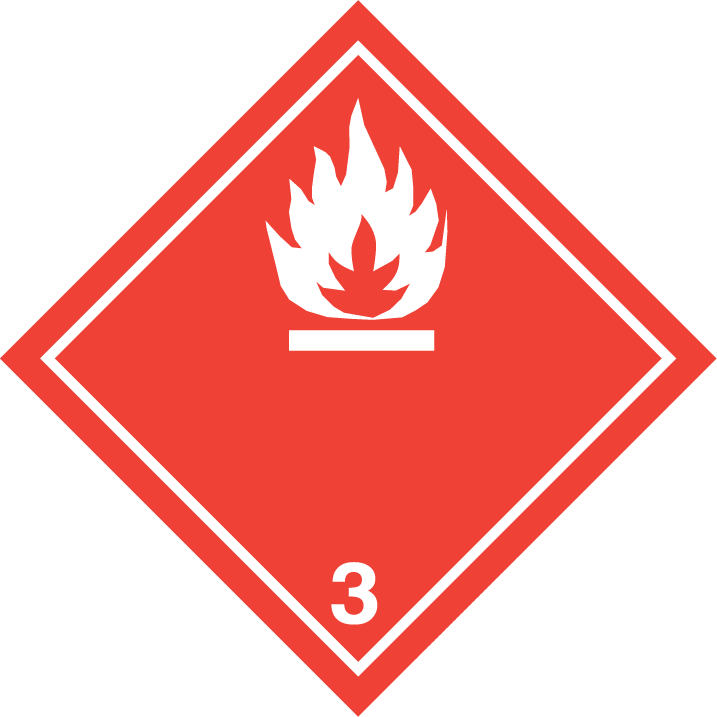
- HAZCHEM
- Not available.
- UN Number
- UN1866
- Proper shipping name
- 1866 RESIN SOLUTION
- Transport hazard class
- 3 Flammable liquids.
- Packing group
- PGIII
- Environmental hazard
- Product contains environmentally hazardous substances:dibutyl phthalate
- Special precautions for users
- Warning: Flammable liquids.
- Danger code (Kemler): 33
- EMS Number: F-E,S-E·
- Stowage Category A
- Additional information
- ADR
- Limited quantities (LQ) 5L
- Excepted quantities (EQ)
- Code: E1
- Maximum net quantity per inner packaging: 30 mL
- Maximum net quantity per outer packaging: 1000 mL
- Transport category 3
- Tunnel restriction code D/E
- IMDG
- Limited quantities (LQ) 5L
- Excepted quantities (EQ)
- Code: E1
- Maximum net quantity per inner packaging: 30 mL
- Maximum net quantity per outer packaging: 1000 ml
15. Regulatory Information
- Poisons Schedule Number
- No information available.
- Other Information
- No further relevant information available.
16. Other Information
- SDS preparation date
- 23 February 2026
- Comments
- Full text of H-Statements referred to under sections 2 and 3.
- H225 Highly flammable liquid and vapour.
- H226 Flammable liquid and vapour.
- H304 May be fatal if swallowed and enters airways.
- H312 Harmful in contact with skin.
- H315 Causes skin irritation.
- H319 Causes serious eye irritation.
- H332 Harmful if inhaled.
- H335 May cause respiratory irritation.
- H336 May cause drowsiness or dizziness.
- H360 May damage fertility or the unborn child.
- H361 Suspected of damaging fertility or the unborn child.
- H373 May cause damage to organs through prolonged or repeated exposure if
- inhaled.
- H400 Very toxic to aquatic life.
- H411 Toxic to aquatic life with long lasting effects.
- References
- Sigma-Aldrich Safety Data Sheet, DPX Mountant for Histology https://www.sigmaaldrich.com/AU/en/sds/sigma/06522-userType=anonymous 22/03/2025
- EMS Safety data Sheet DPX Mounting Medium https://www.emsdiasum.com/docs/technical/msds/13510.pdf 05/12/2022