
Safety Data Sheets / Diamond Paste (0.25µm, 0.5µm, 1µm, 3µm, 6µm, 9µm)
Safety Data Sheet
Diamond Paste (0.25µm, 0.5µm, 1µm, 3µm, 6µm, 9µm)
1. Identification
Product Identifiers
- Product Name
- Diamond Paste
- Other Names
- Micron; MICRON± (MDA, CDA, SND) Series; Synthetic Wheel grit Diamond Abrasive.
- With Sorbolene cream (with 10% glycerin).
- Product Number(s)
- M23-025; M23-05; M23-1; M23-3; M23-6; M23-9.
- CAS Number
- -
Recommended use of the chemical and restriction on use
- Abrasive cutting tool material used in grinding wheels, lapping and polishing.
- Paste is made with a non-perfumed moisturising cream.
Company Details
ProSciTech Pty Ltd
11 Carlton Street
KIRWAN QLD 4817
Australia
(07) 4773 9444
pst@proscitech.com
proscitech.com.au
11 Carlton Street
KIRWAN QLD 4817
Australia
(07) 4773 9444
pst@proscitech.com
proscitech.com.au
Emergency Contact Details
ProSciTech Pty Ltd
11 Carlton Street
KIRWAN QLD 4817
Australia
(07) 4773 9444
pst@proscitech.com
proscitech.com.au
11 Carlton Street
KIRWAN QLD 4817
Australia
(07) 4773 9444
pst@proscitech.com
proscitech.com.au
2. Hazards Identification
Classification of the substance or mixture
- Carcinogen Category 2
- Skin Sensitisation Category 1
- Specific Target Organ Toxicity - Repeated Exposure Category 1
Label Elements
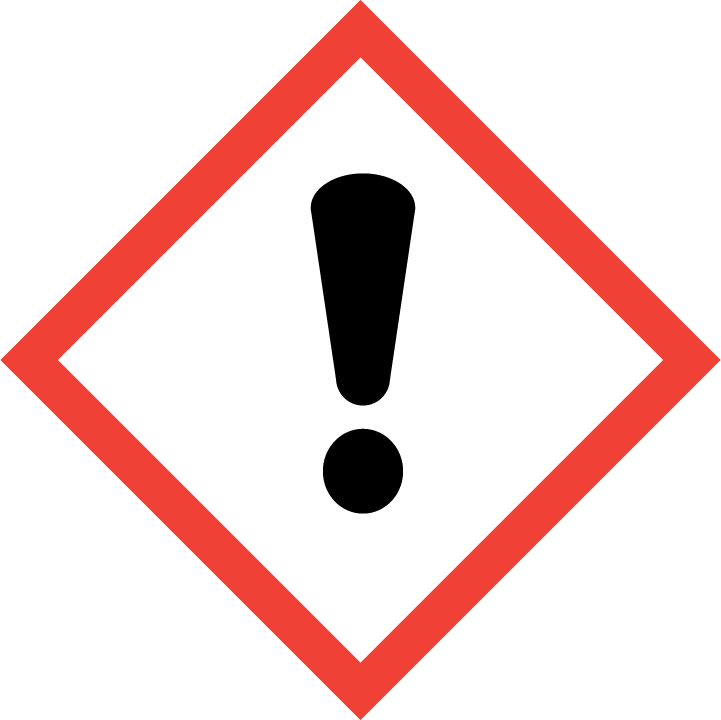
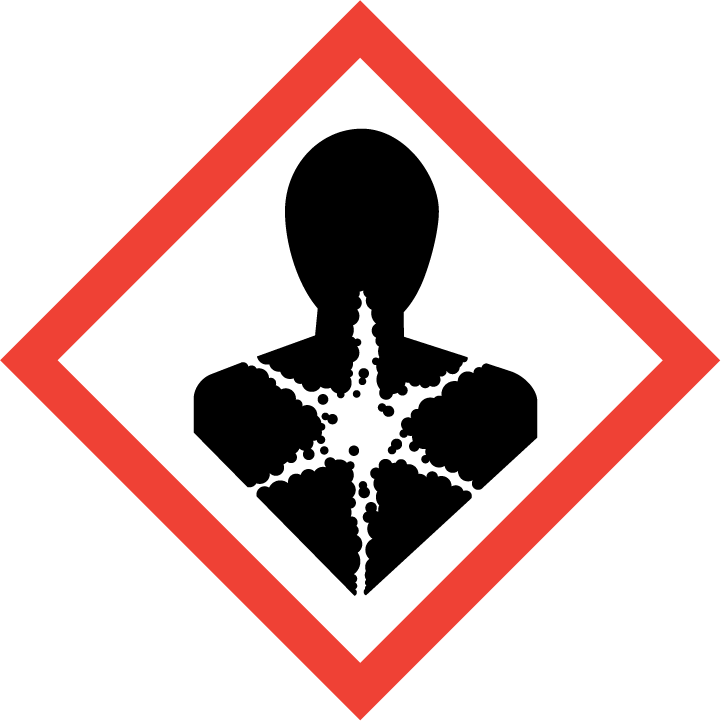
- Signal Words
- None
- Hazard Statement(s)
- H351: Suspected of causing cancer.
- H317: May cause an allergic skin reaction.
- H372: Causes damage to organs, through prolonged or repeated exposure.
- Precautionary Statement(s)
- P201: Obtain special instructions before use.
- P202: Do not handle until all safety precautions have been read and understood.
- P260: Do not breather dust/fume/gas/mist/vapours/spray.
- P261: Avoid breathing dust/fumes/gas/mist/vapours/spray.
- P264: Wash with soap and water thoroughly after handling.
- P270: Do not eat, drink or smoke when using this product.
- P272: Contaminated work clothing should not be allowed out of the workplace.
- P280: Wear face protection. Specify type of equipment.
- P281: Use personal protective equipment as required
- P302±P352: IF ON SKIN: Wash with plenty of soap and water.
- P308±P313: IF exposed or concerned: Get medical advice/attention.
- P314: Get medical advice/attention if you feel unwell.
- P333±P313: If skin irritation or rash occurs: Get medical advice/attention.
- P363: Wash contaminated clothing before reuse.
- P405: Store locked up.
- P501: Dispose of contents/container in accordance with local, state and federal regulations.
Primary route(s) of entry
Inhalation, ingestion, skin and/or eye contact.
Human Health
- Inhalation
- Mists or dry dust can cause congestion and tissue irritation.
- Ingestion
- Tissue irritant.
- Eyes
- Slight irritation, high concentrations may cause conjunctivitis.
- Skin
- Tissue irritant. Nickel may cause dermatitis. Nickel is a contact allergen and sensitiser.
Environment
Not available.
3. Composition / Information on Ingredients
| Name | CAS No. | Content (w/w) | Classification |
|---|---|---|---|
| Diamond | 7782-40-3 | 45-100% | - |
| Nickel | 7440-02-0 | <5% | Carcinogen Category 2 Skin Sensitisation Category 1 Specific Target Organ Toxicity - Repeated Exposure Category |
| Copper | 7440-50-8 | <5% | - |
| Paraffins | - | 10-30% | - |
| Waxes | - | 10-30% | - |
| Propyl hydroxybenzoate | 94-13-3 | <10% | - |
| Methyl hydroxybenzoate | 99-76-3 | <10% | - |
| Propylene Glycol | 57-55-6 | 10-30% | - |
| Water | 7732-18-5 | <100% | - |
4. First Aid Measures
- Ingestion
- Seek medical attention. The cream may have a laxative effect.
- Inhalation
- If high concentrations are inhaled or if worker exhibits trouble breathing, remove to fresh air, if symptoms persist, seek medical attention. The cream is not considered harmful.
- Skin Contact
- Wash affected areas thoroughly with soap and water. Seek medical attention if irritation persists.
- Eye Contact
- Remove contact lenses. Flush eyes with water for 15 minutes. Seek medical attention if irritation persists.
- Other Information
- Treat Symptomatically.
5. Firefighting Measures
Suitable extinguishing equipment
- Fire
- Dry chemical, CO₂, Foam or water.
- HAZCHEM
- Not available.
Special protective equipment and precautions for fire fighters
- Diamond coated materials may generate toxic gases during a fire and self-contained breathing apparatus should be worn. For a dust fire confined to small area, use approved respirator to avoid inhaling dust and fumes. For
- large fires, fire fighters should use self-contained breathing apparatus to avoid inhaling any combustion products.
- Contact of dust with strong oxidiser may cause fire or explosion. On decomposition can release Carbon dioxide.
6. Accidental Release Measures
- Personal precautions, protective equipment and emergency procedures
- Clean-up personnel should wear appropriate personal protective equipment as detailed in Section 8 of this document. Respiratory protection should be worn if hazardous components exceed exposure limits listed in Section 8 of this document.
- Environmental precautions
- Isolate the area where the spill has occurred, do not walk through or scatter the spilled material. Avoid from entering water or ground water. Waste disposal should be in accordance with local environmental regulations.
- Methods and materials for containment and clean up
- Clean-up spilled material using a HEPA vacuum, wet mop or wet clean up. Avoid generating dust during cleanup operations. Avoid incompatible substances.
7. Handling and Storage
- Precautions for safe handling
- Avoid contact with skin and eyes. Wash hands after handling. Maintain good housekeeping procedures to avoid dust accumulation or product becoming airborne. Wear appropriate protective equipment while handling - refer
- to section 8.
- Conditions for safe storage
- Keep material in a tightly closed container. Store in a cool dry area. Store below 25°C.
8. Exposure Controls / Personal Protection
Exposure Standards
| Material | TWA ppm | TWA mg/m³ | STEL ppm | STEL mg/m³ |
|---|---|---|---|---|
| - | - | - | ||
| - | - | - |
- Engineering controls
- Local ventilation should remove any vapour or mist generated while handling. Maintain an eyebath and safety shower close to the laboratory area.
Personal protective equipment
- Eye and face protection
- Wear safety glasses with side shields when handling this product.
- Skin protection
- Wear protective gloves or barrier cream to avoid irritation and sensitisation.
- Body protection
- Hygiene Measures: Wash hands after handling.
- Wear appropriate clothing to avoid skin contact with dust generated during handling operations.
- Respiratory protection
- Wear appropriate NIOSH approved respirator of air borne concentrations of hazardous components exceed exposure limits as detailed above.
9. Physical and Chemical Properties
General information
- Appearance
- The diamond powder is normally yellow but will vary due to the coating on the diamond. If coated with nickel the powder will be grey powder. If coated with copper the powder will be a salmon pink colour. Mixed with a white soft cream.
- Odour
- The cream presents an odour faint and typical to that of cetomacrogol cream.
- pH
- 5-7.
- Vapour Pressure
- Not applicable.
- Density
- Not available.
- Boiling Point
- Not available.
- Melting Point
- Not available.
- Solubility
- Miscible, contains 53.5-57.5% w/w water content.
- Specific Gravity of Density
- Not available.
- Flash Point
- Not applicable.
- Flammable (Explosive) Limits
- Not applicable.
- Ignition Temperature
- Not applicable.
- Formula
- Not available.
10. Stability and Reactivity
- Reactivity
- No further relevant information available.
- Chemical stability
- Stable under normal conditions of use.
- Possibility of hazardous reactions
- On decomposition can release Carbon dioxide. Contact of dust with strong oxidiser may cause fire or explosion.
- Conditions to avoid
- Airborne fine powder dust in confined spaces. High heat and flame, diamond begins to burn at 800°C. Under special conditions, nickel can react with carbon monoxide in reducing atmosphere to form nickel carbonyl, a toxic gas. Copper reacts violently with acetylene, ammonia nitrate, bromates, chlorates, iodates, chlorine compounds, ethylene oxide, fluorine, hydrogen peroxide, hydrazine, hydrogen sulphide, hydrazoic acid, lead azide, potassium peroxide, sodium azide and sodium peroxide.
- Incompatible materials
- Contact with strong acids. Contact of dust with strong oxidiser may cause fire or explosion.
11. Toxicological Information
- Acute effects
- Copper is a irritating to skin and eyes. Inhalation of copper will cause irritation to the lungs. Chronic copper
- poisoning is typified by hepatic cirrhosis, brain damage and demyelisation, kidney defects and copper
- deposition in the cornea as exemplified by humans with Wilson's disease.
- Eye contact
- Diamond dust may cause irritation.
- Sorbolene with Glycerin 10% cream is non-irritating to the mucous membranes.
- Skin contact
- Diamond dust may irritate skin.
- Sorbolene with Glycerin 10% cream is suitable for use on sensitive skin; sensitivity to preservative (methyl &
- propyl hydrobenzoates) may cause a reaction to those susceptible.
- Ingestion
- Not likely due to the form of the product.
- Sorbolene with Glycerin 10% cream is non-irritant. Could have a laxative effect.
- Inhalation
- Diamond dust may irritate throat and respiratory system, may cause coughing.
- Non-volatile, Sorbolene with Glycerin 10% cream does not present an inhalation hazard.
- Toxicity and irritation
- Nickel is listed by IARC as a Group 2B - Possibly Carcinogenic to Humans.
12. Ecological Information
- Ecotoxicity
- This product is not expected to be toxic to the environment.
- Adopt sound working practices, so that the product is not released into the environment.
- Persistence and degradability
- No further relevant information available.
- Bioaccumulative potential
- No further relevant information available.
- Other adverse effects
- No further relevant information available.
13. Disposal Considerations
General information
Dispose of in accordance with appropriate government regulation. May be sold as scrap for reclaim.
14. Transport Information
ADG label required
- HAZCHEM
- Not available.
- UN Number
- None
- Proper shipping name
- Not regulated.
- Transport hazard class
- 0
- Packing group
- None.
- Environmental hazard
- No information available.
- Special precautions for users
- No information available.
- Additional information
- No information available.
15. Regulatory Information
- Poisons Schedule Number
- Not listed.
- Other Information
- No further relevant information available.
16. Other Information
- SDS preparation date
- 23 February 2026
- Comments
- This information is based on our present knowledge. However, this shall not constitute a guarantee for any specific product features and shall not establish a legally valid contractual relationship.