
Safety Data Sheets / Collodion 2% in Amyl Acetate, Sterile
Safety Data Sheet
Collodion 2% in Amyl Acetate, Sterile
1. Identification
Product Identifiers
- Product Name
- Collodion 2% in Amyl Acetate, Sterile
- Other Names
- Sterile Collodion (Parlodion) 2% in Amyl Acetate
- Product Number(s)
- 12620-10, 12620-50, 12620-55, EMS12620-10, EMS12620-50, EMS12620-55
- CAS Number
- 628-63-7
Recommended use of the chemical and restriction on use
Laboratory chemicals. Making thin collodion/nitrocellulose films, including negative replicas and support films for microscopy. It is also used in histology/hematology applications. May be intended for applications requiring sterility.
Company Details
ProSciTech Pty Ltd
11 Carlton Street
KIRWAN QLD 4817
Australia
(07) 4773 9444
pst@proscitech.com
proscitech.com.au
11 Carlton Street
KIRWAN QLD 4817
Australia
(07) 4773 9444
pst@proscitech.com
proscitech.com.au
Emergency Contact Details
ProSciTech Pty Ltd
11 Carlton Street
KIRWAN QLD 4817
Australia
(07) 4773 9444
pst@proscitech.com
proscitech.com.au
11 Carlton Street
KIRWAN QLD 4817
Australia
(07) 4773 9444
pst@proscitech.com
proscitech.com.au
2. Hazards Identification
Classification of the substance or mixture
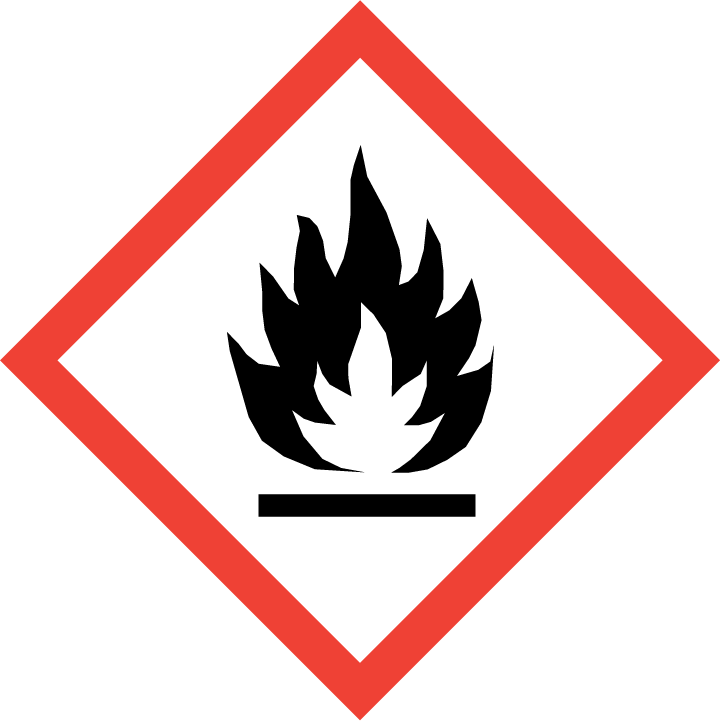
- GHS02 Flame
- Flammable Liquids 3 H226 Flammable liquid and vapour.
Label Elements
- Signal Words
- Warning
- Hazard Statement(s)
- Flammable liquid and vapour.
- Precautionary Statement(s)
- Keep away from heat/sparks/open flames/hot surfaces. - No smoking.
- Keep container tightly closed.
- Ground/bond container and receiving equipment.
- Use only non-sparking tools.
- Take precautionary measures against static discharge.
- Wear protective gloves/protective clothing/eye protection/face protection.
Primary route(s) of entry
Not available
Human Health
- Inhalation
- Vapour may irritate the respiratory tract and may cause headache, dizziness, drowsiness, nausea, or other central nervous system effects at sufficient concentrations.
- Ingestion
- harmful if swallowed. May cause irritation of the gastrointestinal tract, with symptoms such as nausea, vomiting, or abdominal discomfort. Do not induce vomiting; seek medical attention/poison-centre advice if swallowed.
- Eyes
- Causes eye irritation
- Skin
- (or hair) Take off immediately all contaminated clothing. Rinse skin with water/shower.
Environment
- In case of fire: Use CO₂, powder or water spray to extinguish.
- Store in a well-ventilated place. Keep cool.
- Dispose of contents/container in accordance with local/regional/national/international regulations.
3. Composition / Information on Ingredients
| Name | CAS No. | Content (w/w) | Classification |
|---|---|---|---|
| AMYL ACETATE, REAGENT | 628-63-7 | 80-100% | Not Available |
4. First Aid Measures
- Ingestion
- If symptoms persist consult doctor.
- Inhalation
- Supply fresh air; consult doctor in case of complaints.
- Skin Contact
- Generally the product does not irritate the skin.
- Eye Contact
- Rinse opened eye for several minutes under running water.
- Other Information
- No further relevant information available.
5. Firefighting Measures
Suitable extinguishing equipment
- Fire
- CO₂, extinguishing powder or water spray. Fight larger fires with water spray or alcohol resistant foam.
- HAZCHEM
- For safety reasons unsuitable extinguishing agents: Water with full jet.
Special protective equipment and precautions for fire fighters
No special measures required.
6. Accidental Release Measures
- Personal precautions, protective equipment and emergency procedures
- Wear protective equipment. Keep unprotected persons away.
- Protective Action Criteria for Chemicals
- · PAC-1: 628-63-7 AMYL ACETATE, REAGENT 100 ppm
- · PAC-2: 628-63-7 AMYL ACETATE, REAGENT 670 ppm
- · PAC-3: 628-63-7 AMYL ACETATE, REAGENT 4000* ppm
- Environmental precautions
- Dilute with plenty of water.
- Do not allow to enter sewers/surface or ground water.
- Methods and materials for containment and clean up
- Absorb with liquid-binding material (sand, diatomite, acid binders, universal binders, sawdust).
- Do not flush with water or aqueous cleansing agents.
7. Handling and Storage
- Precautions for safe handling
- Keep ignition sources away - Do not smoke.
- Protect from heat.
- Protect against electrostatic charges.
- Conditions for safe storage
- Requirements to be met by storerooms and receptacles: No special requirements.
- · Information about storage in one common storage facility: Not required.
- · Further information about storage conditions:
- Keep receptacle tightly sealed.
- Protect from heat and direct sunlight
8. Exposure Controls / Personal Protection
Exposure Standards
| Material | TWA ppm | TWA mg/m³ | STEL ppm | STEL mg/m³ |
|---|---|---|---|---|
| 628-63-7 AMYL ACETATE, REAGENT | 100ppm | 525mg/m³ | 100ppm |
- Engineering controls
- Wash hands before breaks and at the end of work.
Personal protective equipment
- Eye and face protection
- Tightly sealed goggles.
- Skin protection
- Wear protective gloves. The glove material has to be impermeable and resistant to the product/the substance/the preparation.
- Material of gloves
- The selection of the suitable gloves does not only depend on the material, but also on further marks of quality and varies from manufacturer to manufacturer.
- Penetration time of glove material
- The exact break through time has to be found out by the manufacturer of the protective gloves and has to be observed.
- Body protection
- Not available
- Respiratory protection
- Not required.
9. Physical and Chemical Properties
General information
- Appearance
- Colourless liquid
- Odour
- Fruit-like
- pH
- Not determined
- Vapour Pressure
- at 20 °C (68 °F): 5.3 hPa (4 mm Hg)
- Density
- at 20 °C (68 °F): 0.8752 g/cm³ (7.30354 lbs/gal)
- Boiling Point
- 149.25 °C (300.7 °F)
- Melting Point
- -70.8 °C (-95.4 °F)
- Solubility
- 1.8g/l
- Specific Gravity of Density
- Not available
- Flash Point
- 23 °C (73.4 °F)
- Flammable (Explosive) Limits
- Lower: 1.1 Vol%
- Upper: 7.5 Vol%
- Product is not explosive. However, formation of explosive air/vapour mixtures are possible.
- Ignition Temperature
- 360°C (680 °F)
- Formula
- Not available
10. Stability and Reactivity
- Reactivity
- No further relevant information available.
- Chemical stability
- No decomposition if used according to specifications.
- Possibility of hazardous reactions
- No dangerous reactions known.
- Conditions to avoid
- No further relevant information available.
- Incompatible materials
- no further relevant information available.
11. Toxicological Information
- Acute effects
- Not available.
- Eye contact
- No irritating effect.
- Skin contact
- No irritant effect.
- Ingestion
- Not available
- Inhalation
- Not available
- Chronic effects
- Carcinogenic categories
- · IARC (International Agency for Research on Cancer): None of the ingredients is listed.
- · NTP (National Toxicology Program): None of the ingredients is listed.
- · OSHA-Ca (Occupational Safety Health Administration): None of the ingredients is listed.
- Toxicity and irritation
- Not available.
12. Ecological Information
- Ecotoxicity
- No further relevant information available.
- Persistence and degradability
- No further relevant information available.
- Bioaccumulative potential
- No further relevant information available.
- Other adverse effects
- Water hazard class 1: slightly hazardous for water.
- Do not allow undiluted product or large quantities of it to reach ground water, water course or sewage system.
13. Disposal Considerations
General information
- Recommendation:
- Must not be disposed of together with household garbage. Do not allow product to reach sewage system.
- · Uncleaned packagings:
- · Recommendation: Disposal must be made according to official regulations.
- · Recommended cleansing agent: Water, if necessary with cleansing agents.
14. Transport Information
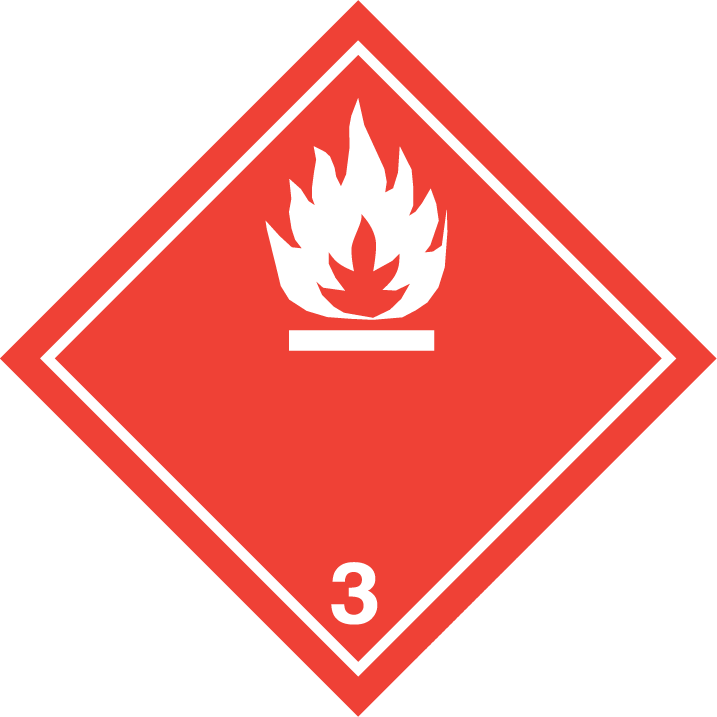
ADG label required
- HAZCHEM
- For safety reasons unsuitable extinguishing agents: Water with full jet.
- UN Number
- UN1104
- Proper shipping name
- DOT RQ Amyl acetates
- ADR 1104 AMYL ACETATES
- IMDG, IATA AMYL ACETATES
- Transport hazard class
- Class 3 Flammable liquids
- Packing group
- III
- Environmental hazard
- Not applicable.
- Special precautions for users
- Warning: Flammable liquids
- Hazard identification number (Kemler) code: 30
- EMS Number: F-E
- Stowage Category: A
- Additional information
- DOT
- Quantity limitations:
- On passenger aircraft/rail: 60L
- On cargo aircraft only: 220L
- Hazardous substance: 5000lbs, 2270kg
- ADR
- Excepted quantities (EQ) Code: E1
- Maximum net quantity per inner packaging: 30mL
- Maximum net quantity per outer packaging: 1000mL
- IMDG
- Limited quantities (LQ) 5L
- Excepted quantities (EQ) Code: E1
- Maximum net quantity per inner packaging: 30mL
- Maximum net quantity per outer packaging: 1000ml
15. Regulatory Information
- Poisons Schedule Number
- Not available
- Other Information
- Sara
- · Section 355 (extremely hazardous substances): None of the ingredients is listed.
- · Section 313 (Specific toxic chemical listings): None of the ingredients is listed.
- · TSCA (Toxic Substances Control Act): All components have the value ACTIVE.
- Hazardous Air Pollutants: None of the ingredients is listed.
- Proposition 65
- · Chemicals known to cause cancer: None of the ingredients is listed.
- · Chemicals known to cause reproductive toxicity for females: None of the ingredients is listed.
- · Chemicals known to cause reproductive toxicity for males: None of the ingredients is listed.
- · Chemicals known to cause developmental toxicity: None of the ingredients is listed.
- Carcinogenic categories
- · EPA (Environmental Protection Agency): None of the ingredients is listed.
- · TLV (Threshold Limit Value): None of the ingredients is listed.
- · NIOSH-Ca (National Institute for Occupational Safety and Health): None of the ingredients is listed.
- A Chemical Safety Assessment has not been carried out.
16. Other Information
- SDS preparation date
- 24 September 2026
- Comments
- This information is based on our present knowledge. However, this shall not constitute a guarantee for any specific features and shall not establish a legally valid contractual relationship.
- Abbreviations and acronyms:
- ADR: Accord relatif au transport international des marchandises dangereuses par route (European Agreement Concerning the International
- Carriage of Dangerous Goods by Road)
- IMDG: International Maritime Code for Dangerous Goods
- DOT: US Department of Transportation
- IATA: International Air Transport Association
- EINECS: European Inventory of Existing Commercial Chemical Substances
- ELINCS: European List of Notified Chemical Substances
- CAS: Chemical Abstracts Service (division of the American Chemical Society)
- NFPA: National Fire Protection Association (USA)
- HMIS: Hazardous Materials Identification System (USA)
- VOC: Volatile Organic Compounds (USA, EU)
- PBT: Persistent, Bioaccumulative and Toxic
- vPvB: very Persistent and very Bioaccumulative
- NIOSH: National Institute for Occupational Safety
- OSHA: Occupational Safety Health
- TLV: Threshold Limit Value
- PEL: Permissible Exposure Limit
- REL: Recommended Exposure Limit
- Flammable liquids 3: Flammable liquids - Category 3
- References
- EMS SDS Collodion 2% in Amyl Acetate 24/01/2023
- https://www.emsdiasum.com/docs/technical/msds/12620-10.pdf