
Safety Data Sheets / Cleanware Aqua-Clear Water Conditioner
Safety Data Sheet
Cleanware Aqua-Clear Water Conditioner
1. Identification
Product Identifiers
- Product Name
- Cleanware Aqua-Clear Water Conditioner - DISCONTINUED
- Other Names
- Aqua-Clear Water Conditioner
- Product Number(s)
- 60502-01
- CAS Number
- -
Recommended use of the chemical and restriction on use
Laboratory chemicals
Company Details
ProSciTech Pty Ltd
11 Carlton Street
KIRWAN QLD 4817
Australia
(07) 4773 9444
pst@proscitech.com
proscitech.com.au
11 Carlton Street
KIRWAN QLD 4817
Australia
(07) 4773 9444
pst@proscitech.com
proscitech.com.au
Emergency Contact Details
ProSciTech Pty Ltd
11 Carlton Street
KIRWAN QLD 4817
Australia
(07) 4773 9444
pst@proscitech.com
proscitech.com.au
11 Carlton Street
KIRWAN QLD 4817
Australia
(07) 4773 9444
pst@proscitech.com
proscitech.com.au
2. Hazards Identification
Classification of the substance or mixture
- GHS02 Flame
- Flam. Liq. 3 H226 Flammable liquid and vapour
- GHS06 Skull and crossbones
- Acute Tox. 3 H301 Toxic if swallowed
- GHS08 Health hazard
- Carc. 1A H350 May cause cancer
- GHS05 Corrosion
- Skin Corr. 1B H314 Causes severe skin burns and eye damage
- EyeDam. 1 H318 Causes serious eye damage
- GHS07
- STOT SE3 H335 May cause respiratory irritation
Label Elements
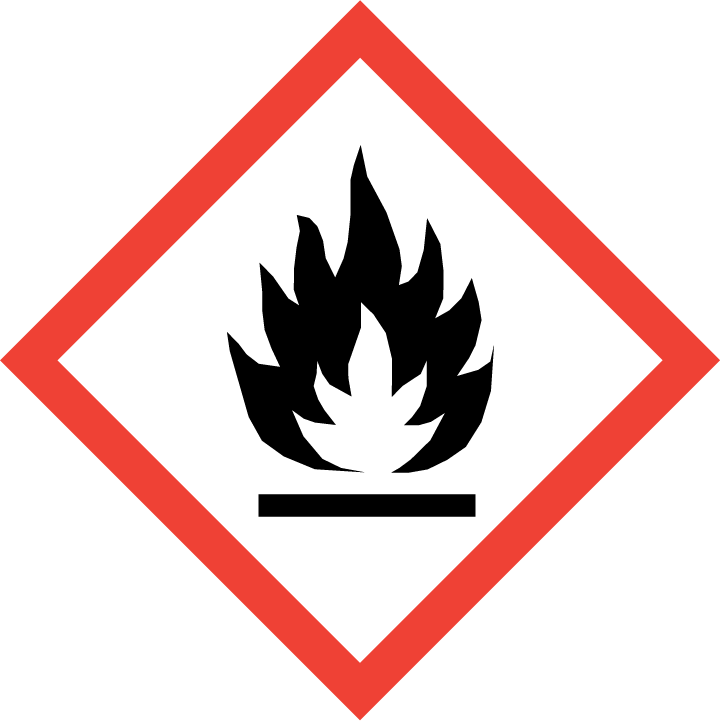
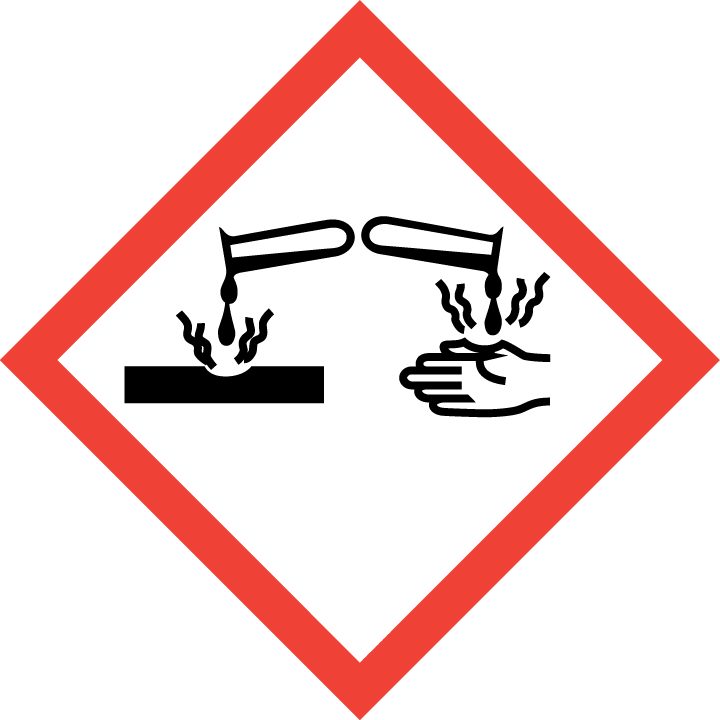
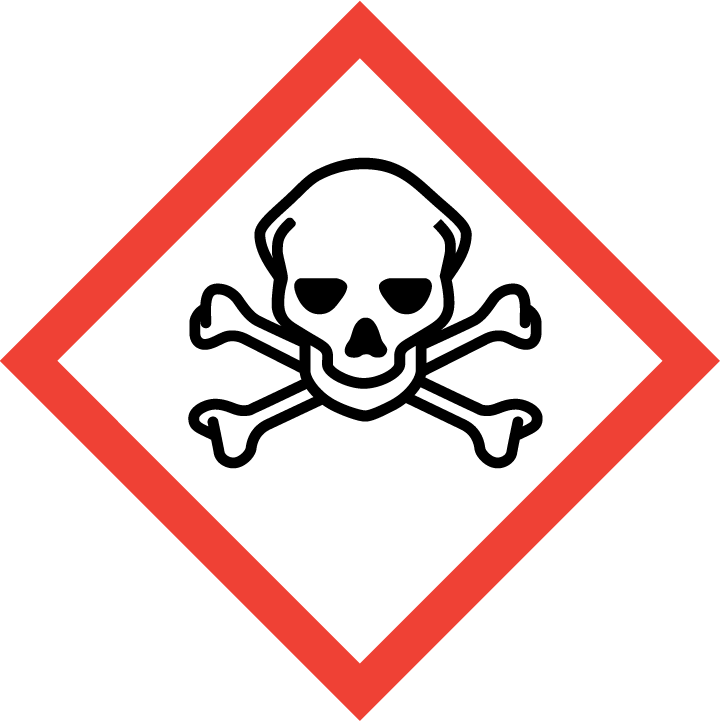
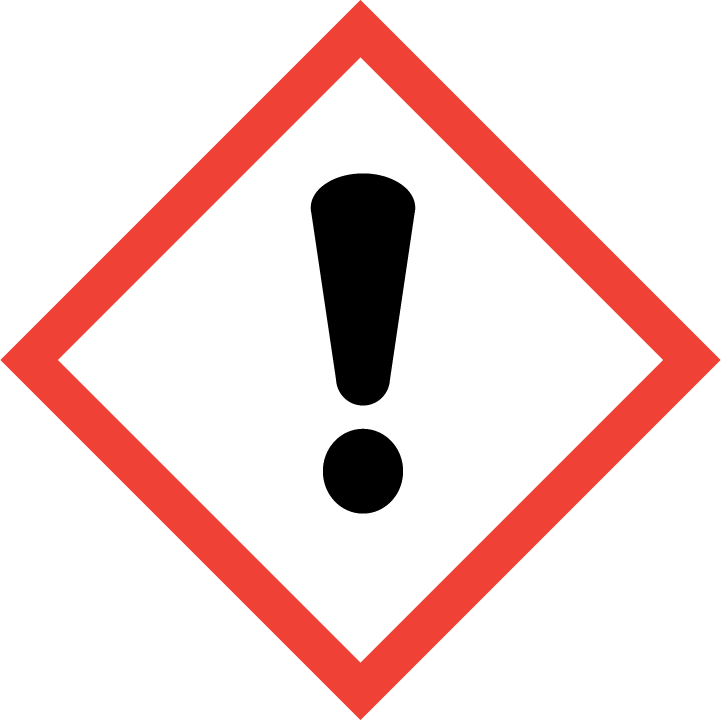
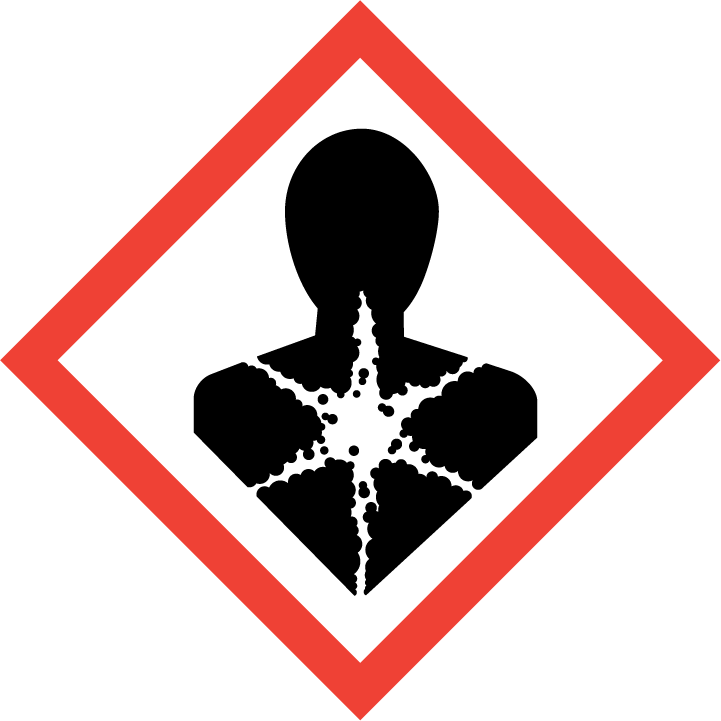
- Signal Words
- None
- Hazard Statement(s)
- Flammable liquid and vapour. Toxic if swallowed. Causes severe skin burns and eye damage. May cause cancer. May cause respiratory irritation.
- Precautionary Statement(s)
- Obtain special instructions before use.
- Do not handle until all safety precautions have been read and understood.
- Keep away from heat/sparks/open flames/hot surfaces. - No smoking.
- Ground/bond container and receiving equipment.
- Use explosion-proof electrical/ventilating/lighting/equipment.
- Use only non-sparking tools.
- Take precautionary measures against static discharge.
- Do not breathe dusts or mists.
- Wash thoroughly after handling.
- Do not eat, drink or smoke when using this product.
- Use only outdoors or in a well-ventilated area.
- Wear protective gloves/protective clothing/eye protection/face protection.
- If swallowed: Immediately call a poison center/doctor.
- Specific treatment (see on this label).
- If swallowed: Rinse mouth. Do NOT induce vomiting.
- If on skin (or hair): Take off immediately all contaminated clothing. Rinse skin with water/shower.
- IF INHALED: Remove person to fresh air and keep comfortable for breathing.
- If in eyes: Rinse cautiously with water for several minutes. Remove contact lenses, if present and easy to do.
- Continue rinsing.
- IF exposed or concerned: Get medical advice/attention.
- Call a poison center/doctor if you feel unwell.
- Wash contaminated clothing before reuse.
- In case of fire: Use for extinction: CO₂, powder or water spray.
- Store in a well-ventilated place. Keep container tightly closed.
- Store in a well-ventilated place. Keep cool.
- Store locked up.
- Dispose of contents/container in accordance with local/regional/national/international regulations
Primary route(s) of entry
Skin
Human Health
- Inhalation
- Remove victim to fresh air and keep at rest in a position comfortable for breathing.
- Ingestion
- Immediately call a POISON CENTRE/doctor. Rinse mouth. Do not induce vomiting
- Eyes
- Rinse cautiously with water for several minutes. Remove contact lenses, if present and easy to do. Continue rinsing
- Skin
- Remove/take off immediately all contaminated clothing. Rinse skin with water/shower
Environment
Dispose of contents/container in accordance with local/regional/national/international regulations
3. Composition / Information on Ingredients
| Name | CAS No. | Content (w/w) | Classification |
|---|---|---|---|
| quaternary ammonium compounds, benzylalkyl(C=12-16)dimethyl, chlorides | 68424-85-I | >25-≤50% | Not Available |
| Ethyl alcohol | 64-I7-5 | >2.5-≤10% | Not Available |
4. First Aid Measures
- Ingestion
- Do not induce vomiting: call for medical help immediately. Drink plenty of water and provide fresh air.
- Inhalation
- In case of unconsciousness place patient stably in side position for transportation.
- Skin Contact
- Immediately wash with water and soap and rinse thoroughly
- Eye Contact
- Rinse opened eye for several minutes under running water. Then consult a doctor.
- Other Information
- No further relevant information available
5. Firefighting Measures
Suitable extinguishing equipment
- Fire
- CO₂, powder or water spray. Fight larger fired with water spray or alcohol resistant foam.
- HAZCHEM
- No further relevant information available
Special protective equipment and precautions for fire fighters
No special measures required
6. Accidental Release Measures
- Personal precautions, protective equipment and emergency procedures
- Wear protective equipment. Keep unprotected persons away.
- Environmental precautions
- Dilute with plenty of water. Do not allow to enter sewers/surface or ground water
- Methods and materials for containment and clean up
- Absorb with liquid-binding material (sand, diatome, acid binders, universal binders, sawdust).
- Use neutralising agent.
- Dispose contaminated material as waste according to item 13.
- Ensure adequate ventilation.
7. Handling and Storage
- Precautions for safe handling
- Ensure good ventilation/exhaustion at the workplace.
- Prevent formation of aerosols. Keep ignition sources away - Do not smoke.
- Protect from heat.
- Protect against electrostatic charges.
- Conditions for safe storage
- Keep container tightly sealed.
- Protect from heat and direct sunlight.
8. Exposure Controls / Personal Protection
Exposure Standards
| Material | TWA ppm | TWA mg/m³ | STEL ppm | STEL mg/m³ |
|---|---|---|---|---|
| Ethyl alcohol | 1000 ppm | 1900 mg/m³ | 1000 ppm | 1880 mg/m³ |
- Engineering controls
- Keep away from foodstuffs, beverages and feed.
- Immediately remove all soiled and contaminated clothing.
- Wash hands before breaks and at the end of work.
- Avoid contact with the eyes.
- Avoid contact with the eyes and skin.
Personal protective equipment
- Eye and face protection
- Tightly sealed goggles.
- Skin protection
- Use protective gloves
- Body protection
- Not available
- Respiratory protection
- Not available
9. Physical and Chemical Properties
General information
- Appearance
- Blue liquid
- Odour
- Mild
- pH
- 7.5 at 20 °C (68 °F)
- Vapour Pressure
- -
- Density
- 0.974 g/cm³ at 20 °C
- Boiling Point
- 78 °C
- Melting Point
- undetermined
- Solubility
- fully miscible
- Specific Gravity of Density
- Not determined
- Flash Point
- 54 °C (129.2 °F)
- Flammable (Explosive) Limits
- Lower 3.5 Vol %, Upper 15 Vol %
- Product is not explosive. However, formation of explosive air/ vapour mixtures are possible.
- Ignition Temperature
- 425 °C
- Formula
- Solvent content:
- Organic solvents: 10.0 %
- VOC content: 10.00 %
- 97.4 g/l / 0.81 lb/gal
10. Stability and Reactivity
- Reactivity
- No further relevant information available.
- Chemical stability
- No decomposition if used according to specifications
- Possibility of hazardous reactions
- No dangerous reactions known.
- Conditions to avoid
- No further relevant information available
- Incompatible materials
- No further relevant information available
11. Toxicological Information
- Acute effects
- The product shows the following dangers according to internally approved calculation methods for
- preparations:
- Toxic
- Corrosive
- Irritant
- Swallowing will lead to a strong caustic effect on mouth and throat and to the danger of perforation of
- esophagus and stomach.
- Eye contact
- Strong caustic effect. Strong irritant with the danger of severe eye injury
- Skin contact
- Strong caustic effect on skin and mucous membranes.
- Ingestion
- Swallowing will lead to a strong caustic effect on mouth and throat and to the danger of perforation of
- esophagus and stomach
- Inhalation
- No sensitising effects known
- Toxicity and irritation
- Toxic, Corrosive, Irritant
12. Ecological Information
- Ecotoxicity
- Water hazard class 1 (German Regulation) (Self-assessment): slightly hazardous for water
- Do not allow undiluted product or large quantities of it to reach ground water, water course or sewage
- system.
- Must not reach sewage water or drainage ditch undiluted or unneutralised.
- Persistence and degradability
- No further relevant information available
- Bioaccumulative potential
- No further relevant information available
- Other adverse effects
- No further relevant information available
13. Disposal Considerations
General information
Must not be disposed together with household garbage. Do not allow product to reach sewage system. Disposal must be made according to official regulations.
14. Transport Information
ADG label required
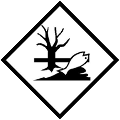
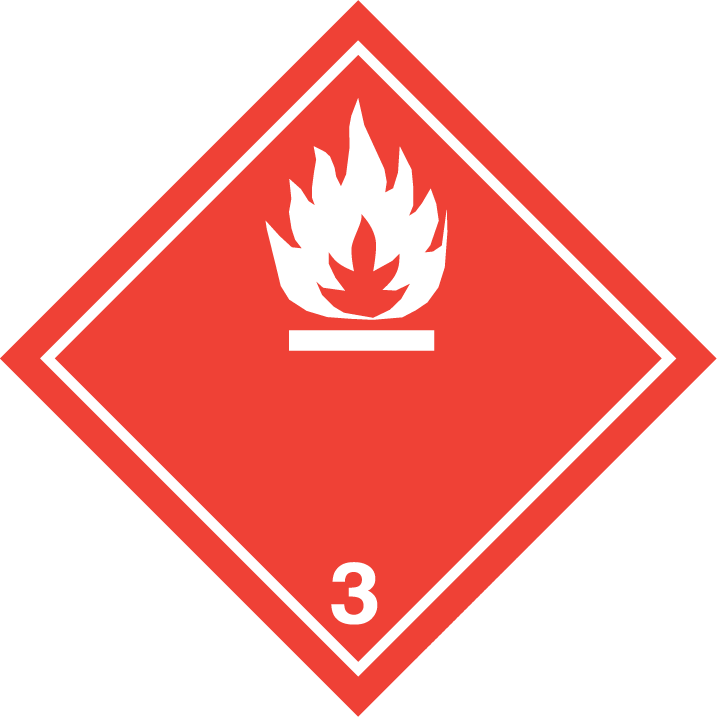
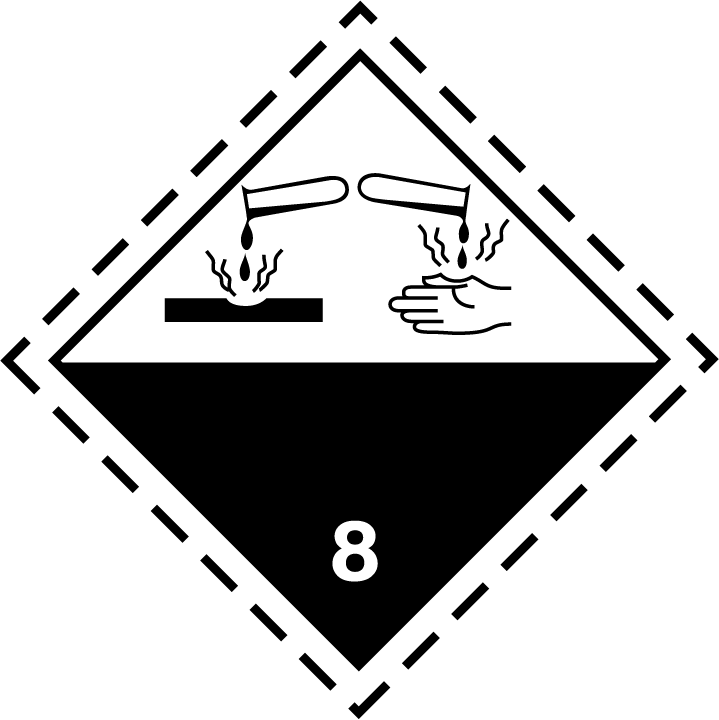
- HAZCHEM
- No further relevant information available
- UN Number
- UN2920
- Proper shipping name
- CORROSIVE LIQUID, FLAMMABLE, N.O.S. (quaternary ammonium compounds, benzylalkyl(C=12-16)dimethyl, chlorides, ETHANOL)
- Transport hazard class
- Class 8 Corrosive substances
- Label 8 (3)
- Packing group
- II
- Environmental hazard
- Marine pollutant, symbol (fish and tree)
- Special precautions for users
- Warning: Corrosive substances,
- Hazard identification number :36,
- EMS Number: F-E, S-C,
- Stowage category: A
- Additional information
- Limited quantities (LQ) 5L
- Excepted quantities (EQ) Code: E1
- Maximum net quantity per inner packaging: 30 mL
- Maximum net quantity per outer packaging: 1000 mL
- Quantity limitations On passenger aircraft/rail: 60 L
- On cargo aircraft only: 220 L
- Remarks: Special marking with the symbol (fish and tree)
15. Regulatory Information
- Poisons Schedule Number
- -
- Other Information
- -
16. Other Information
- SDS preparation date
- 18 February 2026
- Comments
- This information is based on our present knowledge. However, this shall not constitute a guarantee for any specific product features and shall not establish a legally valid contractual relationship.
- References
- -