
Safety Data Sheets / Circuitworks Silver Conductive Epoxy - Epoxy
Safety Data Sheet
Circuitworks Silver Conductive Epoxy - Epoxy
1. Identification
Product Identifiers
- Product Name
- Circuitworks Silver Conductive Epoxy - Part A
- Other Names
- Nil
- Product Number(s)
- 16043, CW2400, CW2400 BLK PART A., CW2400J, PEL16043
- CAS Number
- 7440-22-4, 25068-38-6
Recommended use of the chemical and restriction on use
Where and restrictions (eg. Laboratory use.)
Company Details
ProSciTech Pty Ltd
11 Carlton Street
KIRWAN QLD 4817
Australia
(07) 4773 9444
pst@proscitech.com
proscitech.com.au
11 Carlton Street
KIRWAN QLD 4817
Australia
(07) 4773 9444
pst@proscitech.com
proscitech.com.au
Emergency Contact Details
ProSciTech Pty Ltd
11 Carlton Street
KIRWAN QLD 4817
Australia
(07) 4773 9444
pst@proscitech.com
proscitech.com.au
11 Carlton Street
KIRWAN QLD 4817
Australia
(07) 4773 9444
pst@proscitech.com
proscitech.com.au
2. Hazards Identification
Classification of the substance or mixture
- Skin Irrit. 2, H315
- Eye Irrit. 2, H319
- Skin Sens. 1, H317
- Aquatic Acute 1, H400 Aquatic Chronic 1, H410
- The product is classified as hazardous according to UK CLP Regulation SI 2019/720 as amended.
Label Elements
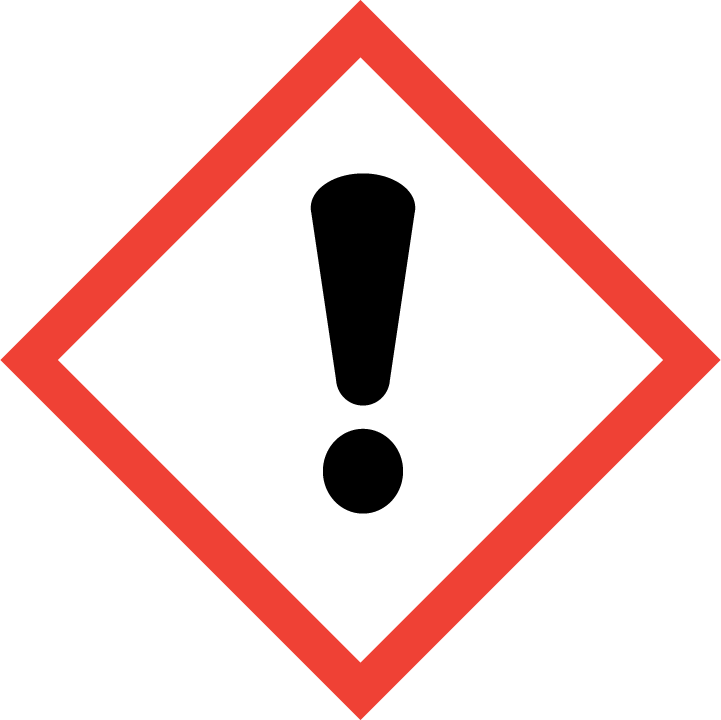
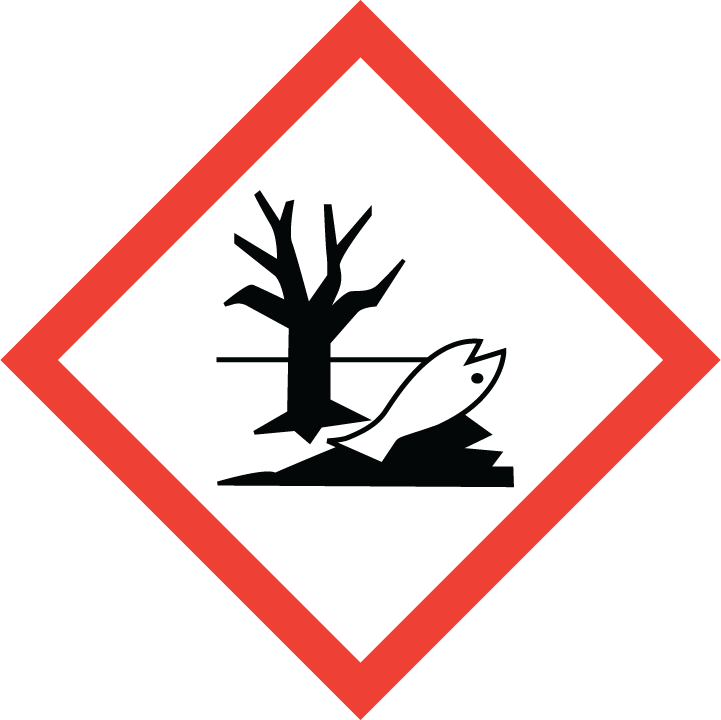
- Signal Words
- Warning
- Hazard Statement(s)
- Causes eye and skin irritation. May cause allergic skin reaction. May cause skin irritation. Contains material that can cause target organ damage.
- Very toxic to aquatic life with long lasting effects.
- Precautionary Statement(s)
- Do not eat, drink or smoke when using this product. Avoid contact with eyes, skin and clothing. Wash thoroughly after handling.
Primary route(s) of entry
- Pre-existing disorders involving any target organs mentioned in this SDS as being at risk may be aggravated by over-exposure to this product.
- Once sensitised, a severe allergic reaction may occur when subsequently exposed to very low levels.
Human Health
- Inhalation
- No specific data.
- Ingestion
- Adverse symptoms may include the following:generalized argyria.
- Eyes
- Adverse symptoms may include the following:
- pain or irritation
- watering
- redness
- Skin
- Adverse symptoms may include the following:
- irritation
- redness
Environment
Avoid release to the environment.
3. Composition / Information on Ingredients
| Name | CAS No. | Content (w/w) | Classification |
|---|---|---|---|
| Silver | 7440-22-4 | 60-90% | Not Available |
| reaction product: bisphenol-A-(epichlorhydrin); epoxy resin | 25068-38-6 | 10-25% | Not Available |
4. First Aid Measures
- Ingestion
- Wash out mouth with water. Remove dentures if any. If material has been swallowed and the exposed person is conscious, give small quantities of water to drink. Stop if the exposed person feels sick as vomiting may be dangerous. Do not induce vomiting unless directed to do so by medical personnel. If vomiting occurs, the head should be kept low so that vomit does not enter the lungs. Get medical attention if adverse health effects persist or are severe. Never give anything by mouth to an unconscious person. If unconscious, place in recovery position and get medical attention immediately. Maintain an open airway. Loosen tight clothing such as a collar, tie, belt or waistband.
- Inhalation
- Remove victim to fresh air and keep at rest in a position comfortable for breathing. If not breathing, if breathing is irregular or if respiratory arrest occurs, provide artificial respiration or oxygen by trained personnel. It may be dangerous to the person providing aid to give mouth-to-mouth resuscitation. Get medical attention if adverse health effects persist or are severe. If unconscious, place in recovery position and get medical attention immediately. Maintain an open airway. Loosen tight clothing such as a collar, tie, belt or waistband.
- Skin Contact
- Wash with plenty of soap and water. Remove contaminated clothing and shoes. Wash contaminated clothing thoroughly with water before removing it, or wear gloves. Continue to rinse for at least 10 minutes. Get medical attention. In the event of any complaints or symptoms, avoid further exposure. Wash clothing before reuse. Clean shoes thoroughly before reuse.
- Eye Contact
- Immediately flush eyes with plenty of water, occasionally lifting the upper and lower eyelids. Check for and remove any contact lenses. Continue to rinse for at least 10 minutes. Get medical attention.
- Other Information
- Protection of first-aiders:No action shall be taken involving any personal risk or without suitable training. It may be dangerous to the person providing aid to give mouth-to-mouth resuscitation. Wash contaminated clothing thoroughly with water before removing it, or wear gloves.
- Notes to physician: No specific treatment. Treat symptomatically. Contact poison treatment specialist immediately if large quantities have been ingested or inhaled.
5. Firefighting Measures
Suitable extinguishing equipment
- Fire
- Use an extinguishing agent suitable for the surrounding fire.
- HAZCHEM
- Decomposition products may include the following materials:
- carbon dioxide
- carbon monoxide
- halogenated compounds
- metal oxide/oxides
Special protective equipment and precautions for fire fighters
- Promptly isolate the scene by removing all persons from the vicinity of the incident if there is a fire. No action shall be taken involving any personal risk or without suitable training.
- Fire-fighters should wear appropriate protective equipment and self-contained breathing apparatus (SCBA) with a full face-piece operated in positive pressure mode.
6. Accidental Release Measures
- Personal precautions, protective equipment and emergency procedures
- For Non-Emergency Personnel: No action shall be taken involving any personal risk or without suitable training. Evacuate surrounding areas. Keep unnecessary and unprotected personnel from entering. Do not touch or walk through spilled material. Provide adequate ventilation. Wear appropriate respirator when ventilation is inadequate. Put on appropriate personal protective equipment (see Section 8).
- For emergency Responders: If specialised clothing is required to deal with the spillage, take note of any information in Section 8 on suitable and unsuitable materials. See also the information in "For non-emergency personnel".
- Environmental precautions
- Avoid dispersal of spilt material and runoff and contact with soil, waterways, drains and sewers. Inform the relevant authorities if the product has caused environmental pollution (sewers, waterways, soil or air). Water polluting material. May be harmful to the environment if released in large quantities. Collect spillage.
- Methods and materials for containment and clean up
- Small Spills: Move containers from spill area. Avoid dust generation. Do not dry sweep. Place spilled material in a designated, labeled waste container. Vacuum dust with equipment fitted with a HEPA filter and place in a closed, labeled waste container. Dispose of via a licensed waste disposal contractor.
- Large Spills: Move containers from spill area. Approach release from upwind. Prevent entry into sewers, water courses, basements or confined areas. Avoid dust generation. Do not dry sweep. Vacuum dust with equipment fitted with a HEPA filter and place in a closed, labeled waste container. Dispose of via a licensed waste disposal contractor. Note: see Section 1 for emergency contact information and Section 13 for waste disposal
7. Handling and Storage
- Precautions for safe handling
- Put on appropriate personal protective equipment (see Section 8). Eating, drinking and smoking should be prohibited in areas where this material is handled, stored and processed. Workers should wash hands and face before eating, drinking and smoking. Remove contaminated clothing and protective equipment before entering eating areas. Do not ingest. Avoid contact with eyes, skin and clothing. Keep in the original container or an approved alternative made from a compatible material, kept tightly closed when not in use. Empty containers retain product residue and can be hazardous. Do not reuse container
- Conditions for safe storage
- Store in accordance with local regulations. Store in original container protected from direct sunlight in a dry, cool and well-ventilated area, away from incompatible materials (see Section 10) and food and drink. Keep container tightly closed and sealed until ready for use. Containers that have been opened must be carefully resealed and kept upright to prevent leakage. Do not store in unlabeled containers. Use appropriate containment to avoid environmental contamination.
8. Exposure Controls / Personal Protection
Exposure Standards
- Engineering controls
- Good general ventilation should be sufficient to control worker exposure to airborne contaminants.
- If this product contains ingredients with exposure limits, personal, workplace atmosphere or biological monitoring may be required to determine the effectiveness of the ventilation or other control measures and/or the necessity to use respiratory protective equipment. Reference should be made to appropriate monitoring standards. Reference to national guidance documents for methods for the determination of hazardous substances will also be required.
- Good general ventilation should be sufficient to control worker exposure to airborne contaminants.
- Wash hands, forearms and face thoroughly after handling chemical products, before eating, smoking and using the lavatory and at the end of the working period. Appropriate techniques should be used to remove potentially contaminated clothing. Wash contaminated clothing before reusing. Ensure that eyewash stations and safety showers are close to the workstation location
Personal protective equipment
- Eye and face protection
- Safety eyewear complying with an approved standard should be used when a risk assessment indicates this is necessary to avoid exposure to liquid splashes, mists, gases or dusts. If contact is possible, the following protection should be worn, unless the assessment indicates a higher degree of protection: chemical splash goggles.
- Skin protection
- Hand Protection: Chemical-resistant, impervious gloves complying with an approved standard should be worn at all times when handling chemical products if a risk assessment indicates this is necessary. Considering the parameters specified by the glove manufacturer, check during use that the gloves are still retaining their protective properties. It should be noted that the time to breakthrough for any glove material may be different for different glove manufacturers. In the case of mixtures, consisting of several substances, the protection time of the gloves cannot be accurately estimated.
- Other Skin Protection: Appropriate footwear and any additional skin protection measures should be selected based on the task being performed and the risks involved and should be approved by a specialist before handling this product.
- Body protection
- Personal protective equipment for the body should be selected based on the task being performed and the risks involved and should be approved by a specialist before handling this product.
- Respiratory protection
- Based on the hazard and potential for exposure, select a respirator that meets the appropriate standard or certification. Respirators must be used according to a respiratory protection program to ensure proper fitting, training, and other important aspects of use.
9. Physical and Chemical Properties
General information
- Appearance
- Solid (Paste)
- Odour
- Mild Amine Like
- pH
- Not stated
- Vapour Pressure
- <0.13 kPa (<1 mm Hg) [room temperature]
- Density
- Not stated
- Boiling Point
- >93.333c (>200f)
- Melting Point
- Not stated
- Solubility
- Not stated
- Specific Gravity of Density
- Not stated
- Flash Point
- Closed cup: >93.3°C (>199.9°F) [Setaflash.]
- Flammable (Explosive) Limits
- Not stated
- Ignition Temperature
- Not stated
- Formula
- Not stated
10. Stability and Reactivity
- Reactivity
- No specific test data related to reactivity available for this product or its ingredients.
- Chemical stability
- The product is stable.
- Possibility of hazardous reactions
- Under normal conditions of storage and use, hazardous reactions will not occur.
- Conditions to avoid
- Excessive Heat.
- Incompatible materials
- Reactive or incompatible with the following materials: oxidising materials acids alkalis Amines. Mercaptans.
11. Toxicological Information
- Acute effects
- Not available.
- Eye contact
- Causes serious eye irritation.
- Skin contact
- Moderate to severe irritant
- Ingestion
- Do not ingest. If swallowed then seek immediate medical assistance.
- Inhalation
- No known significant effects or critical hazards.
- Toxicity and irritation
- Not available.
12. Ecological Information
- Ecotoxicity
- No known significant effects or critical hazards.
- Persistence and degradability
- Not available.
- Bioaccumulative potential
- Low
- Other adverse effects
- Not available.
13. Disposal Considerations
General information
- Methods of Disposal: The generation of waste should be avoided or minimised wherever possible. Disposal of this product, solutions and any by-products should at all times comply with the requirements of environmental protection and waste disposal legislation and any regional local authority requirements. Dispose of surplus and non-recyclable products via a licensed waste disposal contractor. Waste should not be disposed of untreated to the sewer unless fully compliant with the requirements of all authorities with jurisdiction.
- Hazardous Waste: The classification of the product may meet the criteria for a hazardous waste.
14. Transport Information
ADG label required
- HAZCHEM
- Decomposition products may include the following materials:
- carbon dioxide
- carbon monoxide
- halogenated compounds
- metal oxide/oxides
- UN Number
- Not regulated.
- Proper shipping name
- Not Availalble
- Transport hazard class
- Not Availalble
- Packing group
- Not Availalble
- Environmental hazard
- No
- Special precautions for users
- Not Availalble
- Additional information
- Not Availalble
15. Regulatory Information
- Poisons Schedule Number
- Not Listed
- Other Information
- All components are listed or exempted.
16. Other Information
- SDS preparation date
- 19 February 2026
- References
- CIRCUITWORKS® CONDUCTIVE EPOXY - Part A (Epoxy) UK chrome-extension://efaidnbmnnnibpcajpcglclefindmkaj/https://docs.rs-online.com/f417/0900766b8001d968.pdf 1/05/2023