
Safety Data Sheets / Carson's (Para)Formaldehyde, Phosphate Buffered
Safety Data Sheet
Carson's (Para)Formaldehyde, Phosphate Buffered
1. Identification
Product Identifiers
- Product Name
- Carson's (Para)Formaldehyde, Phosphate Buffered
- Other Names
- Not available
- Product Number(s)
- 15733-05, 15733-10, EMS15733-05, EMS15733-10
- CAS Number
- Not available
Recommended use of the chemical and restriction on use
Laboratory chemicals
Company Details
ProSciTech Pty Ltd
11 Carlton Street
KIRWAN QLD 4817
Australia
(07) 4773 9444
pst@proscitech.com
proscitech.com.au
11 Carlton Street
KIRWAN QLD 4817
Australia
(07) 4773 9444
pst@proscitech.com
proscitech.com.au
Emergency Contact Details
ProSciTech Pty Ltd
11 Carlton Street
KIRWAN QLD 4817
Australia
(07) 4773 9444
pst@proscitech.com
proscitech.com.au
11 Carlton Street
KIRWAN QLD 4817
Australia
(07) 4773 9444
pst@proscitech.com
proscitech.com.au
2. Hazards Identification
Classification of the substance or mixture
- GHS08 Health hazard
- Muta. 2 H341 Suspected of causing genetic defects
- Carc. 1B H350 May cause cancer
- GHS07
- Skin Irrit. H315 Causes skin irritation.
- Eye Irrit. 2A H319 Causes serious eye irritation
- Skin Sens. 1 H317 May cause an allergic skin reaction.
Label Elements
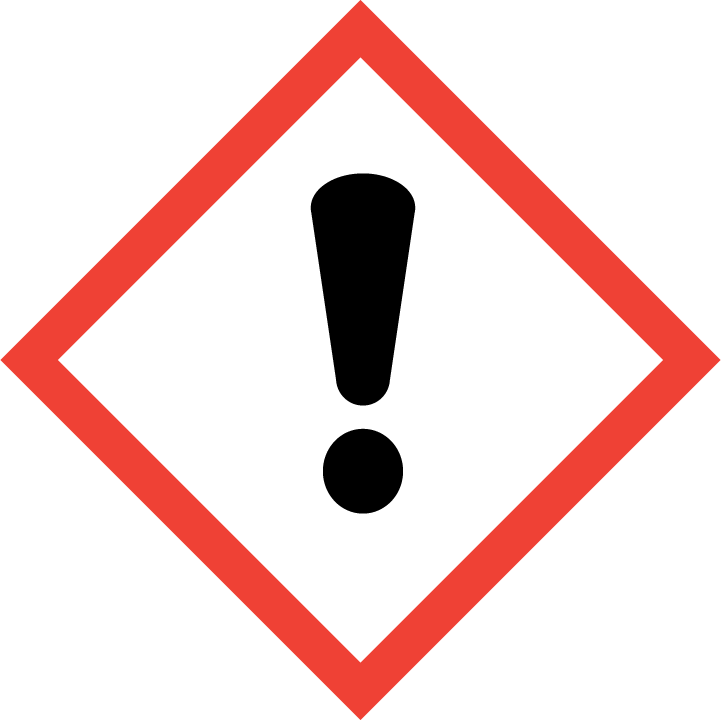
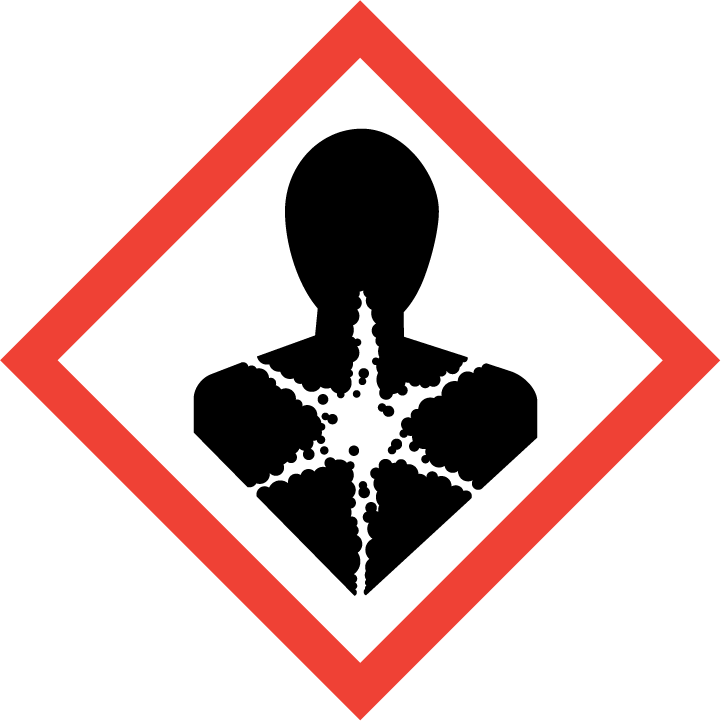
- Signal Words
- None
- Hazard Statement(s)
- Causes skin irritation
- Causes serious eye irritation
- May cause an allergic skin reaction.
- Suspected of causing genetic defects.
- May cause cancer.
- Precautionary Statement(s)
- Avoid breathing dust/fumes/gas/mist/vapours/spray
- Wear protective gloves/protective clothing/eye protection/face protection.
- Wash thoroughly after handling.
- Contaminated work clothing should not be allowed out of the workplace.
- Obtain special instructions before use.
- Do not handle until all safety precautions have been read and understood.
Primary route(s) of entry
Not available
Human Health
- Inhalation
- Not available
- Ingestion
- Not available
- Eyes
- Rinse cautiously with water for several minutes. Remove contact lenses, if present and easy to do. Continue rinsing. If eye irritation persists, get medical advice/attention.
- Skin
- Wash with plenty of water. If skin irritation of rash occurs, get medical advice/attention. Take off contaminated clothing and wash it before reuse.
Environment
Store locked up. Dispose of contents/container in accordance with local/regional/national/international regulations.
3. Composition / Information on Ingredients
| Name | CAS No. | Content (w/w) | Classification |
|---|---|---|---|
| Formaldehyde | 50-00-0 | ≤ 2.5% | Mixtures |
| Sodium Hydroxide | 1310-73-2 | ≤ 2.5% | Mixtures |
4. First Aid Measures
- Ingestion
- If symptoms persist consult a doctor.
- Inhalation
- Supply fresh air and to be sure call for a doctor. In case of unconsciousness place patient stably in side position for transportation.
- Skin Contact
- Immediately wash with water and soap and rinse thoroughly.
- Eye Contact
- Rinse opened eye for several minutes under running water. If symptoms persist, consult a doctor.
- Other Information
- Symptoms of poisoning may even occur after several hours; therefore medical observation for at least 48 hours after the accident.
5. Firefighting Measures
Suitable extinguishing equipment
- Fire
- CO₂, powder or water spray. Fight larger fires with water spray or alcohol resistant foam.
- HAZCHEM
- No further relevant information available.
Special protective equipment and precautions for fire fighters
Mouth respiratory protective device.
6. Accidental Release Measures
- Personal precautions, protective equipment and emergency procedures
- Not required
- Environmental precautions
- Dilute with plenty of water.
- Do not allow to enter sewers/surface or ground wter.
- Methods and materials for containment and clean up
- Absorb with liquid-binding material (sand, Diatomite, acid binders, universal binders, sawdust).
- Dispose contaminated material as waste according to item 13.
- Ensure adequate ventilation.
7. Handling and Storage
- Precautions for safe handling
- Ensure good ventilation/exhaustion at the workplace.
- Open and handle receptacle with care.
- Prevent formation of aerosols.
- Keep respiratory protective device available.
- Conditions for safe storage
- Keep container tightly sealed.
8. Exposure Controls / Personal Protection
Exposure Standards
| Material | TWA ppm | TWA mg/m³ | STEL ppm | STEL mg/m³ |
|---|---|---|---|---|
| Formaldehyde | 1ppm | 1.2 mg/m³ | 2ppm | 2.5 mg/m³ |
| Sodium Hydroxide | 2 mg/m³ | - |
- Engineering controls
- Keep away from foodstuffs, beverages and feed.
- Immediately remove all soiled and contaminated clothing.
- Wash hands before breaks and at the end of work.
- Store protective clothing separately.
- Avoid contact with the eyes and skin.
Personal protective equipment
- Eye and face protection
- Wear tightly sealed goggles
- Skin protection
- Wear protective gloves. The glove material has to be impermeable and resistant to the product/the substance/the preparation.
- Body protection
- not available
- Respiratory protection
- In case of brief exposure or low pollution use respiratory filter device. In case of intensive or longer exposure use self-contained respiratory protective device.
9. Physical and Chemical Properties
General information
- Appearance
- colourless liquid
- Odour
- Pungent
- pH
- Not determined
- Vapour Pressure
- 23hPa at 20°C
- Density
- 1.00448 g/cm³ at 20°C
- Boiling Point
- 100 °C
- Melting Point
- Undetermined
- Solubility
- Fully miscible
- Specific Gravity of Density
- Not available
- Flash Point
- Not applicable
- Flammable (Explosive) Limits
- Product does not present an explosion hazard.
- Ignition Temperature
- Product is not selfigniting.
- Formula
- Not available
10. Stability and Reactivity
- Reactivity
- No further relevant information available
- Chemical stability
- No decomposition if used according to specifications.
- Possibility of hazardous reactions
- No dangerous reactions known.
- Conditions to avoid
- No further relevant information available
- Incompatible materials
- No further relevant information available.
11. Toxicological Information
- Acute effects
- not available
- Eye contact
- Irritating effect
- Skin contact
- Irritant to skin and mucous membranes. Sensitisation possible through skin contact.
- Ingestion
- not available
- Inhalation
- Not available
- Toxicity and irritation
- Harmful
- Irritant
- Carcinogenic.
12. Ecological Information
- Ecotoxicity
- No further relevant information available
- Persistence and degradability
- No further relevant information available
- Bioaccumulative potential
- No further relevant information available
- Other adverse effects
- Water hazard class 2: hazardous for water.
- Do not allow product to reach ground water, water course or sewage system.
- Danger to drinking water if even small quantities leak into the ground.
13. Disposal Considerations
General information
- Must not be disposed together with household garbage. Do not allow product to reach sewage system.
- Disposal must be made according to official regulations. Cleanse with water and if necessary with cleansing agents.
14. Transport Information
ADG label required
- HAZCHEM
- No further relevant information available.
- UN Number
- Not regulated
- Proper shipping name
- Not regulated
- Transport hazard class
- Not regulated
- Packing group
- Not regulated
- Environmental hazard
- Not applicable
- Special precautions for users
- not applicable
- Additional information
- Not available
15. Regulatory Information
- Poisons Schedule Number
- Formaldehyde S2, S6, S10
- Methyl Alcohol S5, S6
- Sodium Hydroxide S5, S6, S10
- Other Information
- Workers are not allowed to be exposed to the hazardous carcinogenic materials contained in the preparation. Exceptions can be made by the authorities in certain cases.
16. Other Information
- SDS preparation date
- 19 February 2026
- Comments
- This information is based on our present knowledge. However, this shall not constitute a guarantee for any specific product features and shall not establish a legally valid contractual relationship.
- References
- Not available.