
Safety Data Sheets / Carnoy's Fluid
Safety Data Sheet
Carnoy's Fluid
1. Identification
Product Identifiers
- Product Name
- Carnoy's Fluid
- Other Names
- Carnoy's Fixative, Carnoy's Solution
- Product Number(s)
- 64130-05, EMS64130-05
- CAS Number
- Not available
Recommended use of the chemical and restriction on use
Laboratory use. A tissue fixative used in Hospital and Pathology laboratories.
Company Details
ProSciTech Pty Ltd
11 Carlton Street
KIRWAN QLD 4817
Australia
(07) 4773 9444
pst@proscitech.com
proscitech.com.au
11 Carlton Street
KIRWAN QLD 4817
Australia
(07) 4773 9444
pst@proscitech.com
proscitech.com.au
Emergency Contact Details
ProSciTech Pty Ltd
11 Carlton Street
KIRWAN QLD 4817
Australia
(07) 4773 9444
pst@proscitech.com
proscitech.com.au
11 Carlton Street
KIRWAN QLD 4817
Australia
(07) 4773 9444
pst@proscitech.com
proscitech.com.au
2. Hazards Identification
Classification of the substance or mixture
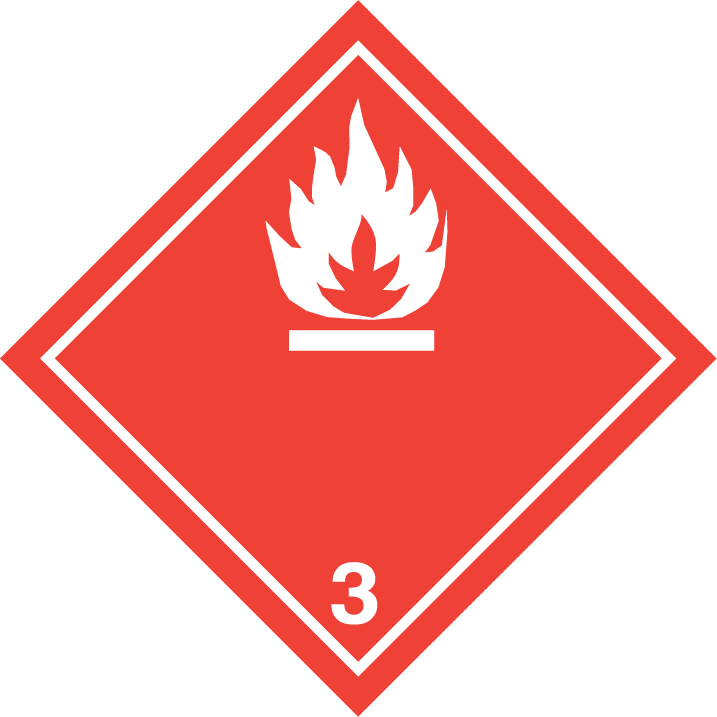
- GHS02 flame
- Flam. Liq. 2 H225 Highly flammable liquid and vapour.
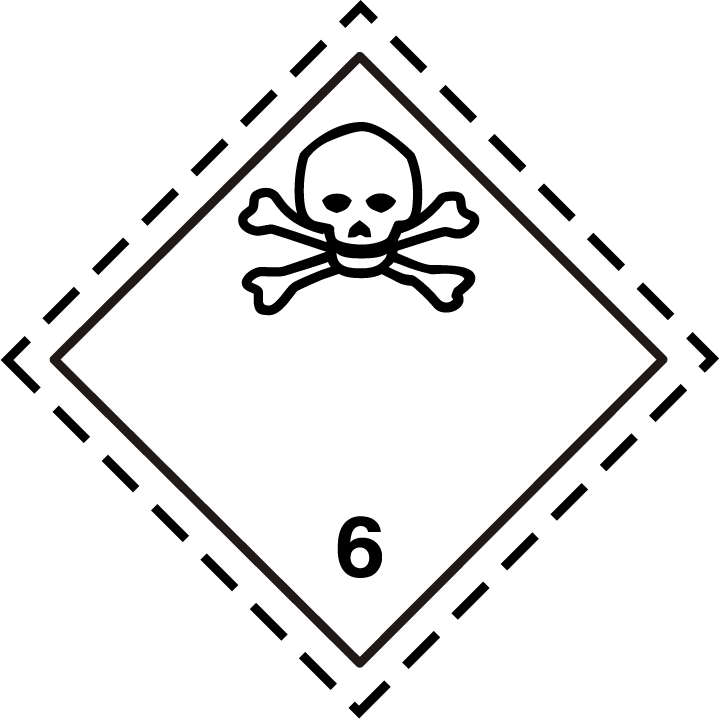
- GHS06
- Acute Tox. 3 H301 Toxic if swallowed
- Acute Tox. 3 H331 Toxic if inhaled
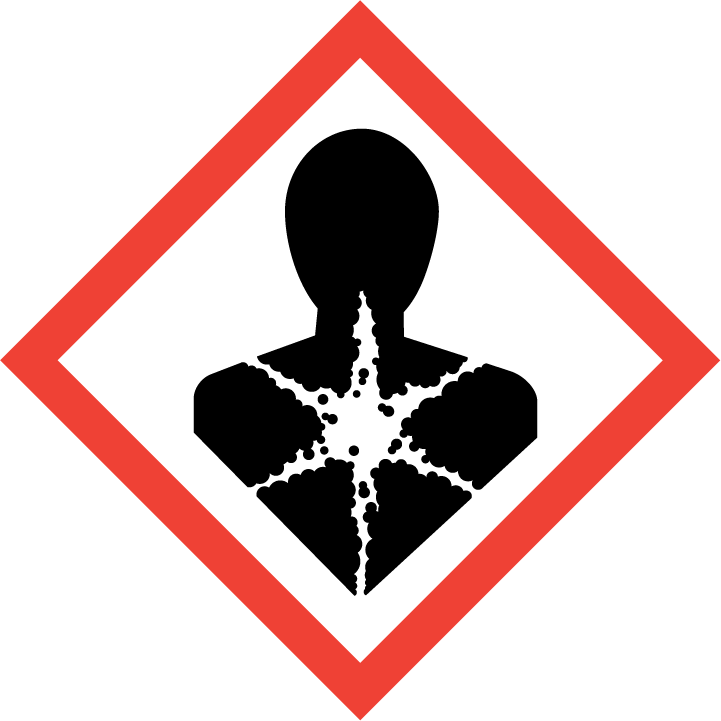
- GHS08 health hazard.
- Carc. 2 H351 Suspected of causing cancer.
- Repr. 2 H361d Suspected of damaging the unborn child.
- STOT SE 2 H371 May cause damage to the central nervous system and the visual organs.
- STOT RE 2 H373 May cause damage to the central nervous system, the kidneys, the liver and the
- respiratory system through prolonged or repeated exposure
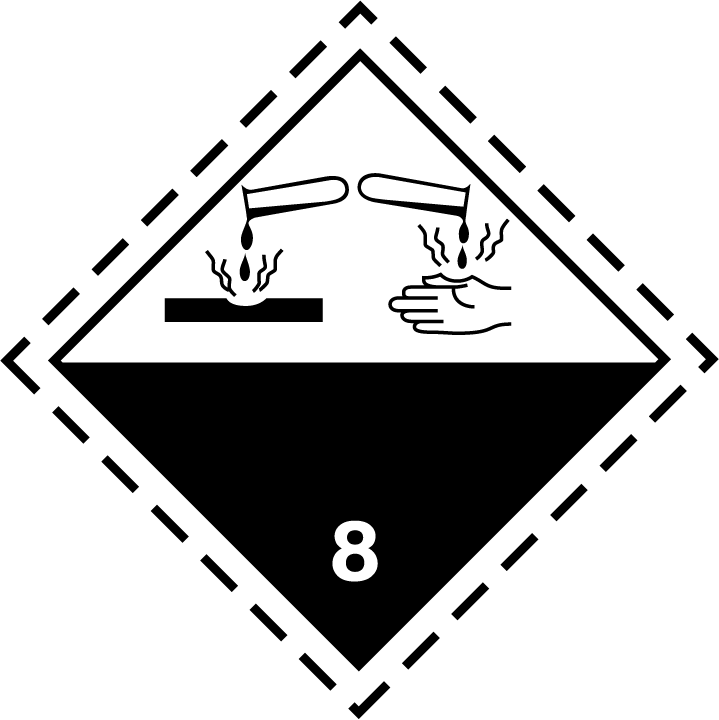
- GHS05 corrosion
- Met. Corr.1 H290 May be corrosive to metals.
- GHS07
- Skin Irrit. 2 H315 Causes skin irritation.
- Eye Irritation 2A H319 Causes serious eye irritation.
- STOT SE 3 H336 May cause drowsiness or dizziness.
Label Elements
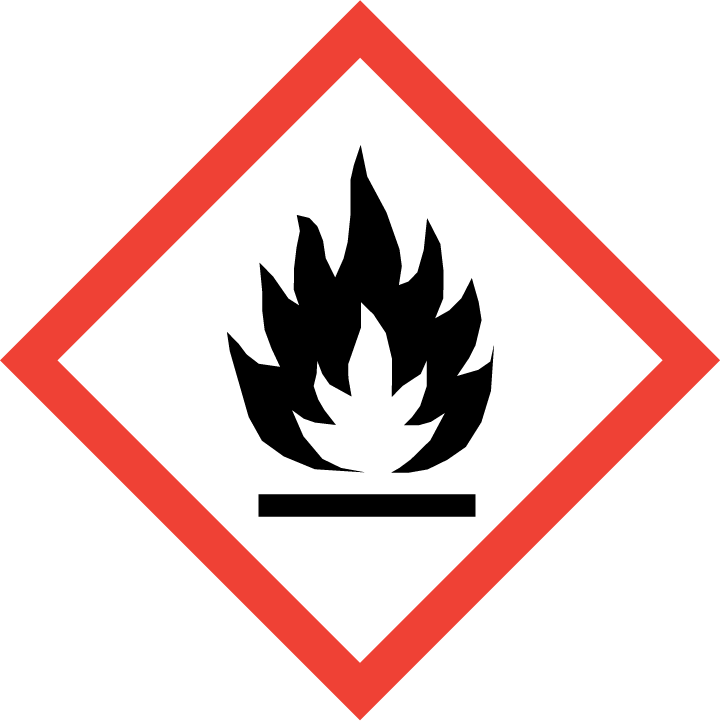
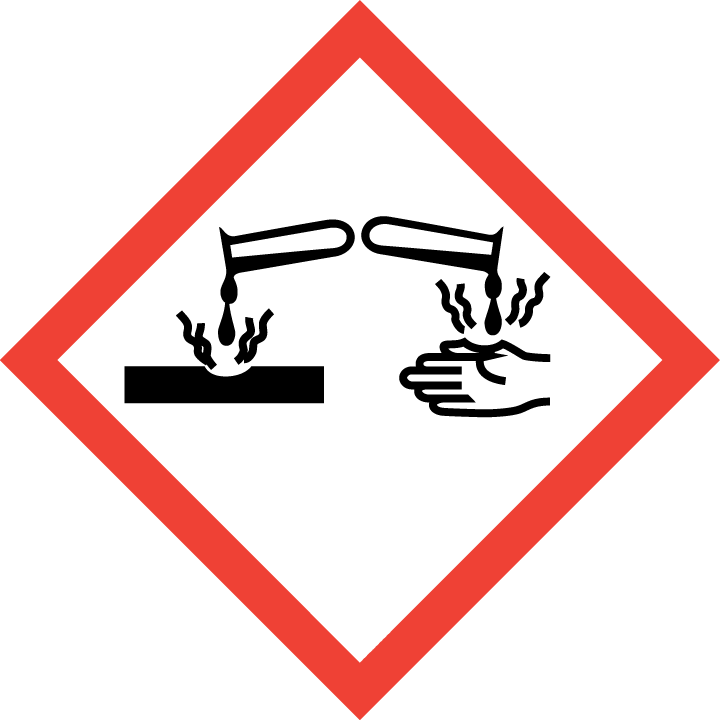
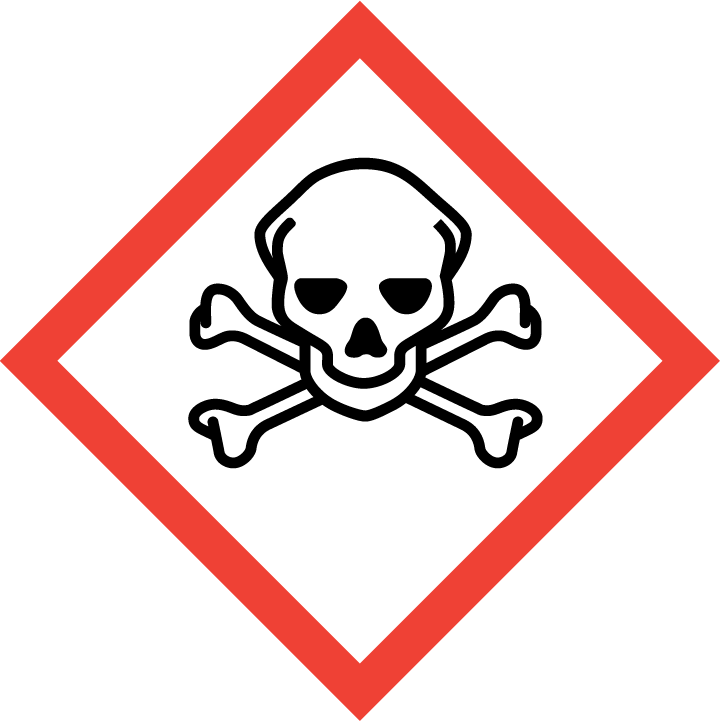
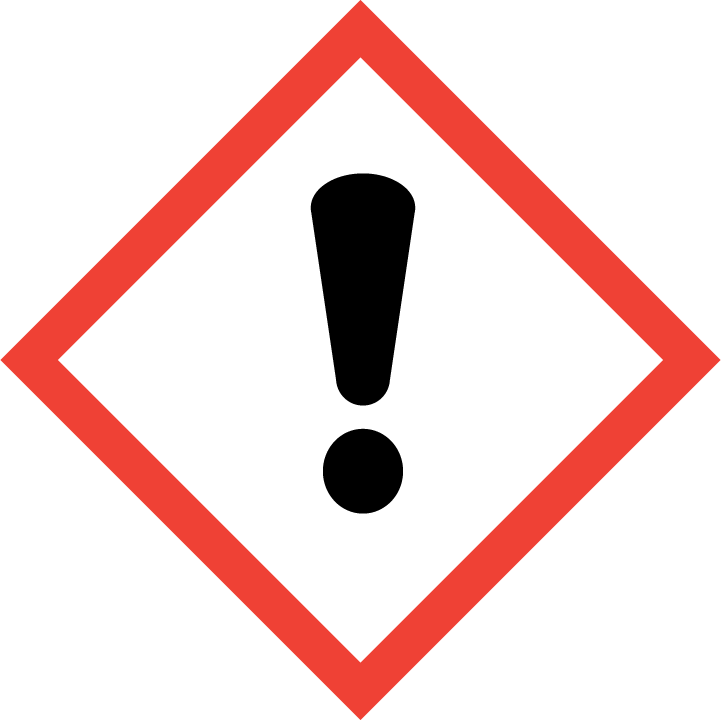
- Signal Words
- None
- Hazard Statement(s)
- H225: Highly flammable liquid and vapour
- H290: Maybe corrosive to metals
- H301: Toxic if swallowed
- H331: Toxic if inhaled
- H315: Causes serious skin irritation
- H319: Causes serious eye irritation
- H351: Suspected of causing cancer
- H361: Suspected of damaging fertility or the unborn child
- H371: May cause damage to the central nervous system and the visual organs
- H336: May cause drowsiness or dizziness
- H372: Causes damage to organs through prolonged or repeated exposure
- Precautionary Statement(s)
- Obtain special instructions before use.
- Do not handle until all safety precautions have been read and understood.
- P301±P310: IF SWALLOWED - Immediately call a POISON CENTER or doctor/physician.
- P330 Rinse mouth.
- P303±P361±P353: IF ON SKIN (or hair): Take off immediately all contaminated clothing. Rinse skin with water [or shower].
- P305±P338: IF IN EYES: Remove contact lenses, if present and easy to do. Continue rinsing.
- P210: Keep away from flames and hot surfaces. No smoking
- P233: Keep container tightly closed
- P260: DO NOT breathe dust/fume/gas/mist/vapours/spray
- P264: Wash thoroughly after handling
- P405 Store locked up.
- P501: Dispose of contents/container in accordance with local regional/national/international regulations.
Primary route(s) of entry
Can enter lungs and cause damage.
Human Health
- Inhalation
- Inhalation of high concentrations may cause central nervous system effects characterised by nausea, headache, dizziness, unconsciousness and coma. Causes respiratory tract irritation. May cause cardiac sensitization and possible failure. May cause narcotic effects in high concentration. Vapors may cause dizziness or suffocation.
- Supply fresh air or oxygen; call for doctor.
- In case of unconsciousness place patient stably in side position for transportation.
- Ingestion
- May be fatal or cause blindness if swallowed. May cause gastrointestinal irritation with nausea, vomiting and diarrhea. May cause systemic toxicity with acidosis. May cause central nervous system depression, characterised by excitement, followed by headache, dizziness, drowsiness, and nausea. Advanced stages may cause collapse, unconsciousness, coma and possible death due to respiratory failure. May cause cardiac disturbances. Aspiration of material into the lungs may cause chemical pneumonitis, which may be fatal.
- Eyes
- Causes severe eye irritation. May cause painful sensitization to light. May cause chemical conjunctivitis and corneal damage.
- Rinse opened eye for several minutes under running water. If symptoms persist, consult a doctor.
- Skin
- Causes moderate skin irritation. May be absorbed through the skin.
- Immediately wash with water and soap and rinse thoroughly.
Environment
Dispose of contents/container in accordance with local/regional/national/international regulations.
3. Composition / Information on Ingredients
| Name | CAS No. | Content (w/w) | Classification |
|---|---|---|---|
| Ethyl Alcohol, denatured | 64-17-5 | >50-≤100% | Mixture |
| CHLOROFORM, REAGENT ACS | 67-66-3 | >25-≤50% | Mixture |
| Acetic Acid Glacial | 64-19-7 | >2.5-≤10% | Mixture |
| Methyl Alcohol | 67-56-1 | >2.5-≤10% | Mixture |
4. First Aid Measures
- Ingestion
- Call for a doctor immediately. Do not induce vomiting
- Inhalation
- Remove from exposure and move to fresh air immediately. Get medical aid immediately. If breathing is difficult, give oxygen. Do NOT use mouth-to-mouth resuscitation. If breathing has ceased apply artificial respiration using oxygen and a suitable mechanical device such as a bag and a mask.
- Skin Contact
- Immediately remove any clothing soiled by the product.
- Get medical aid. : Immediately wash with water and soap and rinse thoroughly for at least 15 minutes after removing contaminated clothing and shoes. Wash clothing before reuse.
- Eye Contact
- Immediately flush eyes with plenty of water for at least 15 minutes, occasionally lifting the upper and lower eyelids. Get medical aid.
- Other Information
- Ethanol may inhibit methanol metabolism.
- Causes cardiac sensitization to endogenous catelcholamines which may lead to cardiac arrhythmias. Do NOT use adrenergic agents such as epinephrine or pseudoepinephrine. Treat symptomatically and supportively. Persons with skin or eye disorders or liver, kidney, chronic respiratory diseases, or central and peripheral nervous system diseases may be at increased risk from exposure to this substance. Activated charcoal does not reduce ethanol absorption.
5. Firefighting Measures
Suitable extinguishing equipment
- Fire
- For small fires, use dry chemical, carbon dioxide, water spray or alcohol-resistant foam. For large fires, use water spray, fog, or alcohol-resistant foam. Water may be ineffective. Do NOT use straight streams of water. Cool containers with flooding quantities of water until well after fire is out.
- Ethanol may inhibit methanol metabolism. As in any fire, wear a self-contained breathing apparatus in pressure-demand, MSHA/NIOSH (approved or equivalent), and full protective gear. Vapors may form an explosive mixture with air. Vapors can travel to a source of ignition and flash back. May burn with invisible flame. Will burn if involved in a fire. Flammable Liquid. Can release vapours that form explosive mixtures at temperatures above the flashpoint. Use water spray to keep fire-exposed containers cool. Containers may explode in the heat of a fire. Vapors may be heavier than air. They can spread along the ground and collect in low or confined areas. May be ignited by heat, sparks, and flame. Vapors may form an explosive mixture with air.
- HAZCHEM
- No further relevant information available.
Special protective equipment and precautions for fire fighters
A respiratory protection program that meets OSHA's 29 CFR 1910.134 and ANSI Z88.2 requirements or European Standard EN 149 must be followed whenever workplace conditions warrant respirator use.
6. Accidental Release Measures
- Personal precautions, protective equipment and emergency procedures
- A respiratory protection program that meets OSHA's 29 CFR 1910.134 and ANSI Z88.2 requirements or European Standard EN 149 must be followed whenever workplace conditions warrant respirator use.
- Keep unprotected persons away.
- Environmental precautions
- Inform respective authorities in case of seepage into water course or sewage system.
- Dilute with plenty of water.
- Do not allow to enter sewers/ surface or ground water.
- Methods and materials for containment and clean up
- Absorb spill with inert material (e.g. vermiculite, sand or earth), then place in suitable container. Clean up spills immediately, observing precautions in the Protective Equipment section. Remove all sources of ignition. Use a spark-proof tool. Provide ventilation. Water spray may reduce vapour but may not prevent ignition in closed spaces.
7. Handling and Storage
- Precautions for safe handling
- Wash thoroughly after handling. Remove contaminated clothing and wash before reuse. Use only in a well-ventilated area. Ground and bond containers when transferring material. Use spark-proof tools and explosion proof equipment. Avoid contact with eyes, skin, and clothing. Empty containers retain product residue, (liquid and/or vapour), and can be dangerous. Keep container tightly closed. Keep away from heat, sparks and flame. Do not ingest or inhale. Do not pressurise, cut, weld, braze, solder, drill, grind, or expose empty containers to heat, sparks or open flames.
- Conditions for safe storage
- Keep away from heat, sparks, and flame. Keep away from sources of ignition. Do not store in direct sunlight. Store in a tightly closed container. Keep from contact with oxidising materials. Store in a cool, dry, well-ventilated area away from incompatible substances. Flammables-area. Do not store near perchlorates, peroxides, chromic acid or nitric acid.
8. Exposure Controls / Personal Protection
Exposure Standards
| Material | TWA ppm | TWA mg/m³ | STEL ppm | STEL mg/m³ |
|---|---|---|---|---|
| Ethyl Alcohol, denatured | 1000 ppm | 1900 mg/m³ | - | - |
| CHLOROFORM, REAGENT ACS | 2 ppm | 10 mg/m³ | - | 10 mg/m³ |
| Acetic Acid Glacial | 10 ppm | 25 mg/m³ | 15 ppm | 37 mg/m³ |
| Ethyl acetate | 400ppm | 1400mg/m³ | - | - |
| Methyl alcohol | 200ppm | 260mg/m³ | 250ppm | 325mg/m³ |
- Engineering controls
- Use explosion-proof ventilation equipment. Facilities storing or utilising this material should be equipped with an eyewash facility and a safety shower. Use adequate general or local exhaust ventilation to keep airborne concentrations below the permissible exposure limits.
Personal protective equipment
- Eye and face protection
- Wear appropriate protective eyeglasses or chemical safety goggles as described by OSHA's eye and face protection regulations in 29 CFR 1910.133 or European Standard EN166.
- Skin protection
- Protective gloves
- The glove material has to be impermeable and resistant to the product/ the substance/ the preparation.
- Due to missing tests no recommendation to the glove material can be given for the product/ the preparation/ the chemical mixture.
- Selection of the glove material on consideration of the penetration times, rates of diffusion and the degradation.
- Material of gloves
- The selection of the suitable gloves does not only depend on the material, but also on further marks of quality and varies from manufacturer to manufacturer. As the product is a preparation of several substances, the resistance of the glove material can not be calculated in advance and has therefore to be checked prior to the application.
- Penetration time of glove material
- The exact break through time has to be found out by the manufacturer of the protective gloves and has to be observed.
- Body protection
- Keep away from foodstuffs, beverages and feed.
- Immediately remove all soiled and contaminated clothing.
- Wash hands before breaks and at the end of work.
- Avoid contact with the eyes and skin.
- Store protective clothing separately.
- Respiratory protection
- A respiratory protection program that meets OSHA's 29 CFR 1910.134 and ANSI Z88.2 requirements or European Standard EN 149 must be followed whenever workplace conditions warrant respirator use.
9. Physical and Chemical Properties
General information
- Appearance
- Colourless fluid
- Odour
- Alcohol-like
- pH
- Acidic - at 20 °C (68 °F): 1.53-2.95
- Vapour Pressure
- at 20 °C: 210 hPa (157.5 mm Hg)
- Density
- at 20 °C: 1.02296 g/cm³
- Boiling Point
- 62 °C
- Melting Point
- Undetermined.
- Solubility
- Fully miscible in water.
- Specific Gravity of Density
- Not determined.
- Flash Point
- 13.9 °C
- Flammable (Explosive) Limits
- Highly flammable
- Lower: 3 Vol %
- Upper: 19.0 Vol %
- Ignition Temperature
- 363 °C
- Formula
- Solvent content:
- Organic solvents: 71.5 %
- VOC content: 71.50 %
10. Stability and Reactivity
- Reactivity
- No further relevant information available.
- Chemical stability
- Stable under normal temperatures and pressures.
- Possibility of hazardous reactions
- Contact with water releases flammable gases.
- Conditions to avoid
- No further relevant information available.
- Incompatible materials
- No further relevant information available.
11. Toxicological Information
- Acute effects
- No further relevant information available.
- Eye contact
- Strong caustic effect.
- Strong irritant with the danger of severe eye injury.
- Skin contact
- Strong caustic effect on skin and mucous membranes.
- Ingestion
- No further relevant information available.
- Inhalation
- No sensitising effects known.
- Toxicity and irritation
- LD/LC50 values relevant for classification:
- 67-66-3 CHLOROFORM, GLASS DISTILLED
- Oral LD50 908 mg/kg (rat)
- Dermal LD50 75 mg/kg (rat)
- 67-56-1 Methyl Alcohol
- Oral LD50 5,628 mg/kg (rat)
- Dermal LD50 15,800 mg/kg (rabbit)
- The product shows the following dangers according to the calculation method of the General EU Classification Guidelines for Preparations as issued in the latest version.
- The product shows the following dangers according to internally approved calculation methods for preparations:
- Toxic
- Harmful
- Corrosive
- Irritant
- Swallowing will lead to a strong caustic effect on mouth and throat and to the danger of perforation of esophagus and stomach.
- Carcinogenic categories
- IARC (International Agency for Research on Cancer)
- 64-17-5 Ethyl alcohol 1
- 67-66-3 CHLOROFORM, GLASS DISTILLED 2B
- NTP (National Toxicology Program)
- 67-66-3 CHLOROFORM, GLASS DISTILLED R
12. Ecological Information
- Ecotoxicity
- A low pH value harms aquatic organism
- Persistence and degradability
- No further relevant information available.
- Bioaccumulative potential
- No further relevant information available.
- Other adverse effects
- Water hazard class 1 (German Regulation) (Self-assessment): slightly hazardous for water. Do not allow undiluted product or large quantities of it to reach ground water, water course or sewage system. Harmful to fish. Harmful to aquatic organisms.
- In the dilution of the use-level the pH-value is considerably increased, so that after the use of the product the aqueous waste, emptied into drains, is only low water-dangerous.
13. Disposal Considerations
General information
- Must not be disposed together with household garbage. Do not allow product to reach sewage system.
- Uncleaned packaging:
- Recommendation: Disposal must be made according to official regulations.
- Recommended cleansing agents: Water, if necessary, together with cleansing agent.
14. Transport Information
ADG label required
- HAZCHEM
- No further relevant information available.
- UN Number
- UN3286
- Proper shipping name
- FLAMMABLE LIQUID, TOXIC, CORROSIVE, N.O.S. (ETHANOL, CHLOROFORM)
- Transport hazard class
- 3 Flammable liquids, 3 (6.1, 8)
- Packing group
- II
- Environmental hazard
- Not applicable.
- Special precautions for users
- Special precautions for user Warning: Flammable liquids
- Hazard identification number (Kemler code): 336
- EMS Number: F-E,S-D
- Stowage Category A
- Additional information
- Quantity limitations On passenger aircraft/rail: 1 L
- On cargo aircraft only: 60 L
- Excepted quantities (EQ) Code: E2
- Maximum net quantity per inner packaging: 30 mL
- Maximum net quantity per outer packaging: 500 mL
- Limited quantities (LQ) 1L
- Excepted quantities (EQ) Code: E2
- Maximum net quantity per inner packaging: 30 mL
- Maximum net quantity per outer packaging: 500 mL
15. Regulatory Information
- Poisons Schedule Number
- CHLOROFORM, REAGENT ACS S2, S4, S6
- Acetic Acid Glacial S2, S5, S6
- Other Information
- No further relevant information available.
16. Other Information
- SDS preparation date
- 9 January 2023
- Comments
- This information is based on our present knowledge. However, this shall not constitute a guarantee for any specific product features and shall not establish a legally valid contractual relationship. This Safety Data Sheet (SDS) has been prepared in compliance with the Preparation of Safety Data Sheets for Hazardous Chemicals Code of Practice February 2016. It is the user's responsibility to determine the suitability of this information for adoption of necessary safety precautions. The information published in this SDS has been compiled from the publications listed in Section 16: to the best of our ability and knowledge these publications are considered accurate. We reserve the right to revise Safety Data Sheets as new information becomes available. Copies may be made for non-profit use.