
Safety Data Sheets / Cargille Refractive Index Liquid Series A nD =1.460 - 1.570
Safety Data Sheet
Cargille Refractive Index Liquid Series A nD =1.460 - 1.570
1. Identification
Product Identifiers
- Product Name
- Cargille Immersion Oil, Type A & B
- Other Names
- N/A
- Product Number(s)
- 16482, 16484, IC113, IC1132, IC18091
- CAS Number
- -
Recommended use of the chemical and restriction on use
For professional and R&D use only
Company Details
ProSciTech Pty Ltd
11 Carlton Street
KIRWAN QLD 4817
Australia
(07) 4773 9444
pst@proscitech.com
proscitech.com.au
11 Carlton Street
KIRWAN QLD 4817
Australia
(07) 4773 9444
pst@proscitech.com
proscitech.com.au
Emergency Contact Details
ProSciTech Pty Ltd
11 Carlton Street
KIRWAN QLD 4817
Australia
(07) 4773 9444
pst@proscitech.com
proscitech.com.au
11 Carlton Street
KIRWAN QLD 4817
Australia
(07) 4773 9444
pst@proscitech.com
proscitech.com.au
2. Hazards Identification
Classification of the substance or mixture
- Aspiration hazard Category 1 H304
- Hazardous to the aquatic environment - Acute Hazard Category 1 H400
- Hazardous to the aquatic environment - Chronic Hazard Category 2 H411
Label Elements
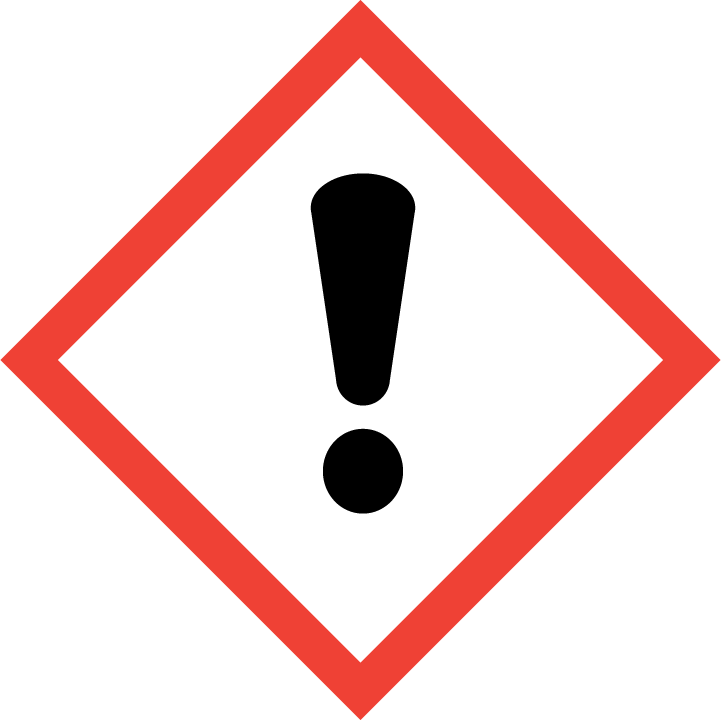
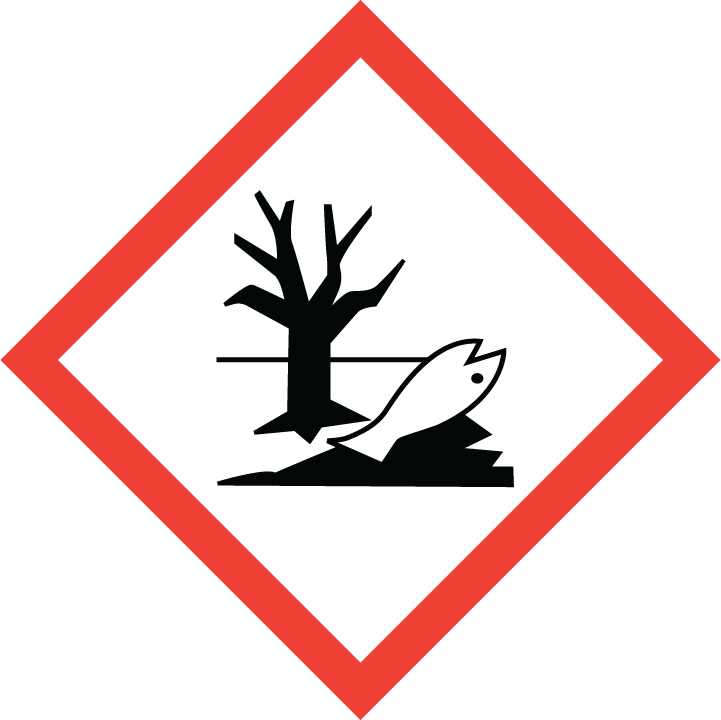
- Signal Words
- None
- Hazard Statement(s)
- H304 - May be fatal if swallowed and enters airways.
- H400 - Very toxic to aquatic life.
- H411 - Toxic to aquatic life with long lasting effects.
- Precautionary Statement(s)
- P273 - Avoid release to the environment.
- P301±P310 - IF SWALLOWED: Immediately call a POISON CENTER or doctor.
- P331 - Do NOT induce vomiting.
- P391 - Collect spillage.
- P405 - Store locked up.
- P501 - Dispose of contents/container in accordance with local, regional, national, and international regulations.
Primary route(s) of entry
- Ingestion.
- Inhalation.
- Eye contact.
- Skin contact.
Human Health
- Inhalation
- Not available.
- Ingestion
- Not available.
- Eyes
- Not available.
- Skin
- Not available.
Environment
No further relevant information available.
3. Composition / Information on Ingredients
| Name | CAS No. | Content (w/w) | Classification |
|---|---|---|---|
| White mineral oil, petroleum | 8042-47-5 | 30-60% | Asp. Tox. 1, H304 |
| Hydrogenated terphenyls | 61788-32-7 | 30-60% | Aquatic Acute 1, H400Aquatic Chronic 4, H413 |
| Terphenyls | 26140-60-3 | 1-5% | Aquatic Acute 1, H400Aquatic Chronic 1, H410 |
4. First Aid Measures
- Ingestion
- Rinse mouth. Do NOT induce vomiting. Place affected person on their side. Immediately call a POISON CENTER or doctor/physician. If vomiting occurs have person lean forward. If vomiting occurs, keep head below waistline
- Inhalation
- When symptoms occur: go into open air and ventilate suspected area. Obtain medical attention if breathing difficulty persists.
- Skin Contact
- Remove contaminated clothing. Drench affected area with water for at least 5 minutes. Obtain medical attention if irritation develops or persists
- Eye Contact
- Rinse cautiously with water for at least 5 minutes. Remove contact lenses, if present and easy to do. Continue rinsing. Obtain medical attention if irritation develops or persists
- Other Information
- Never give anything by mouth to an unconscious person. If you feel unwell, seek medical advice (show the label where possible).
- Gastric or intestinal disorders when ingested. Danger: Causes skin irritation. If medical advice is needed, have product container or label at hand.
5. Firefighting Measures
Suitable extinguishing equipment
- Fire
- Water spray, fog, carbon dioxide (CO₂), alcohol-resistant foam, or dry chemical.
- HAZCHEM
- Not considered flammable but may burn at high temperatures.
- Explosion Hazard: Product is not explosive.
- Reactivity: Hazardous reactions will not occur under normal conditions.
Special protective equipment and precautions for fire fighters
- Precautionary Measures Fire: Exercise caution when fighting any chemical fire.
- Firefighting Instructions: Use water spray or fog for cooling exposed containers.
- Protection During Firefighting: Do not enter fire area without proper protective equipment, including respiratory protection.
- Hazardous Combustion Products: Carbon oxides (CO, CO₂).
- Other Information: Do not allow run-off from fire fighting to enter drains or water courses.
6. Accidental Release Measures
- Personal precautions, protective equipment and emergency procedures
- General Measures: Avoid prolonged contact with eyes, skin and clothing. Avoid breathing (vapour, mist, spray). Spilled product presents a slipping hazard.
- Wear protective equipment. Keep unprotected persons away.
- Ensure adequate ventilation.
- Environmental precautions
- Prevent entry to sewers and public waters. Avoid release to the environment. Collect spillage.
- Inform respective authorities in case of seepage into water course or sewage system.
- Methods and materials for containment and clean up
- For Containment: Contain any spills with dikes or absorbents to prevent migration and entry into sewers or streams.
- Methods for Cleaning Up: Clean up spills immediately and dispose of waste safely. Absorb and/or contain spill with inert material.
- Transfer spilled material to a suitable container for disposal. Contact competent authorities after a spill.
7. Handling and Storage
- Precautions for safe handling
- Additional Hazards When Processed: Spilled material may present a slipping hazard.
- Precautions for Safe Handling: Wash hands and other exposed areas with mild soap and water before eating, drinking or smoking and when leaving work. Avoid prolonged contact with eyes, skin and clothing. Avoid breathing vapours, mist, spray.
- Hygiene Measures: Handle in accordance with good industrial hygiene and safety procedures.
- Conditions for safe storage
- Technical Measures: Comply with applicable regulations.
- Storage Conditions: Keep container closed when not in use. Store in a dry, cool place. Keep/Store away from direct sunlight,
- extremely high or low temperatures and incompatible materials. Store locked up/in a secure area.
- Incompatible Materials: Strong acids, strong bases, strong oxidisers.
- 7.3. Specific End Use(s)
- For professional and R&D use only. Conditions of Intended Use: (ABBR. C.I.U.) As an Optical Refractive Index Liquid at normal room pressure 101.32 kPa (760 mm Hg), temperature 18°C to 40°C (65°F to 104°F) in a non misted/non airborne state in a room having a normal air changes (2)/ HR., in a trained and supervised laboratory/ industrial setting using standard Good Laboratory/ Good
- Manufacturing procedures.
- Note: Product normally sold in 1/4 oz (7.4cc), 1 oz (30cc), 4 oz (120cc),and 16 oz (480cc) quantities. Used in single drop to a few
- cubic centimeters per application. See requisitioner for specific quantities involved.
8. Exposure Controls / Personal Protection
Exposure Standards
| Material | TWA ppm | TWA mg/m³ | STEL ppm | STEL mg/m³ |
|---|---|---|---|---|
| Trade Secret | 0.5 ppm | 5 mg/m³ | - | - |
- Engineering controls
- No information available.
Personal protective equipment
- Eye and face protection
- Safety glasses
- Follow relevant national guidelines concerning the use of protective eyewear.
- Avoid contact with the eyes and skin.
- Skin protection
- Immediately remove all soiled and contaminated clothing. Wash hands before breaks and at the end of work. Protective work clothing.
- Body protection
- Gloves. Protective clothing. Protective goggles. Insufficient ventilation: wear respiratory protection.
- Materials for Protective Clothing: Chemically resistant materials and fabrics.
- The usual precautionary measures for handling chemicals should be followed. Keep away from foodstuffs, beverages and feed.
- Immediately remove all soiled and contaminated clothing.
- Wash hands before breaks and at the end of work.
- Do not inhale gases / fumes / aerosols.
- Avoid contact with the eyes and skin.
- Respiratory protection
- If exposure limits are exceeded or irritation is experienced, approved respiratory protection should be worn.
- In case of inadequate ventilation, oxygen deficient atmosphere, or where exposure levels are not known wear approved respiratory protection.
9. Physical and Chemical Properties
General information
- Appearance
- Colourless to light yellow, oily liquid
- Odour
- Slight Characteristic Odor
- pH
- Not available.
- Vapour Pressure
- 66.66 pascals ( 0.5 mm Hg)
- Density
- 0.923 g/cm³ (7.702 lbs/gal)
- Boiling Point
- > 230 °C (446 °F)
- Melting Point
- 0 °C (32 °F)
- Solubility
- Not miscible or difficult to mix.
- Specific Gravity of Density
- Not determined
- Flash Point
- > 120 °C (248 °F) (Open Cup)
- Flammable (Explosive) Limits
- Not determined
- Ignition Temperature
- Not determined
- Formula
- Not available.
10. Stability and Reactivity
- Reactivity
- Hazardous reactions will not occur under normal conditions
- Chemical stability
- Stable under recommended handling and storage conditions (see section 7)
- Possibility of hazardous reactions
- Hazardous polymerization will not occur.
- Conditions to avoid
- Direct sunlight, extremely high or low temperatures, and incompatible materials
- Incompatible materials
- Strong acids, strong bases, strong oxidisers.
11. Toxicological Information
- Acute effects
- Acute Toxicity (Oral): Not classified.
- Acute Toxicity (Dermal): Not classified.
- Acute Toxicity (Inhalation): Not classified.
- Eye contact
- Based on available data, the classification criteria are not met.
- Skin contact
- Not classified
- Symptoms/Injuries After Skin Contact: Prolonged exposure may cause skin irritation.
- Ingestion
- No further relevant information available.
- Symptoms/Injuries After Ingestion: Aspiration into the lungs can occur during ingestion or vomiting and may cause lung injury.
- Inhalation
- Irritant to skin and mucous membranes. Prolonged exposure may cause irritation.
- Toxicity and irritation
- No further relevant information available.
12. Ecological Information
- Ecotoxicity
- Ecology - General: Very toxic to aquatic life. Very toxic to aquatic life with long lasting effects. Very toxic to aquatic life. Toxic to
- aquatic life with long lasting effects.
- Persistence and degradability
- Due to available data on eliminability/decomposition and bioaccumulation potential prolonged term damage of the environment can not be excluded.
- Bioaccumulative potential
- Due to the distribution coefficient n-octanol/water an accumulation in organisms is not expected.
- Other adverse effects
- Harmful to fish
- Toxic for water fleas
- Do not allow undiluted product or large quantities of it to reach ground water, water course or sewage system.
- Due to available data on eliminability/decomposition and bioaccumulation potential prolonged term damage of the environment can not be excluded.
13. Disposal Considerations
General information
- Waste Disposal Recommendations: Dispose of contents/container in accordance with local, regional, national, territorial, provincial, and international regulations.
- Ecology - Waste Materials: Avoid release to the environment. This material is hazardous to the aquatic environment. Keep out of sewers and waterways.
14. Transport Information
ADG label required


- HAZCHEM
- Not considered flammable but may burn at high temperatures.
- Explosion Hazard: Product is not explosive.
- Reactivity: Hazardous reactions will not occur under normal conditions.
- UN Number
- UN3082
- Proper shipping name
- ENVIRONMENTALLY HAZARDOUS SUBSTANCE, LIQUID, N.O.S (TERPHENYL)
- Transport hazard class
- 9 Miscellaneous dangerous substances and articles
- Packing group
- PG III
- Environmental hazard
- This is a marine pollutant.
- Harmful to fish.
- Toxic for water fleas.
- Special precautions for users
- Special precautions for user Warning: Miscellaneous dangerous substances and articles
- Danger code (Kemler): 90
- EMS Number: F-A,S-F
- Additional information
- Not regulated when carried in single or combination packaging containing a net quantity of 5L or less for liquids or 5 kg or less for solids per the following:
- DOT: 171.4©(2)
- ADR: SP 375
- IMDG: 2.10.2.7
- IATA: special provision A197
15. Regulatory Information
- Poisons Schedule Number
- None of the ingredients are listed.
- Other Information
- No further relevant information available.
16. Other Information
- SDS preparation date
- 16 February 2026
- Comments
- ---- H304 May be fatal if swallowed and enters airways
- ----- H400 Very toxic to aquatic life
- ----- H410 Very toxic to aquatic life with long lasting effects
- ----- H411 Toxic to aquatic life with long lasting effects
- ----- H413 May cause long lasting harmful effects to aquatic life
- Glossary of Data Source Abbreviations
- ATSDR: Agency for Toxic Substances and Disease Registry (U.S. Department of Health and Human Services)
- AU_WES: Australia WES
- CHEMVIEW: ChemView (U.S. Environmental Protection Agency)
- EC_RAR: European Commission Renewal Assessment Report
- EC_SCOEL: European Commission Scientific Committee on Occupational Exposure Limits
- ECETOC: European Centre for Ecotoxicology and Toxicology of Chemicals Reports
- ECHA_API: European Chemicals Agency API
- ECHA_RAC: ECHA Committee for Risk Assessment
- EFSA: European Food Safety Authority
- EPA: U.S. Environmental Protection Agency
- EPA_AEGL: Acute Exposure Guideline Levels (U.S. Environmental Protection Agency)
- EPA_FIFRA: Federal Insecticide, Fungicide, and Rodenticide Act Reregistration Eligibility Decision (U.S. Environmental Protection Agency)
- EPA_HPV: High Production Volume Chemicals (U.S. Environmental Protection Agency)
- EPA_TRED: Risk Assessment for Tolerance Reassessment Eligibility Decision (U.S. Environmental Protection Agency)
- EU_CLH: European Union Harmonised Classification and Labelling Proposal
- EU_RAR: European Union Risk Assessment Report FOOD_JOURN: Food Research Journal (1956)
- IARC: The International Agency for Research on Cancer
- IDLH: National Institute for Occupational Health and Safety Immediately Dangerous to Life or Health Value Profiles
- IUCLID: International Uniform Chemical Information Database
- JAPAN_GHS: Japan GHS Basis for Classification Data
- JP_J-CHECK: Japan J-Check
- KR_NIER: South Korea National Institute of Environmental Research Evaluations
- NICNAS: Australia National Industrial Chemicals Notification and Assessment Scheme
- NIOSH: National Institute for Occupational Health and Safety (U.S. Department of Health and Human Services)
- NLM_CIP: National Library of Medicine ChemID plus database
- NLM_HSDB: National Library of Medicine Hazardous Substance Data Bank
- NLM_PUBMED: National Library of Medicine PubMed database
- NTP: National Toxicology Program
- NZ_CCID: New Zealand Chemical Classification and Information Database
- OECD_EHSP: Environment, Health, and Safety Publication (Organisation for Economic Co-operation and Development)
- OECD_SIDS: Screening Information Data Sets (Organisation for Economic Cooperation and Development)
- WHO: World Health Organization
- References
- SDS Cargille Refractive Index Liquid Series A nD =1.460 - 1.570 https://www.cargille.com/wp-content/uploads/2025/02/Cargille_Refractive_Index_Liquid_Series_A_nD_1460__1570_SDS_NA.pdf 11/02/2015