
Safety Data Sheets / Autoradiography Emulsion NTB
Safety Data Sheet
Autoradiography Emulsion NTB
1. Identification
Product Identifiers
- Product Name
- Autoradiography Emulsion NTB - DISCONTINUED
- Other Names
- PCD NTB
- Product Number(s)
- P8895666
- CAS Number
- -
Recommended use of the chemical and restriction on use
Photographic Chemical for Industrial use only.
Company Details
ProSciTech Pty Ltd
11 Carlton Street
KIRWAN QLD 4817
Australia
(07) 4773 9444
pst@proscitech.com
proscitech.com.au
11 Carlton Street
KIRWAN QLD 4817
Australia
(07) 4773 9444
pst@proscitech.com
proscitech.com.au
Emergency Contact Details
ProSciTech Pty Ltd
11 Carlton Street
KIRWAN QLD 4817
Australia
(07) 4773 9444
pst@proscitech.com
proscitech.com.au
11 Carlton Street
KIRWAN QLD 4817
Australia
(07) 4773 9444
pst@proscitech.com
proscitech.com.au
2. Hazards Identification
Classification of the substance or mixture
Not a dangerous substance or mixture according to the Globally Harmonized System (GHS)
Label Elements
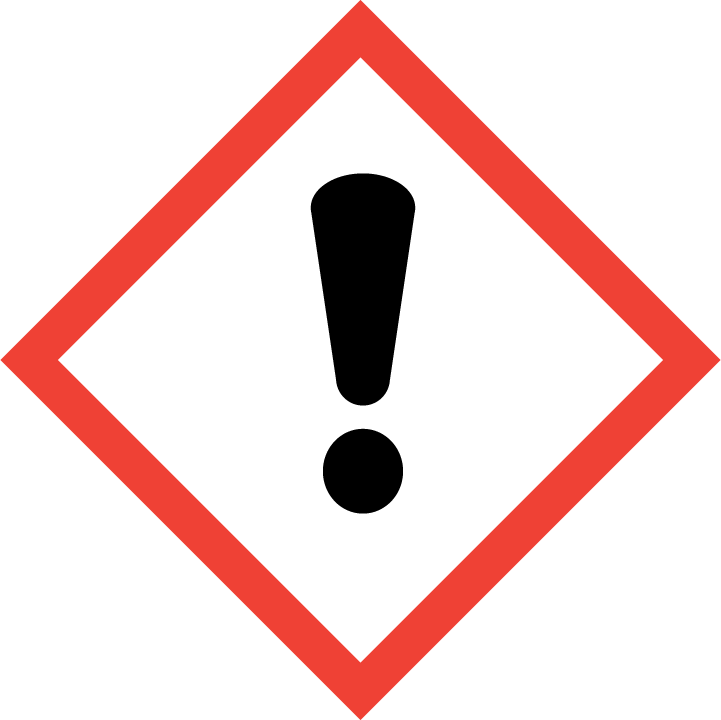
- Signal Words
- Warning
- Hazard Statement(s)
- Not available.
- Precautionary Statement(s)
- Not available.
Primary route(s) of entry
Not available.
Human Health
- Inhalation
- Not available.
- Ingestion
- Not available.
- Eyes
- Not available.
- Skin
- Not available.
Environment
Not available.
3. Composition / Information on Ingredients
| Name | CAS No. | Content (w/w) | Classification |
|---|---|---|---|
| Water | 7732-18-5 | >80 | - |
| Silver bromide (AgBr | 7785-23-1 | 5-10 | - |
| Gelatin | 9000-70-8 | <5 | - |
| Glycerin | 56-81-5 | <5 | - |
| Methyl alcohol | 67-56- | <1 | - |
4. First Aid Measures
- Ingestion
- Do NOT induce vomiting. Rinse mouth. Drink plenty of water. Never give anything by mouth to an unconscious person. Get medical attention.
- Inhalation
- Move to fresh air. Get medical attention immediately if symptoms occur.
- Skin Contact
- Wash off immediately with soap and plenty of water while removing all contaminated clothes and shoes. Get medical attention immediately if symptoms occur.
- Eye Contact
- In the case of contact with eyes, rinse immediately with plenty of water and seek medical advice.
- Other Information
- If symptoms persist, call a physician.
5. Firefighting Measures
Suitable extinguishing equipment
- Fire
- Use extinguishing measures that are appropriate to local circumstances and the surrounding environment.
- HAZCHEM
- Thermal decomposition can lead to release of irritating and toxic gases and vapours.
- Carbon oxides. Nitrogen oxides (NOx). Hydrogen bromide.
Special protective equipment and precautions for fire fighters
As in any fire, wear self-contained breathing apparatus pressure-demand, MSHA/NIOSH (approved or equivalent) and full protective gear.
6. Accidental Release Measures
- Personal precautions, protective equipment and emergency procedures
- Ensure adequate ventilation. For personal protection see section 8.
- Environmental precautions
- Prevent further leakage or spillage if safe to do so. Prevent entry into waterways, sewers, basements or confined areas.
- Methods and materials for containment and clean up
- Prevent further leakage or spillage if safe to do so.
- Take up mechanically and collect in suitable container for disposal. Clean contaminated surface thoroughly.
7. Handling and Storage
- Precautions for safe handling
- Avoid breathing mist or vapour from heated material at concentrations greater than the exposure limits. Avoid contact with skin, eyes and clothing. Ensure adequate ventilation. Wash thoroughly after handling.
- Conditions for safe storage
- Keep containers tightly closed in a dry, cool and well-ventilated place. Keep refrigerated.
8. Exposure Controls / Personal Protection
Exposure Standards
| Material | TWA ppm | TWA mg/m³ | STEL ppm | STEL mg/m³ |
|---|---|---|---|---|
| Glycerin | - | 10 mg/m3 | - | - |
| Methyl alcohol | 200 ppm | - | 250 ppm | - |
- Engineering controls
- Ensure adequate ventilation. Apply technical measures to comply with the occupational exposure limits.
Personal protective equipment
- Eye and face protection
- Safety glasses with side-shields
- Skin protection
- Wear chemical-resistant gloves, footwear, and protective clothing appropriate for the risk of exposure.
- Body protection
- Handle in accordance with good industrial hygiene and safety practice.
- Respiratory protection
- None required under normal usage. When workers are facing concentrations above the exposure limit they must use appropriate certified respirators.
9. Physical and Chemical Properties
General information
- Appearance
- Semi-solid (gel)
- Odour
- Not available.
- pH
- 6
- Vapour Pressure
- Not available.
- Density
- Not available.
- Boiling Point
- > 100 °C
- Melting Point
- > 40 °C
- Solubility
- Water solubility dispersible
- Specific Gravity of Density
- Not available.
- Flash Point
- Not available.
- Flammable (Explosive) Limits
- Not available.
- Ignition Temperature
- Not available.
- Formula
- Not available.
10. Stability and Reactivity
- Reactivity
- No further relevant information available.
- Chemical stability
- Stable under recommended storage conditions.
- Possibility of hazardous reactions
- None under normal processing.
- Conditions to avoid
- Temperatures above 180°C.
- Incompatible materials
- None known based on information supplied.
11. Toxicological Information
- Acute effects
- No further relevant information available.
- Eye contact
- May cause slight irritation.
- Skin contact
- Substance may cause slight skin irritation.
- Ingestion
- Low order of toxicity based on components.
- Inhalation
- Not an expected route of exposure.
- Toxicity and irritation
- Chemical Name LD50 Oral LD50 Dermal LC50 Inhalation.
- Glycerin 12600 mg/kg ( Rat ) 21900 mg/kg ( Rat )
- Methyl alcohol 5628 mg/kg ( Rat )15800 mg/kg ( Rabbit ) 64000 ppm ( Rat ) 4 h; 83.2 mg/L (Rat ) 4 h.
- Silver bromide
- Excessive absorption of silver compounds from chronic overexposure may result in argyria, a bluish-gray discoloration of the skin, eyes, and mucous membranes.
- Methyl alcohol.
- Prolonged and repeated exposure to high vapour concentrations,skin absorption or ingestion of methyl alcohol may result in visual disturbances, metabolic acidosis, headache, giddiness, nausea, insomnia, gastric disturbance, dizziness, and slow breathing. There have been several cases reported of blindness, coma and death due to the ingestion of methyl alcohol.
12. Ecological Information
- Ecotoxicity
- No further relevant information available.
- Persistence and degradability
- No further relevant information available.
- Bioaccumulative potential
- Not likely to bioaccumulate.
- Other adverse effects
- No further relevant information available.
13. Disposal Considerations
General information
- Dispose of in accordance with Local, State and Federal law. Use a licensed chemical disposal agency.
- Special Precautions:
- Recover silver before disposal.
14. Transport Information
ADG label required
- HAZCHEM
- Thermal decomposition can lead to release of irritating and toxic gases and vapours.
- Carbon oxides. Nitrogen oxides (NOx). Hydrogen bromide.
- UN Number
- None
- Proper shipping name
- Not regulated.
- Transport hazard class
- 0
- Packing group
- None.
- Environmental hazard
- Yes
- Special precautions for users
- No information available.
- Additional information
- No information available.
15. Regulatory Information
- Poisons Schedule Number
- Not listed.
- Other Information
- No further relevant information available.
16. Other Information
- SDS preparation date
- 18 February 2026
- Comments
- This information is based on our present knowledge. However, this shall not constitute a guarantee for any specific product features and shall not establish a legally valid contractual relationship.