
Safety Data Sheets / Auramine O, C.I. 41000
Safety Data Sheet
Auramine O, C.I. 41000
1. Identification
Product Identifiers
- Product Name
- Auramine O, C.I. 41000
- Other Names
- 2,4,4'-(Imidocarbonyl)bis(N,N-dimethylaniline) monohydrochloride, C.I. 41000, Basic Yellow 2, Auramine hydrochloride, Canary Yellow, bis[4-(dimethylamino)phenyl]methaniminium chloride
- Product Number(s)
- C067, C0671, C0675.
- CAS Number
- 2465-27-2
Recommended use of the chemical and restriction on use
Auramine O is a diarylmethane dye used as a fluorescent stain.
Company Details
ProSciTech Pty Ltd
11 Carlton Street
KIRWAN QLD 4817
Australia
(07) 4773 9444
pst@proscitech.com
proscitech.com.au
11 Carlton Street
KIRWAN QLD 4817
Australia
(07) 4773 9444
pst@proscitech.com
proscitech.com.au
Emergency Contact Details
ProSciTech Pty Ltd
11 Carlton Street
KIRWAN QLD 4817
Australia
(07) 4773 9444
pst@proscitech.com
proscitech.com.au
11 Carlton Street
KIRWAN QLD 4817
Australia
(07) 4773 9444
pst@proscitech.com
proscitech.com.au
2. Hazards Identification
Classification of the substance or mixture
- Chronic aquatic hazard: Category 2
- Eye Irritation: Category 2
- Carcinogenicity: Category 2
- Acute Toxicity - Oral: Category 4
Label Elements

- Signal Words
- Warning
- Hazard Statement(s)
- H302 Harmful if swallowed.
- H319 Causes serious eye irritation.
- H351 Suspected of causing cancer.
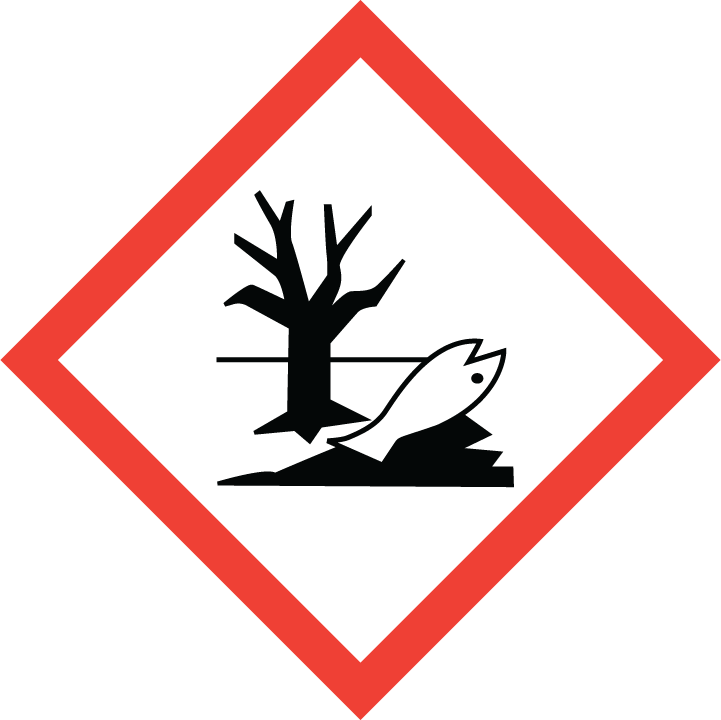
- H411 Toxic to aquatic life with long-lasting effects.
- Precautionary Statement(s)
- P201 Obtain special instructions before use.
- P202 Do not handle until all safety precautions have been read and understood.
- P264 Wash thoroughly after handling.
- P270 Do not eat, drink or smoke when using this product.
- P280 Wear protective gloves/protective clothing/eye protection/face protection.
- P301±P312 IF SWALLOWED: Call a POISON CENTER or doctor/physician if you feel unwell.
- P302±P352 IF ON SKIN: Wash with plenty of soap and water.
- P308±P313 IF exposed or concerned: Get medical advice/attention.
- P330 Rinse mouth.
- P361 Remove/Take off immediately all contaminated clothing.
- P363 Wash contaminated clothing before reuse.
- P405 Store locked up.
- P391 Collect spillage.
- P273 Avoid release to the environment.
- P337±P313 If eye irritation persists: get medical attention.
- P501 Dispose of contents/container to an approved waste disposal plant.
Primary route(s) of entry
Not available.
Human Health
- Inhalation
- Not available.
- Ingestion
- Not available.
- Eyes
- Not available.
- Skin
- Not available.
Environment
Not available.
3. Composition / Information on Ingredients
| Name | CAS No. | Content (w/w) | Classification |
|---|---|---|---|
| Auramine-o | 2465-27-2 | 100 % | R22, R24, R45(2) |
4. First Aid Measures
- Ingestion
- Do not induce vomiting without medical advice. Wash out mouth with water and obtain medical attention.
- Inhalation
- If inhaled, remove from contaminated area to fresh air immediately. Apply artificial respiration if not
- breathing. If breathing is difficult, give oxygen. Get medical aid if cough or other symptoms appear.
- Skin Contact
- Wash affected areas with copious quantities of soap and water immediately for at least 15 minutes while removing contaminated clothing and shoes. Seek medical attention if irritation develops or persist.
- Eye Contact
- Immediately flush eyes with plenty of water for at least 15 minutes, lifting upper and lower eyelids occasionally. Seek medical attention urgently.
- Other Information
- For advice, contact a Poisons Information Centre (Phone eg Australia 13 1126 New Zealand 0800 764 766) or a doctor.
5. Firefighting Measures
Suitable extinguishing equipment
- Fire
- Use water spray to cool fire exposed containers. Use water, dry chemical foam, or alcohol-resistant foam, or appropriate foam.
- HAZCHEM
- Hydrogen chloride, carbon monoxide, oxides of nitrogen, carbon dioxide.
Special protective equipment and precautions for fire fighters
Wear self-contained breathing apparatus and full protective gear.
6. Accidental Release Measures
- Personal precautions, protective equipment and emergency procedures
- Avoid substance contact. Avoid generation of dusts: do not inhale dusts. Ensure supply of fresh air in enclosed room.
- Wear protective clothing specified for normal operations (see Section 8)
- Environmental precautions
- Clean up spills immediately, observing precautions in the Protective Equipment section.
- Methods and materials for containment and clean up
- Sweep up (avoid generating dust) and remove to a suitable, clearly labelled container for disposal in accordance with local regulations.
7. Handling and Storage
- Precautions for safe handling
- Wash hands and face thoroughly after working with material. Use with adequate ventilation. Avoid generation or accumulation of dusts. Avoid contact with eyes, skin and clothing. Avoid ingestion and inhalation of material. Keep container tightly closed when not in use.
- Conditions for safe storage
- Keep container tightly closed Keep in a cool, dry, well-ventilated place. Store away from incompatible substances.
8. Exposure Controls / Personal Protection
Exposure Standards
- Engineering controls
- No exposure standards have been established for this product by Safe Work Australia, however, the TWA exposure standard for dusts not otherwise specified is 10 mg/m3.
- In industrial situations maintain the concentrations values below the TWA. This may be achieved by process modification, use of local exhaust ventilation, capturing substances at the source, or other methods.
Personal protective equipment
- Eye and face protection
- The use of a face shield, chemical goggles or safety glasses with side shield protection as appropriate. Must comply with Australian Standards AS 1337 and be selected and used in accordance with AS 1336.
- Skin protection
- Hand protection should comply with AS 2161, Occupational protective gloves - Selection, use and maintenance. 0.11mm thick nitrile gloves.
- Body protection
- Final choice of personal protective equipment will depend on individual circumstances and/or according to risk assessments undertaken.
- Safety boots in industrial situations is advisory, foot protection should comply with AS 2210, Occupational protective footwear - Guide to selection, care and use.
- Appropriate protective clothing.
- Wash hands before eating, drinking, smoking and using the toilet.
- Respiratory protection
- Where ventilation is not adequate, respiratory protection may be required. Avoid breathing dust, vapours or mists. Respiratory protection should comply with AS 1716 - Respiratory Protective Devices and be selected in accordance with AS 1715 - Selection, Use and Maintenance of Respiratory Protective
- Devices. Filter capacity and respirator type depends on exposure levels. In event of emergency or planned entry into unknown concentrations a positive pressure, full-facepiece SCBA should be used. If respiratory protection is required, institute a complete respiratory protection program including selection, fit testing, training, maintenance and inspection.
9. Physical and Chemical Properties
General information
- Appearance
- Yellow-green powder.
- Odour
- Odourless
- pH
- Not available.
- Vapour Pressure
- Negligible.
- Density
- >1
- Boiling Point
- Not available.
- Melting Point
- 267 °C
- Solubility
- Soluble in water 10 g/l at 20°C
- Specific Gravity of Density
- Not available.
- Flash Point
- Not available.
- Flammable (Explosive) Limits
- Not available.
- Ignition Temperature
- Not available.
- Formula
- C17H22N3Cl
10. Stability and Reactivity
- Reactivity
- No further relevant information available.
- Chemical stability
- Stable at room temperature in closed containers under normal storage and handling conditions.
- Possibility of hazardous reactions
- Hydrogen chloride, carbon monoxide, oxies of nitrogen, carbon dioxide.
- Conditions to avoid
- Dust generation. Incompatibles. Excess heat.
- Incompatible materials
- Strong oxidising agents.
11. Toxicological Information
- Acute effects
- Auramine (492-80-8) IARC group 2B: No data available on human carcinogenicity, however sufficient evidence of carcinogenicity in animals.
- Suspected Gastrointestinal or Liver Toxicant.
- May cause cancer according to animal studies
- .No evidence of mutagenic properties.
- Eye contact
- May cause irritation. May cause irreversible eye injury.
- Skin contact
- Toxic if absorbed through the skin. May cause skin irritation.
- Ingestion
- May cause irritation of the digestive tract.
- Inhalation
- May cause irritation to the respiratory tract.
- Toxicity and irritation
- Acute Toxicity - Oral Mouse LD50 = 480mg/kg
- Acute Toxicity - Mouse LD50 = 300 mg/
12. Ecological Information
- Ecotoxicity
- No further relevant information available.
- Persistence and degradability
- Will slowly biodegrade but not bioconcentrate.
- Bioaccumulative potential
- Terrestrial: May undergo covalent chemical bonding with humic materials which can result in its chemical alteration to a latent form and tight adsorption. When covalently bound in this latent form, leaching in soil
- systems is not expected to occur.
- Aquatic: May undergo covalent bonding with humic materials in the water column and sediment.
- Atmospheric: Particulate phase auramine hydrochloride will probably be removed from air via dry deposition, or degraded in air by photolysis based on its UV spectrum.
- Other adverse effects
- No further relevant information available.
13. Disposal Considerations
General information
Whatever cannot be saved for recovery or recycling should be handled as hazardous waste and disposed of according to relevant local, state and federal government regulations.
14. Transport Information
ADG label required
- HAZCHEM
- Hydrogen chloride, carbon monoxide, oxides of nitrogen, carbon dioxide.
- UN Number
- Not regulated
- Proper shipping name
- Not regulated
- Environmental hazard
- No information available.
- Special precautions for users
- No information available.
- Additional information
- Not regulated
15. Regulatory Information
- Poisons Schedule Number
- Not scheduled.
- Other Information
- No further relevant information available.
16. Other Information
- SDS preparation date
- 18 February 2026
- Comments
- This information is based on our present knowledge. However, this shall not constitute a guarantee for any specific product features and shall not establish a legally valid contractual relationship.