
Safety Data Sheets / Acid Alcohol
Safety Data Sheet
Acid Alcohol
1. Identification
Product Identifiers
- Product Name
- Acid Alcohol
- Other Names
- Acidified Alcohol water mixture; Acid Alcohol 0.5% / 70%.
- Product Number(s)
- AACDL-1L
- CAS Number
- -
Recommended use of the chemical and restriction on use
Used in hospital and pathology laboratories only.
Company Details
ProSciTech Pty Ltd
11 Carlton Street
KIRWAN QLD 4817
Australia
(07) 4773 9444
pst@proscitech.com
proscitech.com.au
11 Carlton Street
KIRWAN QLD 4817
Australia
(07) 4773 9444
pst@proscitech.com
proscitech.com.au
Emergency Contact Details
ProSciTech Pty Ltd
11 Carlton Street
KIRWAN QLD 4817
Australia
(07) 4773 9444
pst@proscitech.com
proscitech.com.au
11 Carlton Street
KIRWAN QLD 4817
Australia
(07) 4773 9444
pst@proscitech.com
proscitech.com.au
2. Hazards Identification
Classification of the substance or mixture
- - Serious eye damage/eye irritation, Cat. 1
- - Flammable liquids, Cat. 2
- - Skin corrosion/irritation, Cat. 2
- - Corrosive to metals, Cat. 1
Label Elements
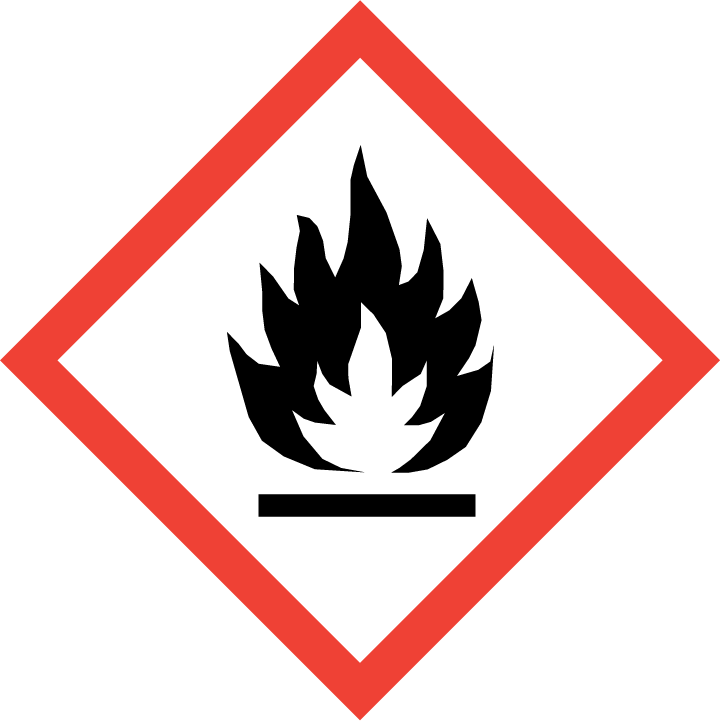
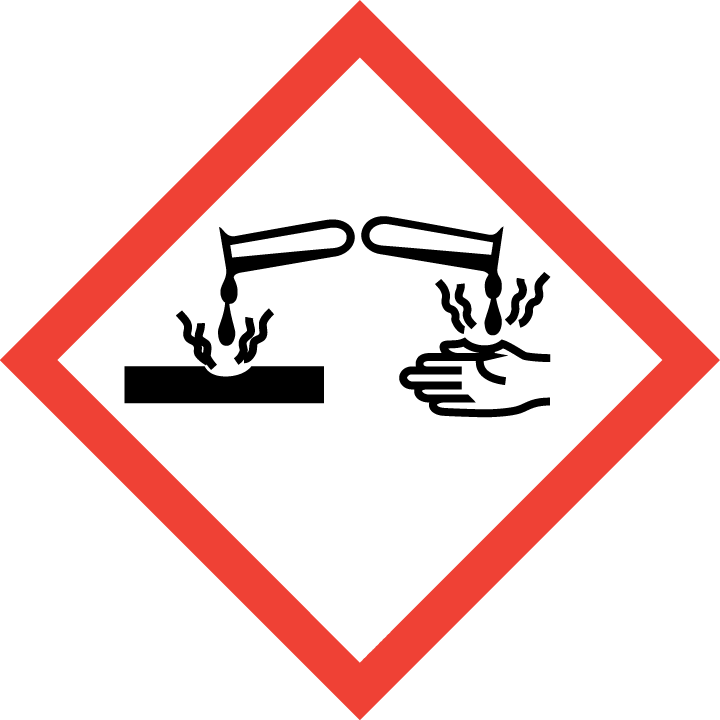
- Signal Words
- Danger
- Hazard Statement(s)
- H225 Highly flammable liquid and vapor
- H290 May be corrosive to metals
- H315 Causes skin irritation
- H318 Causes serious eye damage
- Precautionary Statement(s)
- P210 Keep away from heat, hot surfaces, sparks, open flames and other ignition sources. No smoking.
- P240 Ground and bond container and receiving equipment.
- P241 Use explosion-proof [electrical/ventilating/lighting/...] equipment.
- P242 Use non-sparking tools.
- P243 Take action to prevent static discharges.
- P280 Wear protective gloves/protective clothing/eye protection/face protection.
- P303+P361+P353 IF ON SKIN (or hair): Take off immediately all contaminated clothing. Rinse skin with water [or shower].
- P305+P351+P338 IF IN EYES: Rinse cautiously with water for several minutes. Remove contact lenses, if present and easy to do. Continue rinsing.
- P310 Immediately call a POISON CENTER/doctor/physcian
- P332+P313 If skin irritation occurs: Get medical advice/attention.
- P362+P364 Take off contaminated clothing and wash it before reuse.
- P370+P378 In case of fire: Use agents recommended in Section 5 of SDS for extinction
- P390 Absorb spillage to prevent material-damage.
- P403+P235 Store in a well-ventilated place. Keep cool.
- P406 Store in a corrosive resistant/… container with a resistant inner liner.
- P501 Dispose of contents/container to an approved waste disposal facility
Primary route(s) of entry
- Primary route: Eye contact – HIGH concern, direct splashes can cause significant eye injury.
- Secondary route: Skin contact – MODERATE concern, Inhalation – MODERATE concern.
Human Health
- Inhalation
- Vapours may irritate the respiratory tract and mucous membranes and may cause headache, dizziness and nausea.
- Ingestion
- Ingestion may cause gastric irritation, nausea, vomiting, dizziness and CNS depression.
- Eyes
- Causes serious eye damage.
- Skin
- Causes skin irritation. Repeated or prolonged skin contact may cause dermatitis.
Environment
No further relevant information available.
3. Composition / Information on Ingredients
| Name | CAS No. | Content (w/w) | Classification |
|---|---|---|---|
| Ethanol | 64-17-5 | 70%- ≤ 95% | CLASSIFICATIONS: Flammable liquids, Cat. 2; Eye damage/irritation, Cat. 2A. HAZARDS: H225 - Highly flammable liquid and vapor; H319 - Causes serious eye irritation. |
| Hydrochloric acid | 7647-01-0 | 0.2 - 3% | CLASSIFICATIONS: Specific target organ toxicity, single exposure, Cat. 3; Skin corrosion/irritation, Cat. 1B. HAZARDS: H314 - Causes severe skin burns and eye damage; H335 - May cause respiratory irritation. [SCLs/ M-factors/ATEs]: Skin Corr. 1B; H314: C ≥ 25 %; Skin Irrit. 2; H315: 10 % ≤ C < 25 %; Eye Irrit. 2; H319: 10 % ≤ C < 25 %; STOT SE 3; H335: C ≥ 10 % |
4. First Aid Measures
- Ingestion
- Do NOT induce vomiting. Never give anything by mouth to an unconscious person. Rinse mouth with water. Consult a physician.
- Inhalation
- If inhaled, remove to fresh air. If not breathing, give artificial respiration. If breathing is difficult, give oxygen. Seek medical attention if breathing problems develop.
- Skin Contact
- In case of skin contact, immediately remove contaminated clothing and wash affected areas with water and soap. Seek medical attention if symptoms persist.
- Eye Contact
- If in eyes, hold eyelids apart and flush eye continuously with running water.
- Continue flushing until advised to stop by a Poisons Information Centre (e.g. phone Australia 13 11 26; New Zealand 0800 764 766) or a doctor, or for at least 15 minutes.
- Other Information
- Inhalation: May cause respiratory irritation leading to headache, dizziness and confusion.
- Skin Contact: May cause skin irritation, itchiness and redness.
- Eye Contact: May cause eye irritation, stinging, tearing and blurred vision. Ingestion: May cause irritation of mouth, throat and stomach, mucous build up and stomach pain.
5. Firefighting Measures
Suitable extinguishing equipment
- Fire
- Suitable extinguishing media
- Caution: Use of water spray when fighting fire may be inefficient.
- Small fire: Use foam, dry chemical, CO2 or water spray.
- If safe to do so, move undamaged containers from fire area. Cool containers with flooding quantities of water until well after fire is out.
- FLAMMABLE: These products have a low flash point - Will be easily ignited by heat, sparks or flames at ambient temperatures.
- Vapours will form explosive mixtures with air. Vapours will travel to source of ignition and flash back. Fire may produce irritating,
- poisonous and/or corrosive gases. Containers may explode when heated. Many liquids are lighter than water. Many vapours are
- heavier than air and will collect in low or confined areas (drains, basements, tanks). Vapours from run-off may create an explosion
- hazard.
- -----
- Ethanol: Carbon oxides
- Large Fire
- Large fire: Use foam, fog or water spray - Do not use water jets.
- HAZCHEM
- Not available.
Special protective equipment and precautions for fire fighters
- Fire fighters should wear full protective clothing and self-contained breathing apparatus (SCBA) operated in positive pressure mode.
- Fight fire from safe location.
6. Accidental Release Measures
- Personal precautions, protective equipment and emergency procedures
- Wear appropriate respiratory protection and protective clothing. Evacuate all non-essential personnel from affected area. Do not breathe vapours. Ensure adequate ventilation. Extinguish all sources of ignition. Avoid sparks and open flames. No smoking.
- Environmental precautions
- Prevent further leakage or spillage if safe to do so. Do not let product enter drains.
- Methods and materials for containment and clean up
- ELIMINATE all ignition sources (no smoking, flares, sparks or flame) within at least 50m - All equipment used in handling the product must be earthed. Do not touch or walk through spilled material. Stop leak if safe to do so - Prevent entry into waterways, drains or confined areas. Vapour-suppressing foam may be used to control vapours. Absorb spill with earth, sand or other non-combustible material - Use clean, non-sparking tools to collect material and place it in loosely-covered metal or plastic containers for later disposal. Water spray may be used to knock down or divert vapour clouds.
- SEEK EXPERT ADVICE ON HANDLING AND DISPOSAL.
7. Handling and Storage
- Precautions for safe handling
- Corrosive liquid. Attacks skin and eyes. Causes burns. Avoid breathing in vapours, mist or fumes. Wear suitable protective clothing, gloves and eye/face protection when mixing and using. Use in designated areas with adequate ventilation. Keep containers tightly closed. Ensure a high level of personal hygiene is maintained when using this product, that is, always wash hands after handling, and before eating, drinking, smoking or using the toilet facilities. Avoid exposure. Do not handle until all safety precautions have been read and understood
- Conditions for safe storage
- Refer Australian Standard AS 1940 - 1993 'The storage and handling of flammable and combustible liquids'.
- Keep container tightly closed in a dry and well-ventilated place. Containers which are opened must be carefully resealed and kept upright to prevent leakage.
8. Exposure Controls / Personal Protection
Exposure Standards
| Material | TWA ppm | TWA mg/m³ | STEL ppm | STEL mg/m³ |
|---|---|---|---|---|
| Ethanol | 1000 ppm | 1880 mg/m³, | - | - |
| Hydrochloric acid | - | - | 7.5 mg/m³ | 5 ppm |
- Engineering controls
- Provide exhaust ventilation or other engineering controls to keep the airborne concentrations of vapour below occupational exposure standards.
Personal protective equipment
- Eye and face protection
- The use of a face shield, chemical goggles or safety glasses with side shield protection as appropriate. Must comply with Australian
- Standards AS 1337 and be selected and used in accordance with AS 1336.
- Skin protection
- Clean impervious clothing should be worn. Clothing for protection against chemicals should comply with AS 3765 Clothing for Protection Against Hazardous Chemicals.
- Hand Protection: Normally not required but if in doubt ensure hand protection should complies with AS 2161, Occupational protective gloves - Selection, use and maintenance.
- Body protection
- Suitable protective workwear, e.g. cotton overalls buttoned at neck and wrist is recommended. Chemical resistant apron is recommended where large quantities are handled.
- Respiratory protection
- If engineering controls are not effective in controlling airborne exposure then an approved respirator with a replaceable vapor/ mist filter should be used. Refer to relevant regulations for further information concerning respiratory protective requirements. Reference should be made to Australian Standards AS/ NZS 1715, Selection, Use and Maintenance of Respiratory Protective Devices; and AS/NZS 1716, Respiratory Protective Devices, in rder to make any necessary changes for individual circumstances.
9. Physical and Chemical Properties
General information
- Appearance
- Colourless volitile liquid
- Odour
- Characteristic alcohol odour.
- pH
- Not available.
- Vapour Pressure
- at 20 °C: 59 hPa
- Density
- Not available.
- Boiling Point
- 82 °C
- Melting Point
- -41 °C
- Solubility
- Soluble in water.
- Specific Gravity of Density
- Not available.
- Flash Point
- 12 °C
- Flammable (Explosive) Limits
- Lower: 2.8 Vol %
- Upper: 18.2 Vol %
- Ignition Temperature
- Not applicable.
- Formula
- Not available.
10. Stability and Reactivity
- Reactivity
- No further relevant information available.
- Chemical stability
- Stable at ambient temperature and under normal conditions of use.
- Possibility of hazardous reactions
- Avoid contact with formalin (Formaldehyde gas) fumes, as the formation of Bis-Chloro-Methyl-Ether (BCME) is a serious risk.
- Conditions to avoid
- Heat, sparks, open flames and other sources of ignition and build-up of static electricity..
- Incompatible materials
- xidising agents, peroxides, acids, acid chlorides, acid anhydrides, alkali metals and ammonia.
- -----
- Ethanol: Alkali metals, Oxidizing agents, Peroxides
- Hazardous decomposition products
- May liberate toxic fumes in fire producing carbon monoxide and or carbon dioxide.
11. Toxicological Information
- Acute effects
- ngestion: May cause nausea, vomiting, headache, dizziness, gastric irritation and CNS depression.
- Inhalation: Irritating to the mucous membranes and respiratory tract. Risk of absorption. May cause headaches, dizziness, nausea and possible CNS effects.
- Eye contact
- May cause irritation and watering. High concentrations of vapours may cause irritation.
- Skin contact
- May cause skin irritation, itchiness and redness.
- Ingestion
- May cause irritation of mouth, throat and stomach, mucous build up and stomach pain.
- Inhalation
- May cause respiratory irritation leading to headache, dizziness and confusion.
- Toxicity and irritation
- LD₅₀/LC₅₀ Values Relevant for Classification:
- 64-17-5 Ethanol
- Oral LD₅₀ 7060 mg/kg (rat)
- Inhalation LC₅₀/4 h 20000 mg/l (rat)
- 7647-01-0 Hydrochloric acid
- Oral LD₅₀ 900 mg/kg (rabbit)
12. Ecological Information
- Ecotoxicity
- May cause long term adverse effects in the aquatic environment.
- Persistence and degradability
- No further relevant information available.
- Bioaccumulative potential
- No further relevant information available.
- Other adverse effects
- No further relevant information available.
13. Disposal Considerations
General information
- Dispose according to applicable local and state government regulations.
- Special Precautions for Landfill or Incineration:
- Please consult your state Land Waste Management Authority for more information.
14. Transport Information
ADG label required
- HAZCHEM
- Not available.
- UN Number
- UN1170
- Proper shipping name
- ETHANOL SOLUTION (ETHYL ALCOHOL SOLUTION).
- Transport hazard class
- 3 F
- Packing group
- II
- Environmental hazard
- No
- Special precautions for users
- 144
- Additional information
- Limited Quantities: 1 L Packagings & IBCs - Packing Instruction: P001, IBC02
- Packagings & IBCs - Special Packing Provisions: No information available Portable Tanks & Bulk Containers - Instructions: T4
- Portable Tanks & Bulk Containers - Special Provisions: TP1
15. Regulatory Information
- Poisons Schedule Number
- 5
- Other Information
- No further relevant information available.
16. Other Information
- SDS preparation date
- 9 November 2021
- Comments
- This information is based on our present knowledge. However, this shall not constitute a guarantee for any specific product features and shall not establish a legally valid contractual relationship.