
Safety Data Sheets / Acetate Buffer, 0.2M, pH4.2
Safety Data Sheet
Acetate Buffer, 0.2M, pH4.2
1. Identification
Product Identifiers
- Product Name
- Acetate Buffer, 0.2M, pH4.2
- Other Names
- Not available.
- Product Number(s)
- 11482-42, EMS11482-42
- CAS Number
- Not available.
Recommended use of the chemical and restriction on use
Laboratory chemicals.
Company Details
ProSciTech Pty Ltd
11 Carlton Street
KIRWAN QLD 4817
Australia
(07) 4773 9444
pst@proscitech.com
proscitech.com.au
11 Carlton Street
KIRWAN QLD 4817
Australia
(07) 4773 9444
pst@proscitech.com
proscitech.com.au
Emergency Contact Details
ProSciTech Pty Ltd
11 Carlton Street
KIRWAN QLD 4817
Australia
(07) 4773 9444
pst@proscitech.com
proscitech.com.au
11 Carlton Street
KIRWAN QLD 4817
Australia
(07) 4773 9444
pst@proscitech.com
proscitech.com.au
2. Hazards Identification
Classification of the substance or mixture
- HS02 Flame
- Flammable liquids 3 H226 Flammable liquid and vapour.
- GHS06 Skull and crossbones
- Acute toxicity - oral 1 H300 Fatal if swallowed.
- Acute toxicity - dermal 1 H310 Fatal in contact with skin.
- Acute toxicity - inhalation 1 H330 Fatal if inhaled.
- GHS05 Corrosion
- Skin corrosion 1B H314 Causes severe skin burns and eye damage.
- Eye damage 1 H318 Causes serious eye damage.
Label Elements
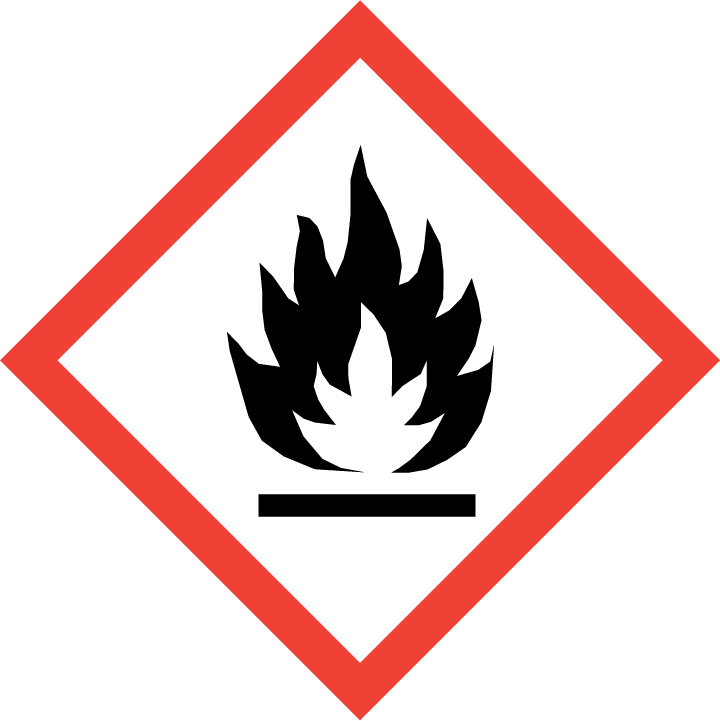
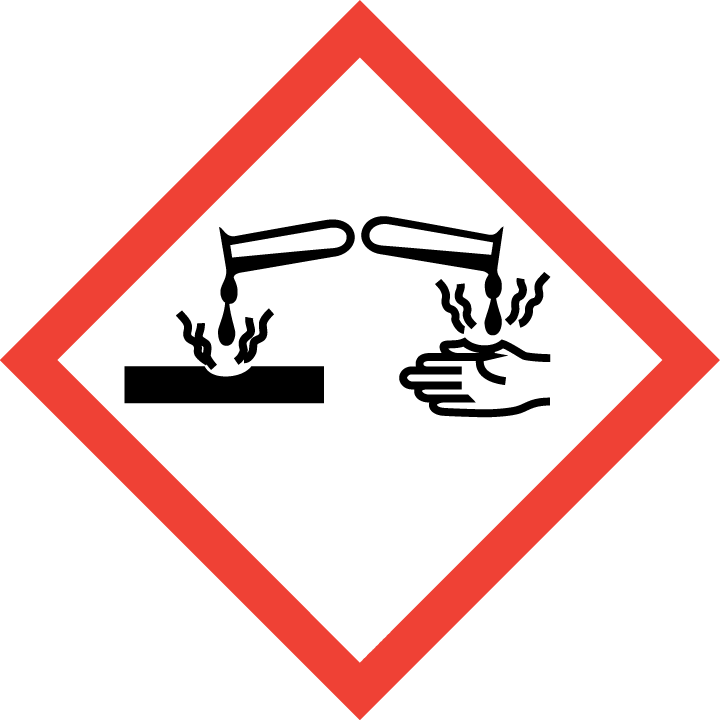
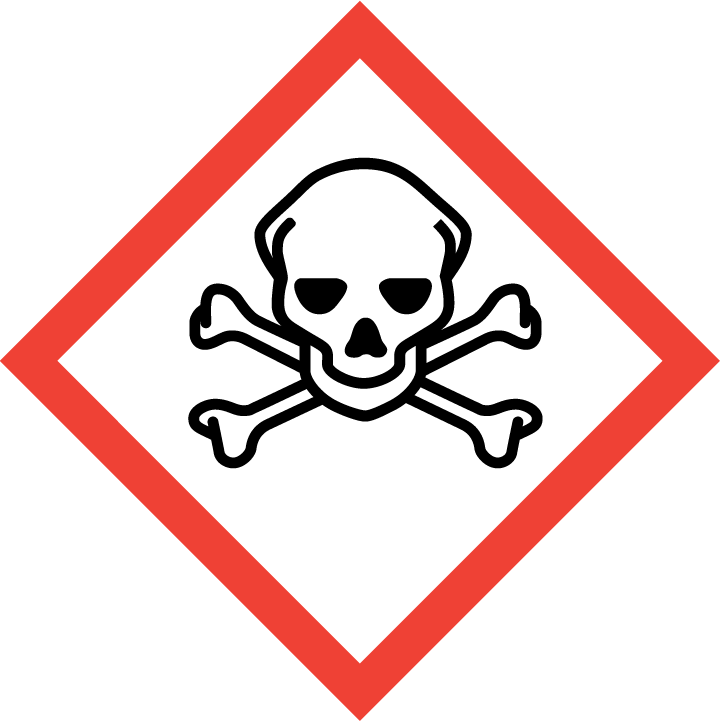
- Signal Words
- None
- Hazard Statement(s)
- Hazard-determining components of labelling:
- Acetic Acid Glacial
- SODIUM ACETATE TRIHYDRATE
- Flammable liquid and vapour.
- Fatal if swallowed, in contact with skin or if inhaled.
- Causes severe skin burns and eye damage.
- Precautionary Statement(s)
- Keep away from heat, hot surfaces, sparks, open flames and other ignition sources. No smoking.
- Ground / bond container and receiving equipment.
- Use explosion-proof [electrical/ventilating/lighting] equipment.
- Use non-sparking tools.
- Take action to prevent static discharge.
- Do not breathe dusts or mists.
- Do not get in eyes, on skin, or on clothing.
- Wash thoroughly after handling.
- Do not eat, drink or smoke when using this product.
- Use only outdoors or in a well-ventilated area.
- Wear protective gloves/protective clothing/eye protection/face protection/hearing protection.
- [In case of inadequate ventilation] wear respiratory protection.
Primary route(s) of entry
inhalation, ingestion, and skin/eye contact.
Human Health
- Inhalation
- Remove victim to fresh air and keep at rest in a position comfortable for breathing.
- Ingestion
- Call a POISON CENTER/doctor if you feel unwell. Rinse mouth. Do NOT induce vomiting.
- Eyes
- Rinse cautiously with water for several minutes. Remove contact lenses, if present and easy to do. Continue rinsing. Immediately call a POISON CENTER/doctor.
- Skin
- (or hair) Remove/take off immediately all contaminated clothing. Rinse skin with water/shower. Take off contaminated clothing and wash it before reuse.
Environment
- In case of fire: Use for extinction: CO₂, powder or water spray.
- Store in a well-ventilated place. Keep cool.
- Store locked up.
- Dispose of contents/container in accordance with local/regional/national/international regulations.
- Hazards not otherwise classified
- There are no adverse physical or health effects known that are not covered by the hazard classes of the Hazard
- Communications Standard.
3. Composition / Information on Ingredients
| Name | CAS No. | Content (w/w) | Classification |
|---|---|---|---|
| Acetic Acid Glacial | 64-19-7 | 30-60% | Mixture |
| SODIUM ACETATE TRIHYDRATE | 6131-90-4 | 30-60% | Mixture |
4. First Aid Measures
- Ingestion
- Drink plenty of water and provide fresh air. Call for a doctor immediately.
- Inhalation
- Supply fresh air or oxygen; call for doctor.
- In case of unconsciousness place patient stably in side position for transportation.
- Skin Contact
- Immediately wash with water and soap and rinse thoroughly.
- Eye Contact
- Rinse opened eye for several minutes under running water. Then consult a doctor.
- Other Information
- Immediately remove any clothing soiled by the product.
- Remove breathing apparatus only after contaminated clothing have been completely removed.
- In case of irregular breathing or respiratory arrest provide artificial respiration
5. Firefighting Measures
Suitable extinguishing equipment
- Fire
- CO₂, extinguishing powder or water spray. Fight larger fires with water spray or alcohol resistant foam.
- HAZCHEM
- No further relevant information available.
Special protective equipment and precautions for fire fighters
Mouth respiratory protective device.
6. Accidental Release Measures
- Personal precautions, protective equipment and emergency procedures
- Wear protective equipment. Keep unprotected persons away.
- Environmental precautions
- Dilute with plenty of water.
- Do not allow to enter sewers/surface or ground water.
- Methods and materials for containment and clean up
- Absorb with liquid-binding material (sand, diatomite, acid binders, universal binders, sawdust).
- Use neutralising agent.
- Dispose contaminated material as waste according to item 13.
- Ensure adequate ventilation.
- Do not flush with water or aqueous cleansing agents.
- Protective Action Criteria for Chemicals
- PAC-1:
- 64-19-7 Acetic Acid Glacial 5 ppm
- 6131-90-4 SODIUM ACETATE TRIHYDRATE 11 mg/m³
- PAC-2:
- 64-19-7 Acetic Acid Glacial 35 ppm
- 6131-90-4 SODIUM ACETATE TRIHYDRATE 120 mg/m³
- PAC-3:
- 64-19-7 Acetic Acid Glacial 250 ppm
- 6131-90-4 SODIUM ACETATE TRIHYDRATE 690 mg/m³
7. Handling and Storage
- Precautions for safe handling
- Ensure good ventilation/exhaustion at the workplace.
- Open and handle receptacle with care.
- Prevent formation of aerosols.
- Information about protection against explosions and fires:
- Keep ignition sources away - Do not smoke.
- Protect from heat.
- Protect against electrostatic charges.
- Keep respiratory protective device available.
- Conditions for safe storage
- Requirements to be met by storerooms and receptacles: No special requirements.
- Information about storage in one common storage facility: Not required.
- Further information about storage conditions:
- Keep receptacle tightly sealed.
- Protect from heat and direct sunlight.
- Specific end use(s) No further relevant information available.
8. Exposure Controls / Personal Protection
Exposure Standards
| Material | TWA ppm | TWA mg/m³ | STEL ppm | STEL mg/m³ |
|---|---|---|---|---|
| Acetic Acid Glacial | 10ppm | 25mg/m³ | 15ppm | 37mg/m³ |
- Engineering controls
- Keep away from foodstuffs, beverages and feed.
- Immediately remove all soiled and contaminated clothing.
- Wash hands before breaks and at the end of work.
- Avoid contact with the eyes.
- Avoid contact with the eyes and skin.
Personal protective equipment
- Eye and face protection
- Tightly sealed goggles.
- Skin protection
- Protective gloves
- The glove material has to be impermeable and resistant to the product/ the substance/ the preparation.
- Due to missing tests no recommendation to the glove material can be given for the product/ the preparation/ the chemical mixture.
- Selection of the glove material on consideration of the penetration times, rates of diffusion and the degradation.
- Material of gloves
- The selection of the suitable gloves does not only depend on the material, but also on further marks of quality and varies from manufacturer to manufacturer. As the product is a preparation of several substances, the resistance of the glove material can not be calculated in advance and has therefore to be checked prior to the application.
- Penetration time of glove material
- The exact break through time has to be found out by the manufacturer of the protective gloves and has to be observed.
- Body protection
- Not available.
- Respiratory protection
- In case of brief exposure or low pollution use respiratory filter device. In case of intensive or longer exposure use self-contained respiratory protective device.
9. Physical and Chemical Properties
General information
- Appearance
- Clear liquid
- Odour
- Pungent
- pH
- 4.2
- Vapour Pressure
- 11.4hPa
- Density
- Not determined
- Boiling Point
- 118°C
- Melting Point
- Undetermined
- Solubility
- Not miscible or difficult to mix.
- Specific Gravity of Density
- Not determined.
- Flash Point
- 43°C
- Flammable (Explosive) Limits
- Lower: 4 Vol%
- Upper: 19 Vol%
- Ignition Temperature
- 426°C
- Formula
- Not available.
10. Stability and Reactivity
- Reactivity
- No further relevant information available.
- Chemical stability
- No decomposition if used according to specifications.
- Possibility of hazardous reactions
- No dangerous reactions known.
- Conditions to avoid
- No further relevant information available.
- Incompatible materials
- No further relevant information available.
11. Toxicological Information
- Acute effects
- 64-19-7 Acetic Acid Glacial
- Oral LD50 3310 mg/kg (rat)
- Dermal LD50 1060 mg/kg (rabbit)
- Eye contact
- Strong caustic effect.
- Strong irritant with the danger of severe eye injury.
- Skin contact
- Strong caustic effect on skin and mucous membranes.
- Ingestion
- Swallowing will lead to a strong caustic effect on mouth and throat and to the danger of perforation of oesophagus and stomach.
- Inhalation
- No sensitising effects known.
- Toxicity and irritation
- Harmful
- Corrosive
- Irritant
- Danger through skin absorption.
- Swallowing will lead to a strong caustic effect on mouth and throat and to the danger of perforation of esophagus and stomach.
- Interactive effects: No interactive effects between components are known.
- Carcinogenic categories
- · IARC (International Agency for Research on Cancer): None of the ingredients is listed.
- · NTP (National Toxicology Program): None of the ingredients is listed.
- · OSHA-Ca (Occupational Safety Health Administration): None of the ingredients is listed
12. Ecological Information
- Ecotoxicity
- No further relevant information available.
- Persistence and degradability
- No further relevant information available.
- Bioaccumulative potential
- No further relevant information available.
- Other adverse effects
- Water hazard class 1: Slightly hazardous for water.
- Do not allow undiluted product or large quantities of it to reach ground water, water course or sewage system.
- Must not reach sewage water or drainage ditch undiluted or unneutralised.
13. Disposal Considerations
General information
- Must not be disposed together with household garbage. Do not allow product to reach sewage system.
- Disposal must be made according to official regulations.
14. Transport Information
ADG label required
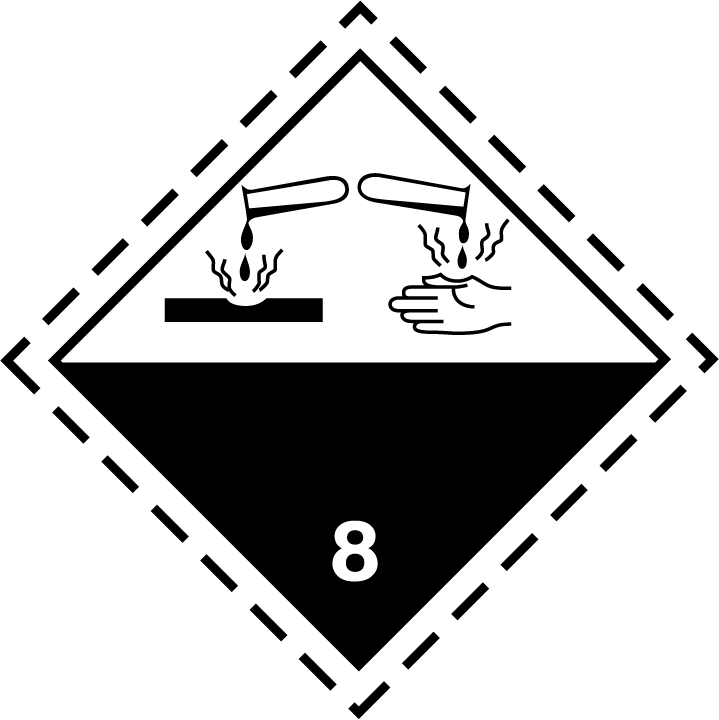
- HAZCHEM
- No further relevant information available.
- UN Number
- UN2790
- Proper shipping name
- 2790ACETIC ACID SOLUTION mixture
- Transport hazard class
- Class 8 Corrosive substances.
- Packing group
- II
- Environmental hazard
- Not applicable.
- Special precautions for users
- Warning: Corrosive substances.
- Hazard identification number (Kemler code): 80
- EMS number: F-A,S-B
- Segregation groups: Acids
- Stowage Category: A
- Additional information
- Limited quantities (LQ) 1L
- Excepted quantities (EQ) Code: E2
- Maximum net quantity per inner packaging: 30mL
- Maximum net quantity per outer packaging: 500mL
- Transport category: 2
- Tunnel restriction code: E
15. Regulatory Information
- Poisons Schedule Number
- 64-19-7 Acetic Acid Glacial S2, S5, S6
- Other Information
- A Chemical Safety Assessment has not been carried out.
16. Other Information
- SDS preparation date
- 11 September 2026
- Comments
- Danger through skin absorption.
- Swallowing will lead to a strong caustic effect on mouth and throat and to the danger of perforation of esophagus
- and stomach.
- · Interactive effects No interactive effects between components are known.
- · Carcinogenic categories
- · IARC (International Agency for Research on Cancer)
- None of the ingredients is listed.
- · NTP (National Toxicology Program)
- None of the ingredients is listed.
- · OSHA-Ca (Occupational Safety Health Administration)
- None of the ingredients is listed
- References
- Electrom Microscopy Science SDS "ACETATE BUFFER, 0.2M, pH 4.2". 30.01.2025
- https://www.emsdiasum.com/docs/technical/msds/11482-42.pdf